
U.S. crude oil inventories drop to lowest level since March 1985
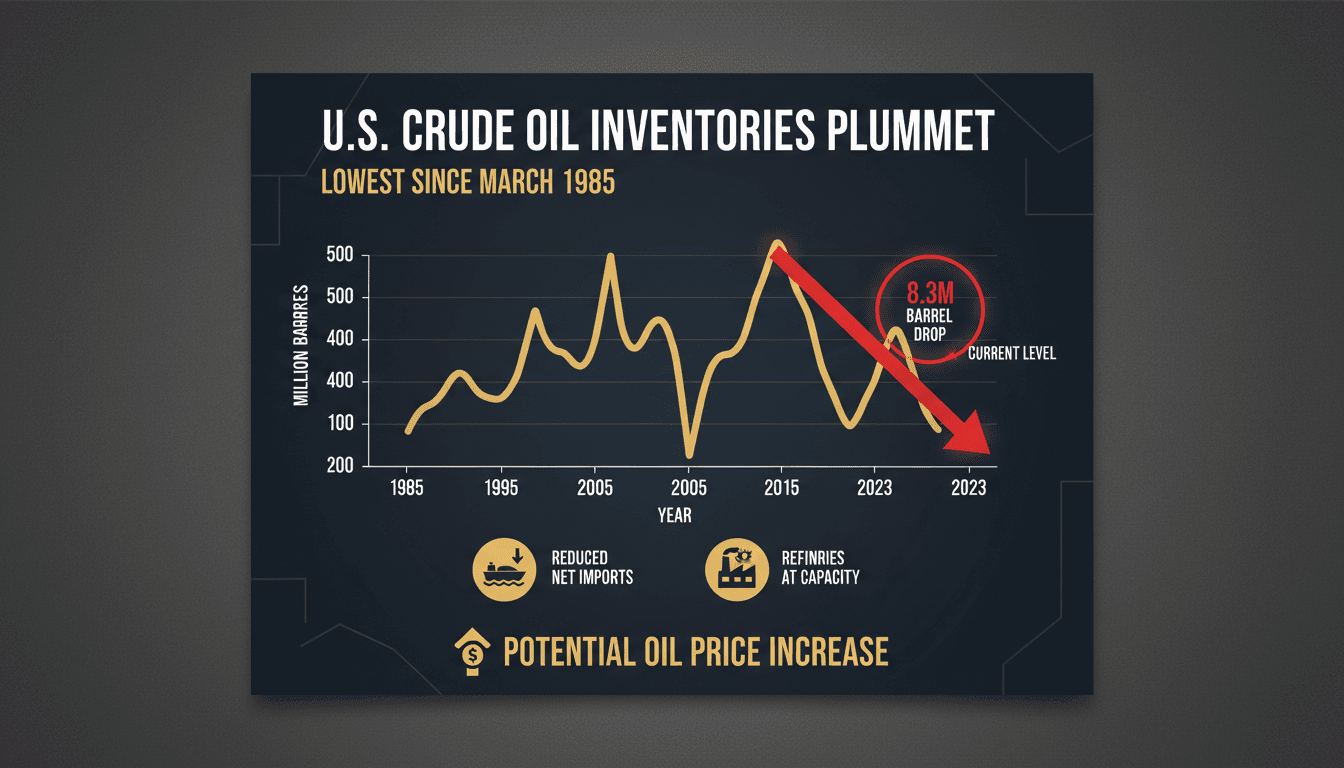
Here's what it means for you.
The recent decline in U.S. crude oil inventories signals a tightening supply in the market, which could lead to upward pressure on oil prices. As refineries operate at near full capacity, the implications for consumers and businesses could be significant, particularly in energy-dependent sectors. Stakeholders should prepare for potential fluctuations in pricing as the market adjusts to these new inventory levels.
What happened
U.S. crude oil inventories fell by 8.3 million barrels last week, marking a significant drop that exceeded analysts' expectations. This decline has brought stockpiles to their lowest level since March 1985. The decrease is primarily attributed to reduced net imports and refineries operating at nearly full capacity, which has intensified the supply constraints in the market.
The latest figures indicate that commercial crude oil stocks are experiencing a notable contraction. This situation raises concerns about the overall availability of crude oil as demand remains steady. The current inventory levels reflect a critical moment for the U.S. oil market.
The Context
The backdrop to this inventory decline includes a combination of factors affecting both supply and demand dynamics. Reduced net imports have played a crucial role in the shrinking stockpiles, while refineries are maximizing their output to meet ongoing demand. This scenario is particularly significant as it marks the lowest inventory levels seen in nearly four decades.
The implications of these inventory levels extend beyond immediate market reactions. With refineries running near full capacity, stakeholders in the energy sector must navigate the potential for increased oil prices. This situation could impact various industries reliant on stable energy costs, making it a critical point of observation for policymakers and market analysts alike.
Takeaway
As crude oil inventories remain low and refinery operations continue at high capacity, the market may experience tighter supply conditions. This trend could lead to upward pressure on oil prices in the near future, prompting stakeholders to monitor crude oil prices closely. Additionally, further reports on refinery capacity and import levels will be essential in understanding the evolving landscape of the oil market.
In the coming weeks, it will be crucial to watch for any shifts in pricing and supply dynamics as the market adjusts to these new realities. The situation warrants attention from both consumers and businesses that could be affected by rising energy costs.
Markets desk coverage, trading insights, and investor updates.
"WSJ’s markets reporting provides in-depth analysis and context for investors."
— A47 Editor
U.S. Crude Oil Stockpiles Fall More Than Expected
U.S. commercial crude oil stockpiles fell by 8.3 million barrels, exceeding expectations as net imports decreased and refineries operated near full capacity. This decline marks a continuation of a tightening supply in the market, following a previous...
Macro commentary, policy analysis, growth/inflation themes, and global outlooks.
"Contextual macro coverage that complements day-to-day market headlines."
— A47 Editor
US crude inventories drop to lowest level since March 1985
US crude inventories have dropped to their lowest level since March 1985, reflecting a significant decline in available crude oil supplies. This decrease is indicative of tightening market conditions, with inventories falling sharply amid rising fuel...
Oil, metals, and agriculture: supply/demand headlines, OPEC chatter, inventories, and price action.
"Solid tape for energy and metals traders tracking macro and micro catalysts."
— A47 Editor
US crude oil stockpiles drop 8.3 million barrels last week
U.S. crude oil stockpiles have decreased by 8.3 million barrels last week, marking a significant drop that exceeds market expectations. This decline reflects a tightening supply situation as net imports have fallen and refineries are operating at nea...
Key macro releases (CPI, jobs, PMIs), surprise indexes, and market implications.
"Great for data-print awareness and instant read-through to rates and risk assets."
— A47 Editor
Crude Oil Inventories Drop More Than Expected, Impacting Prices
Crude oil inventories in the U.S. have dropped more than expected, with a reported decline of 7.2 million barrels last week, reflecting ongoing fluctuations in supply and demand dynamics within the oil market.