
IEA Revises 2026 Oil Demand Outlook Amid U.S.-Iran Agreement
Here's what it means for you.
The International Energy Agency's recent downgrade of the 2026 oil demand forecast signals a significant shift in the global oil market landscape. As geopolitical tensions ease with a potential U.S.-Iran agreement, the implications for oil supply dynamics could be profound. Stakeholders in the energy sector must prepare for a possible oversupply situation, which could impact pricing and production strategies. This development necessitates close monitoring of both geopolitical events and market responses, as the balance between supply and demand becomes increasingly precarious.
What happened
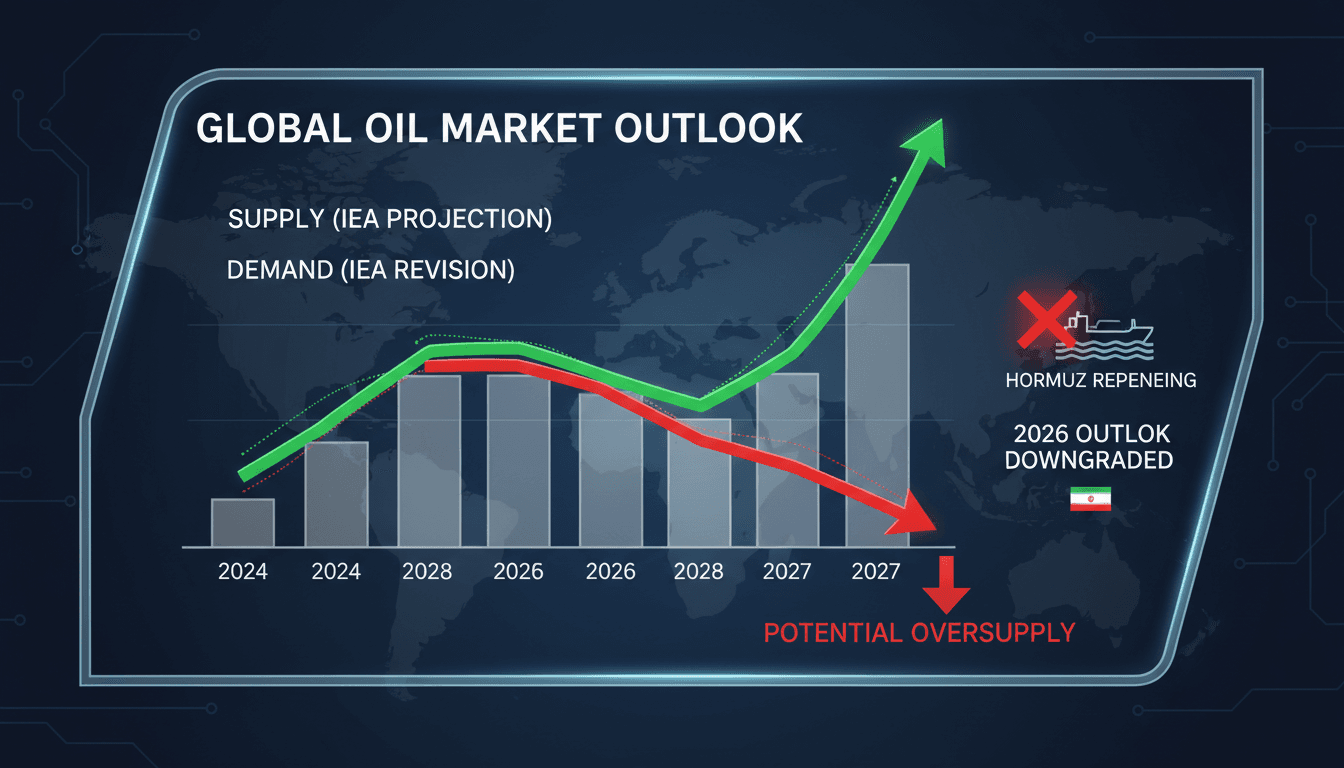
The International Energy Agency (IEA) has revised its oil demand outlook for 2026, indicating a notable decline in expected growth due to weakening global demand. This revision aligns with reports of a potential reopening of the Hormuz Strait following a U.S.-Iran agreement, which is anticipated to lead to a surge in oil supply. The IEA's latest report highlights a significant shift in the oil market, with projections suggesting a surplus in oil supply by 2027.
Despite the potential for increased supply, the IEA warns of a slow recovery in Gulf oil production. This situation raises concerns about the stability of oil prices and the overall health of the market moving forward.
The Context
The backdrop to this revision includes a marked decline in global oil demand growth, which has fallen short of earlier optimistic forecasts. The reopening of the Hormuz Strait is expected to normalize oil flows, a critical factor for global supply chains. The IEA's assessment underscores the importance of geopolitical developments in shaping market dynamics, particularly in the Gulf region.
As the situation evolves, stakeholders must consider the implications of these changes on their operations and strategies. The timing of the U.S.-Iran agreement and its potential impact on oil supply will be crucial in determining the future landscape of the oil market.
Takeaway
Looking ahead, the oil market faces uncertainty, with the potential for oversupply looming if demand does not recover as anticipated. Industry players should closely monitor the impact of the Hormuz Strait reopening on oil prices and supply dynamics. Additionally, further updates from the IEA regarding oil demand forecasts will be essential for understanding market trends.
The interplay between geopolitical developments and market responses will be critical in shaping the future of oil production and pricing strategies. Stakeholders must remain vigilant as these factors unfold.
Global business headlines with AI angles.
"General business outlet that frequently covers AI."
— A47 Editor
IEA Slashes 2026 Oil Demand Outlook Despite U.S.-Iran Agreement To Reopen Hormuz Strait
The International Energy Agency (IEA) has significantly reduced its oil demand forecast for 2026, citing a substantial weakening in global oil demand growth compared to earlier optimistic projections. This adjustment comes despite a recent agreement ...
UAE-based English-language newspaper covering regional politics, economics, and global affairs.
"The National reflects Emirati policy perspectives while maintaining international editorial standards."
— A47 Editor
IEA warns of slow Gulf oil recovery even as Hormuz deal nears
The International Energy Agency (IEA) has issued a warning regarding the slow recovery of oil production in the Gulf region, even as negotiations for a peace deal concerning the Strait of Hormuz progress. This situation reflects ongoing geopolitical ...
Global political, business, and cultural coverage from WSJ international desks.
"The Wall Street Journal offers extensive international reporting with a reputation for financial insight and a center-right editorial stance."
— A47 Editor
Oil Supply Could Far Outstrip Demand Growth if Middle East Peace Deal Holds, IEA Says
The International Energy Agency (IEA) has indicated that oil consumption is expected to decline sharply, potentially leading to a significant oversupply if the recent peace deal in the Middle East holds. This situation arises as flows through the Str...
Regional and international reporting focused on Middle Eastern politics, diplomacy, and economics.
"Asharq Al-Awsat is a Saudi-owned international newspaper reflecting mainstream Gulf political perspectives."
— A47 Editor
IEA Sees Gradual Hormuz Recovery Tipping Into Significant 2027 Surplus
The International Energy Agency (IEA) has projected a gradual recovery in oil supply from the Strait of Hormuz, anticipating a significant surplus by 2027. This outlook reflects ongoing geopolitical tensions that have historically disrupted oil expor...