
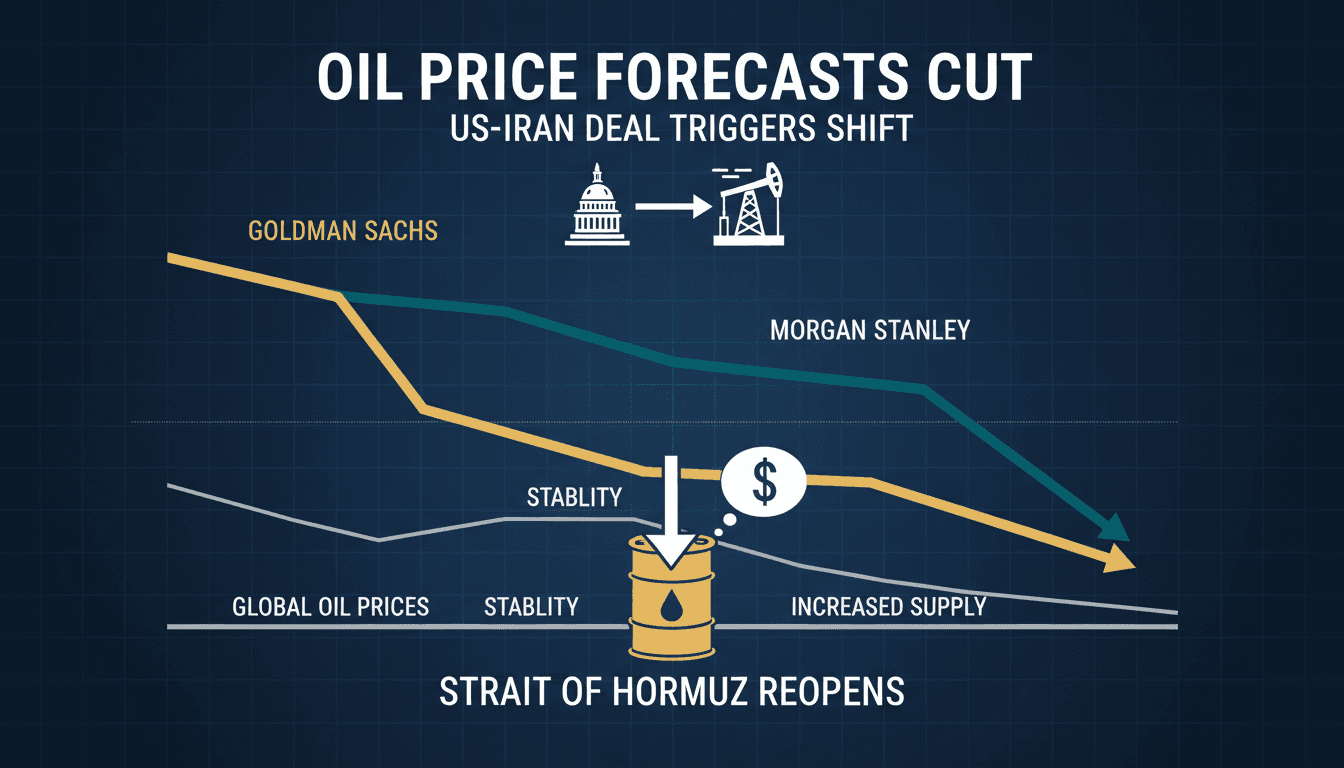
Goldman Sachs and Morgan Stanley Lower Oil Price Forecasts Following US-Iran Deal
Here's what it means for you.
The recent agreement between the US and Iran to reopen the Strait of Hormuz is poised to reshape the oil market significantly. With major financial institutions like Goldman Sachs and Morgan Stanley adjusting their oil price forecasts downward, stakeholders should prepare for potential shifts in pricing dynamics. Increased oil supply from the region could lead to a more stable market, impacting everything from consumer prices to energy policy. As these changes unfold, businesses and investors will need to monitor the evolving geopolitical landscape closely. The implications of this deal extend beyond immediate price adjustments, potentially influencing long-term energy strategies and market volatility.
What happened
Goldman Sachs and Morgan Stanley have both revised their oil price forecasts downward following a deal between the US and Iran to reopen the Strait of Hormuz. This agreement is expected to significantly increase oil supply in the region, prompting analysts to adjust their projections. The cuts to forecasts specifically target the years 2026 and 2027, reflecting the immediate future of oil pricing amid changing geopolitical conditions.
On June 16, 2026, Goldman Sachs announced its decision to lower oil price forecasts, with Morgan Stanley quickly following suit. This coordinated response from two major financial institutions underscores the anticipated impact of the deal on global oil prices.
The Context
The Strait of Hormuz is a critical chokepoint for global oil supply, making any changes in its operational status highly significant. The reopening of this vital passage is expected to enhance oil production in the region, which could lead to increased supply dynamics. Market analysts are closely watching these developments, as they could stabilize global oil prices and reduce market volatility.
The agreement between the US and Iran comes at a time when geopolitical tensions have been high, making this deal a pivotal moment for oil markets. Stakeholders across the energy sector are keenly aware of the implications, as the potential for increased production could reshape strategies and pricing models.
Takeaway
The reopening of the Strait of Hormuz could lead to a more stable oil market in the coming years, but it also presents new challenges. As the geopolitical landscape evolves, stakeholders should monitor further developments in US-Iran relations and watch for changes in oil production levels from regional producers. These factors will be crucial in determining the future trajectory of oil prices.
In the near term, the potential for higher supply may create more favorable pricing conditions, but market volatility could still persist. Keeping an eye on these dynamics will be essential for businesses and investors alike.
Oil, metals, and agriculture: supply/demand headlines, OPEC chatter, inventories, and price action.
"Solid tape for energy and metals traders tracking macro and micro catalysts."
— A47 Editor
Goldman cuts 2026, 2027 oil price forecasts after deal to reopen Strait of Hormuz
Goldman Sachs has revised its oil price forecasts for 2026 and 2027 downward following an interim agreement to reopen the Strait of Hormuz, a critical maritime route for global oil shipments. This decision reflects the changing dynamics in the oil ma...
Regional and international reporting focused on Middle Eastern politics, diplomacy, and economics.
"Asharq Al-Awsat is a Saudi-owned international newspaper reflecting mainstream Gulf political perspectives."
— A47 Editor
Goldman Sachs Cuts Oil Price Forecasts after US-Iran Deal
Goldman Sachs has revised its oil price forecasts downward following a recent peace agreement between the United States and Iran, which aims to stabilize relations and reopen the strategically important Strait of Hormuz. This deal is seen as a signif...
Global markets, investing, and macroeconomics from a premier financial newsroom.
"Bloomberg is respected for in-depth financial reporting and data-driven analysis."
— A47 Editor
Morgan Stanley Cuts Oil Forecasts as Hormuz Deal Revives Supply
Morgan Stanley has significantly reduced its oil price forecasts for the upcoming quarters, attributing this adjustment to an interim agreement between the United States and Iran aimed at reopening the Strait of Hormuz, a crucial maritime route for o...