
Yemen resumes oil exports after three-year suspension amid ongoing conflict
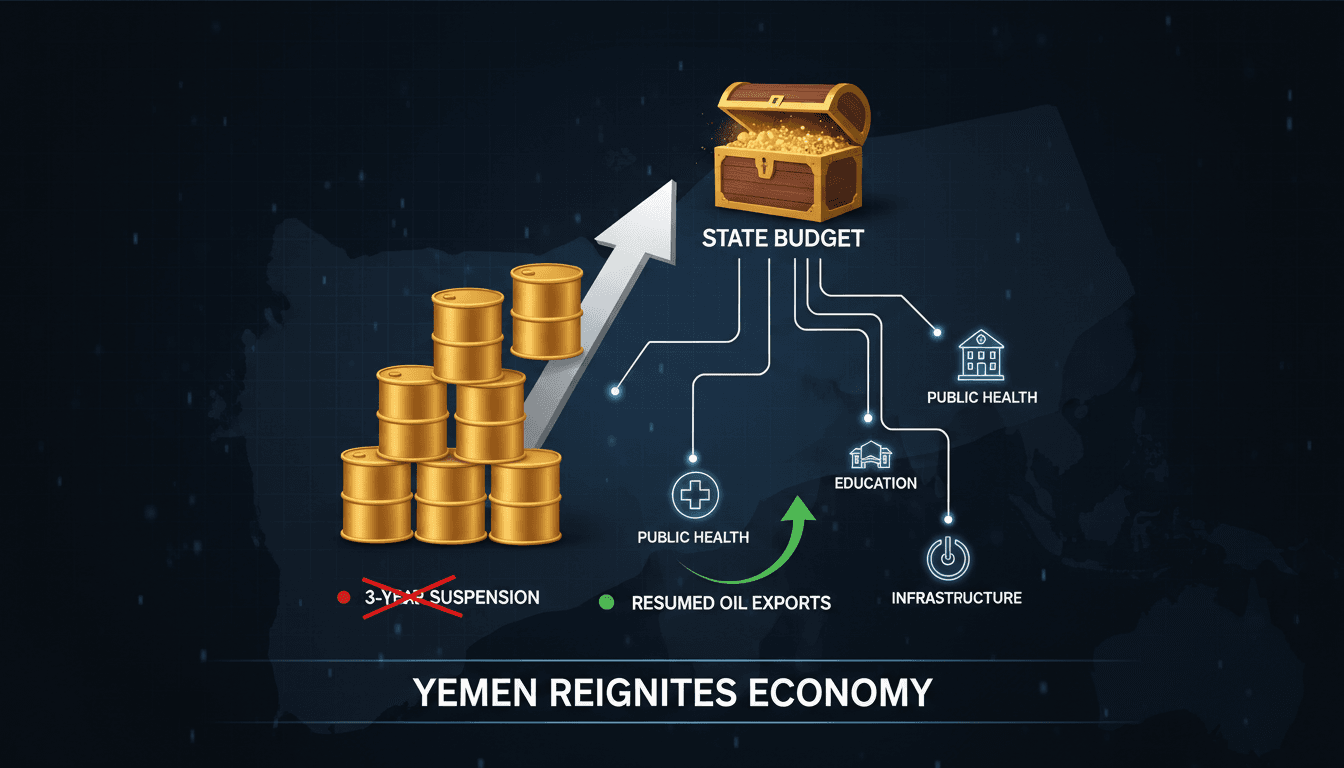
Here's what it means for you.
The resumption of oil exports in Yemen marks a significant step towards economic recovery amid ongoing conflict. This development could enhance government revenues, enabling improved public services and infrastructure. Stakeholders should monitor the impact on the local economy and the potential for increased stability in the region.
What happened
Yemen has officially resumed oil exports after a nearly three-year suspension that began in 2022 due to conflict with the Houthi militia. The announcement was made by Rashad Al-Alimi, Chairman of the Presidential Leadership Council, during a televised address. This move is aimed at generating revenue for the state budget and enhancing essential services for the Yemeni population.
The government plans to allocate the revenues from oil exports to support public sector salaries and improve living conditions. This decision reflects a broader strategy to restore state authority and governance in a country that has faced significant economic challenges due to prolonged conflict.
The Context
The suspension of oil exports was a direct consequence of the ongoing conflict with the Houthi militia, which has severely impacted Yemen's economy. Al-Alimi emphasized the urgent need for national unity to restore state institutions and combat the Houthi insurgency. The resumption of oil exports is seen as a pivotal moment in Yemen's efforts to stabilize its economy and improve governance.
The timing of this announcement is crucial, as it comes at a moment when the Yemeni government seeks to regain control and provide essential services to its citizens. The long-term implications of this decision could lead to a more stable economic environment, although challenges from the Houthi militia remain significant.
Takeaway
The resumption of oil exports could signal a turning point in Yemen's economic landscape, offering a much-needed boost to the state budget. Stakeholders should closely monitor the impact of these exports on the economy and public services. Additionally, the response from the Houthi militia will be critical in determining the sustainability of this development.
As Yemen navigates this complex situation, the focus will be on how effectively the government can utilize oil revenues to foster stability and improve living conditions for its citizens. The ongoing conflict poses challenges, but this move may pave the way for a more unified national effort against the Houthi insurgency.
English-language reporting on Saudi politics, policy, and society.
"Saudi Gazette reflects mainstream Saudi institutional perspectives."
— A47 Editor
Yemen to resume oil exports after nearly three-year suspension
Yemen's Presidential Leadership Council Chairman Rashad Al-Alimi announced the resumption of oil exports after a nearly three-year suspension due to the ongoing conflict with the Houthi militia. The government has initiated measures to restart export...
Arabic-language coverage of international news and geopolitics.
"RT Arabic is a Russian state-funded outlet often criticized for promoting Kremlin-aligned narratives."
— A47 Editor
اليمن.. العليمي يدعو إلى التحام وطني شامل في معركة استعادة مؤسسات الدولة و"إنهاء الانقلاب"
Rashad Alimi, the President of the Presidential Leadership Council in Yemen, has called for a comprehensive national unity in the battle to restore state institutions and to end what he described as the 'coup' in the country. This appeal emphasizes t...
Arabic-language coverage of political affairs and current events.
"Okaz political coverage typically follows mainstream Saudi framing on national and regional affairs."
— A47 Editor
أعلن استئناف تصدير النفط.. العليمي: حان الوقت لإنهاء الانقلاب الحوثي
Dr. Rashad Mohammed Alimi, the President of the Yemeni Presidential Leadership Council, announced the resumption of oil exports starting today, directing revenues to serve citizens across the country, including fulfilling state obligations, paying sa...