
IEA Forecasts Oil Market Surplus Following Potential Middle East Peace Deal
Here's what it means for you.
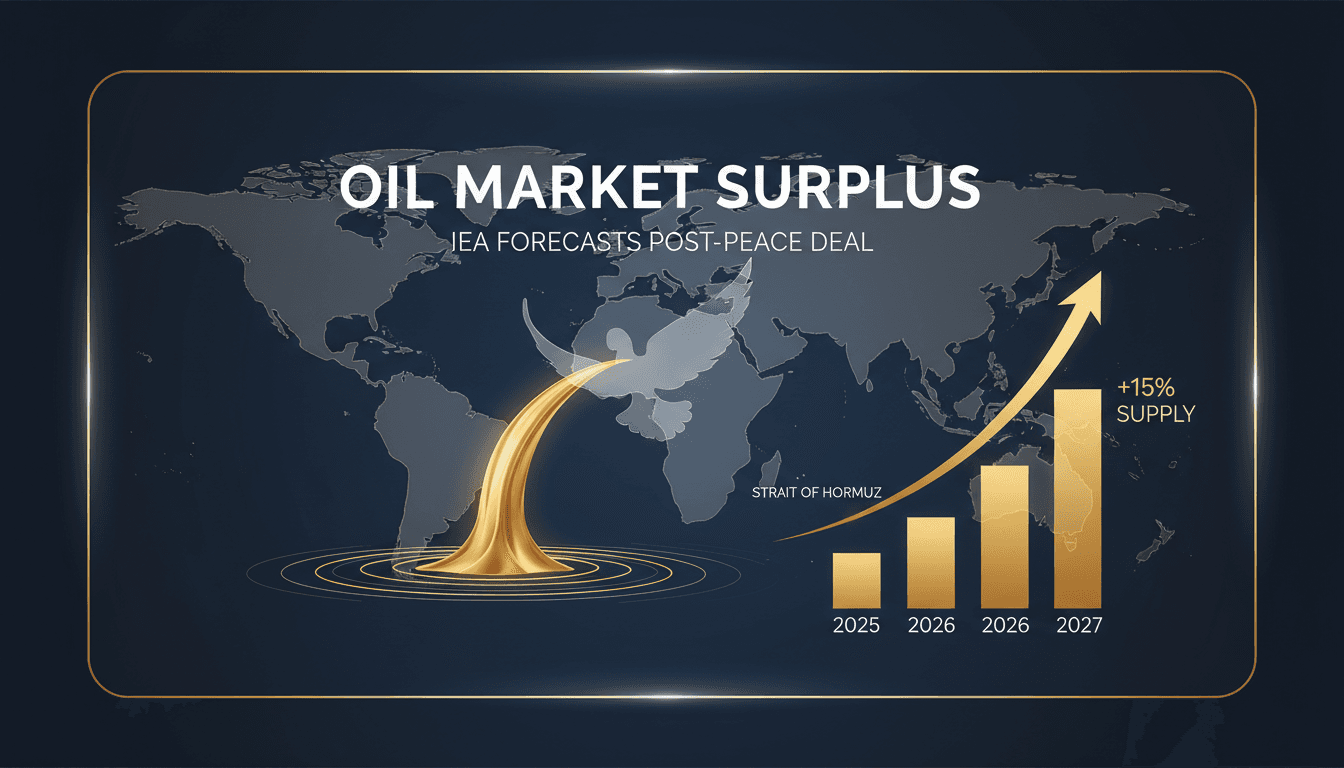
The International Energy Agency's (IEA) forecast indicates a transformative shift in the global oil market, driven by a potential peace agreement in the Middle East. If realized, this deal could lead to the reopening of the Strait of Hormuz, significantly impacting oil supply dynamics. Stakeholders in the energy sector should prepare for a potential oversupply scenario, which may influence pricing and strategic planning. As countries adapt to increased oil production levels, the implications for energy policies and market strategies will be profound. The anticipated surplus by 2027 could reshape how nations approach energy security and resource management.
What happened
The IEA has predicted a substantial surplus in global oil supply, contingent upon a potential peace deal in the Middle East. This forecast is particularly linked to the anticipated reopening of the Strait of Hormuz, a vital chokepoint for oil production that has faced significant disruptions due to recent conflicts. The agency estimates that global oil supply could increase by 8 million barrels per day next year, while demand is expected to rise by only 2 million barrels.
The potential peace agreement between Washington and Tehran could facilitate the lifting of U.S. sanctions, allowing for a full resumption of Iranian oil exports. This development is poised to dramatically alter the current landscape of oil production and consumption.
The Context
The Strait of Hormuz has been a critical artery for global oil transport, with over 14 million barrels per day passing through it. Its closure has led to unprecedented disruptions in oil supplies, marking one of the largest crises in the history of the oil market. The IEA's report suggests that the reopening of this strategic passage could lead to a gradual recovery in oil production, significantly impacting global supply levels.
The geopolitical dynamics surrounding the Middle East, particularly the relationship between the U.S. and Iran, play a crucial role in this scenario. A successful peace deal could stabilize supply chains and encourage countries to replenish their depleted reserves, fundamentally reshaping energy strategies worldwide.
Takeaway
Looking ahead, the oil market's trajectory will depend heavily on the developments surrounding the peace agreement between the U.S. and Iran. Stakeholders should closely monitor changes in oil production levels from Gulf countries as sanctions are lifted and supply chains stabilize. The IEA's forecast underscores the importance of geopolitical stability in determining future market conditions.
As the situation evolves, the potential for a significant surplus in oil supply by 2027 could lead to a more balanced market, but uncertainties regarding the implementation and longevity of such agreements remain. The energy sector must remain agile to adapt to these changing dynamics.
UAE-based English-language newspaper covering regional politics, economics, and global affairs.
"The National reflects Emirati policy perspectives while maintaining international editorial standards."
— A47 Editor
IEA warns of slow Gulf oil recovery even as Hormuz deal nears
The International Energy Agency (IEA) has issued a warning regarding the slow recovery of oil production in the Gulf region, even as negotiations for a peace deal concerning the Strait of Hormuz progress. This situation reflects ongoing geopolitical ...
Sports reporting with a focus on Saudi and regional competitions.
"Okaz sports coverage is broad and audience-friendly, with strong attention to Saudi teams and leagues."
— A47 Editor
وكالة الطاقة: سوق النفط ستتعافى تدريجيّاً من آثار إغلاق مضيق هرمز
The International Energy Agency has projected that the oil market will gradually recover from the impacts of the closure of the Strait of Hormuz, caused by ongoing conflicts in the Middle East. The agency's report indicates that an agreement between ...
Pan-Arab news coverage spanning politics, business, sports, and regional affairs.
"Asharq Al-Awsat reflects a broad Arab editorial perspective with strong attention to regional geopolitics."
— A47 Editor
وكالة الطاقة الدولية تتوقع تعافياً تدريجياً لسوق النفط بعد انتهاء الحرب
The International Energy Agency announced on Wednesday that the global oil market is expected to gradually recover from the impacts of the closure of the Strait of Hormuz, with a significant surplus anticipated by 2027.
Global political, business, and cultural coverage from WSJ international desks.
"The Wall Street Journal offers extensive international reporting with a reputation for financial insight and a center-right editorial stance."
— A47 Editor
Oil Supply Could Far Outstrip Demand Growth if Middle East Peace Deal Holds, IEA Says
The International Energy Agency (IEA) has indicated that oil consumption is expected to decline sharply, potentially leading to a significant oversupply if the recent peace deal in the Middle East holds. This situation arises as flows through the Str...
Regional and international reporting focused on Middle Eastern politics, diplomacy, and economics.
"Asharq Al-Awsat is a Saudi-owned international newspaper reflecting mainstream Gulf political perspectives."
— A47 Editor
IEA Sees Gradual Hormuz Recovery Tipping Into Significant 2027 Surplus
The International Energy Agency (IEA) has projected a gradual recovery in oil supply from the Strait of Hormuz, anticipating a significant surplus by 2027. This outlook reflects ongoing geopolitical tensions that have historically disrupted oil expor...