
Gold prices decline after reaching two-week high amid Middle East tensions
Here's what it means for you.
The recent decline in gold prices signals a shift in market dynamics influenced by geopolitical tensions and rising oil prices. Investors should remain vigilant as these factors can lead to continued volatility in the gold market. Understanding these trends is crucial for making informed decisions in the precious metals sector. As gold prices fluctuate, the implications for traders and investors could be significant, particularly in the context of ongoing global events. Monitoring these developments will be essential for anticipating future market movements.
What happened
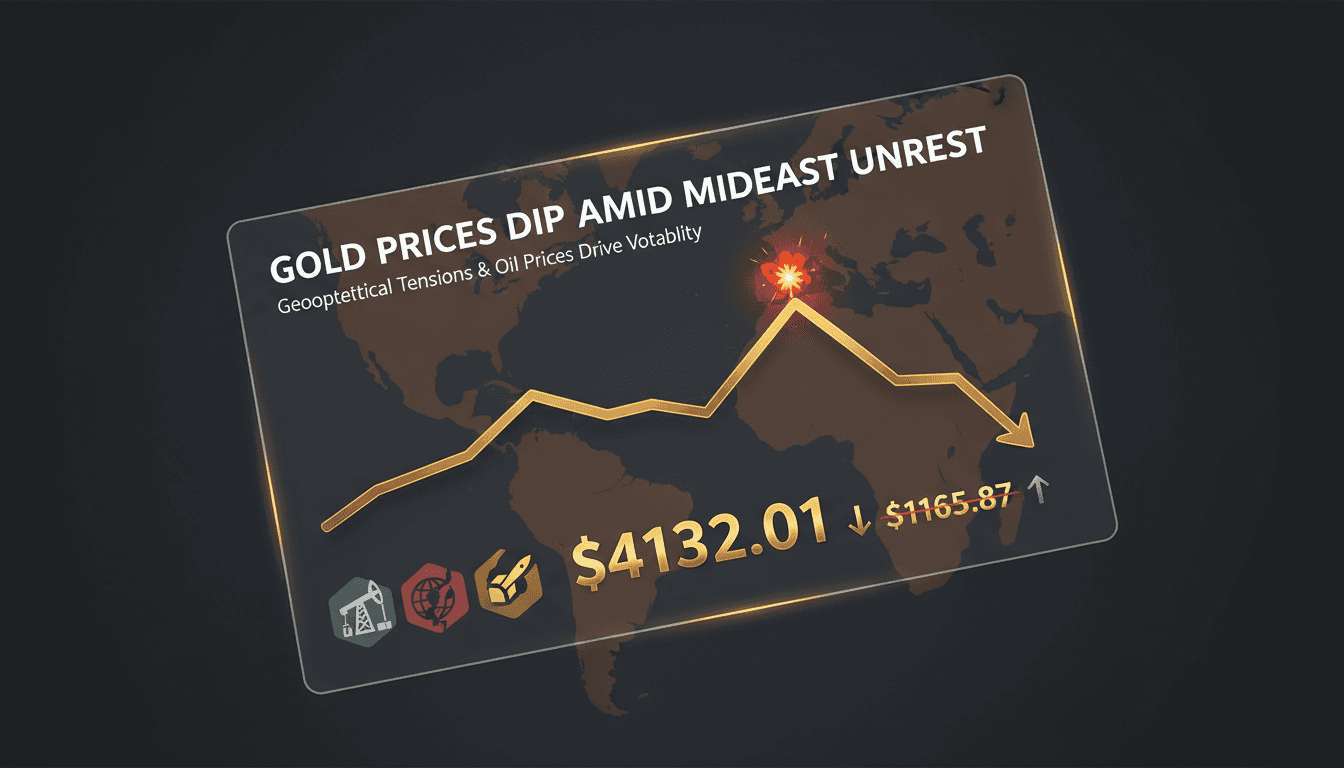
Gold prices have retreated from a two-week high, settling at $4,132.01 per ounce after peaking at $4,165.87. This peak was the highest price for gold since July 7, indicating notable market fluctuations. The decline in gold prices is attributed to escalating tensions in the Middle East and rising oil prices, which are reshaping market dynamics.
Other precious metals, including silver, platinum, and palladium, experienced slight increases during this period. Silver rose by 0.3% to $59.90 per ounce, while platinum and palladium saw gains of 0.7% and 0.8%, respectively. This mixed performance among precious metals reflects a complex market environment.
The Context
The current volatility in the gold market is largely driven by external factors such as geopolitical tensions and fluctuating oil prices. As tensions in the Middle East escalate, investors are increasingly cautious, which can lead to significant shifts in commodity prices. The recent peak in gold prices highlights the market's sensitivity to global events and investor sentiment.
The interplay between oil prices and gold is particularly noteworthy, as rising oil costs often correlate with increased demand for gold as a safe-haven asset. This relationship underscores the importance of monitoring developments in both sectors. As geopolitical factors continue to evolve, the implications for the gold market remain significant.
Takeaway
Looking ahead, market participants should keep a close eye on developments in the Middle East, as these events could further impact gold prices. Additionally, tracking oil price trends will be crucial, given their correlation with gold market movements. The ongoing volatility suggests that investors and traders may need to adapt their strategies in response to these external influences.
As geopolitical tensions persist and commodity prices fluctuate, the gold market is likely to remain dynamic. Understanding these trends will be essential for navigating the complexities of the precious metals market in the coming weeks.
Sports reporting with a focus on Saudi and regional competitions.
"Okaz sports coverage is broad and audience-friendly, with strong attention to Saudi teams and leagues."
— A47 Editor
الذهب يتراجع عن أعلى مستوى في أسبوعين
Gold prices have retreated from a two-week high, settling at $4,132.01 per ounce amid rising tensions in the Middle East and increasing oil prices. The price had peaked at $4,165.87 in the previous session, marking the highest level since July 7. Add...
Arabic-language economic and business reporting with strong UAE market relevance.
"Emarat Al Youm business coverage often centers UAE property, banking, consumer issues, and economic policy."
— A47 Editor
تراجع الذهب عن أعلى مستوياته خلال أسبوعين مع ارتفاع النفط تراجع الذهب عن أعلى مستوياته خلال أسبوعين مع ارتفاع النفط
The price of gold has declined from its highest levels in two weeks, recorded in the previous session, amid rising tensions in the Middle East. This shift indicates a reaction to geopolitical instability, which often impacts commodity prices.
Jordanian news and regional updates.
"Roya News is a Jordanian outlet focused on breaking news and local affairs."
— A47 Editor
الذهب يتماسك فوق 4,130 دولاراً للأونصة بعد موجة جني أرباح طفيفة
On Thursday, gold futures for August 2026 experienced a slight decline after a brief profit-taking wave, maintaining a price above $4,130 per ounce. This indicates a stabilization in the gold market despite recent fluctuations.