
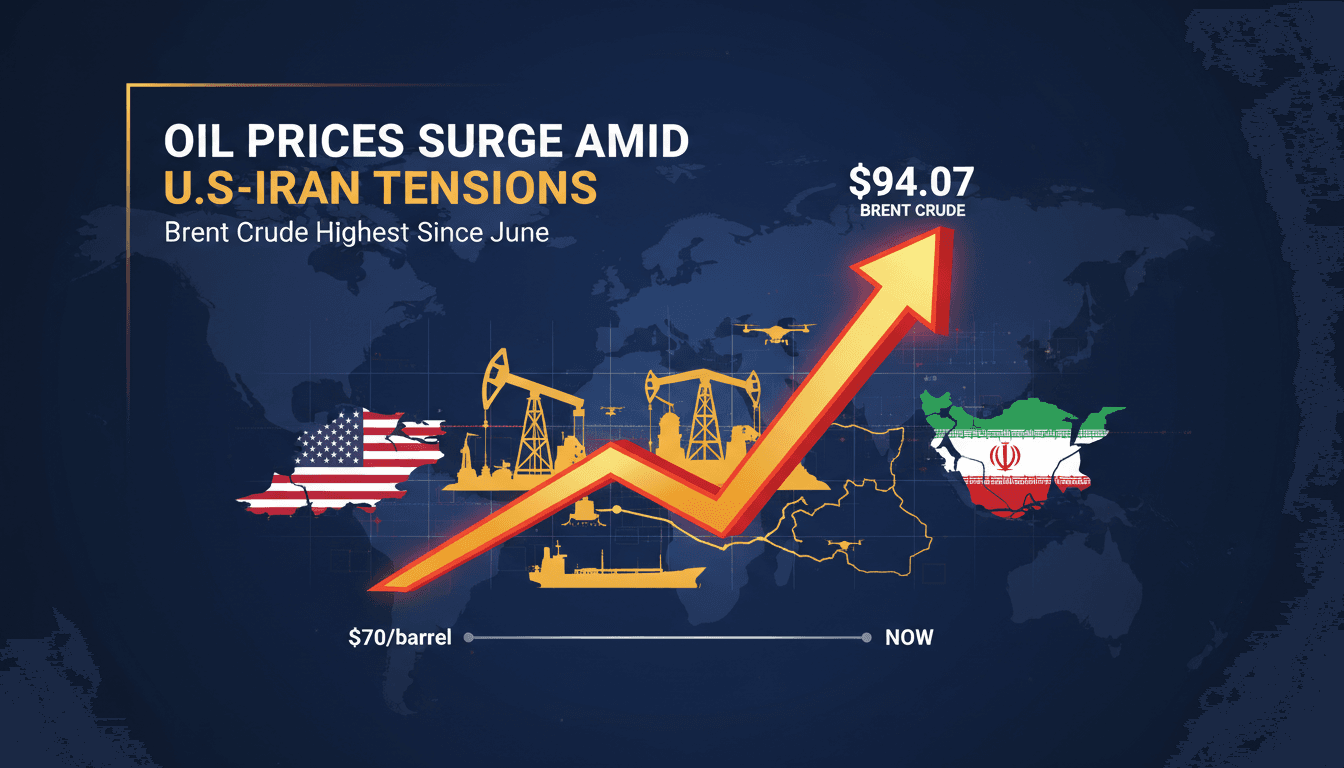
Brent crude oil prices surge to highest level since June amid U.S.-Iran tensions
Here's what it means for you.
The recent surge in Brent crude oil prices to $94.07 per barrel signals heightened geopolitical risks that could impact global markets. Investors and policymakers should brace for potential volatility in oil prices as tensions between the U.S. and Iran escalate. This situation may lead to increased costs for consumers and businesses reliant on oil, affecting everything from transportation to manufacturing. As military tensions in the Strait of Hormuz rise, the implications for oil supply stability become more pronounced. Stakeholders across various sectors must remain vigilant as developments unfold, potentially reshaping market dynamics.
What happened
Brent crude oil prices have risen significantly, reaching $94.07 per barrel, the highest level since June. This increase is attributed to escalating military tensions between the United States and Iran, raising concerns about potential disruptions in oil supply. The price surge of $3.06 on the latest trading day reflects a market reaction to these geopolitical developments.
This rise marks the first time Brent crude has surpassed $90 per barrel in over a month. Analysts are closely monitoring the situation, as the increase in prices indicates broader concerns regarding global oil supply stability.
The Context
The Strait of Hormuz is a critical chokepoint for global oil transportation, making any military tensions in the region particularly significant. The recent spike in prices is a direct response to heightened military actions, which have raised alarms about the security of oil shipments. As the U.S. and Iran navigate their complex relationship, the potential for further escalation remains a concern for market participants.
The last time Brent crude was above $90 was over a month ago, highlighting the volatility that can arise from geopolitical tensions. Stakeholders, including governments and energy companies, are now faced with the challenge of adapting to an uncertain market environment.
Takeaway
Looking ahead, the ongoing geopolitical tensions between the U.S. and Iran are likely to continue influencing oil prices in the near future. Market analysts will be watching closely for any developments that could signal changes in oil supply chain dynamics. If military actions escalate or if supply disruptions are anticipated, further increases in oil prices could occur.
Investors and consumers alike should prepare for potential fluctuations in energy costs as the situation evolves. Monitoring U.S.-Iran relations will be crucial for understanding the broader implications for the oil market.
Arabic-language economic and business reporting with strong UAE market relevance.
"Emarat Al Youm business coverage often centers UAE property, banking, consumer issues, and economic policy."
— A47 Editor
العقود الآجلة لخام برنت تصعد 3.06 دولارات لتصل إلى 94.07 دولاراً للبرميل العقود الآجلة لخام برنت تصعد 3.06 دولارات لتصل إلى 94.07 دولاراً للبرميل
Brent crude futures rose by $3.06 to reach $94.07 per barrel, marking the highest settlement since June 11. This increase reflects a recovery in oil prices, influenced by regional developments and supply constraints that have been affecting the marke...
Arabic-language coverage of international news and geopolitics.
"RT Arabic is a Russian state-funded outlet often criticized for promoting Kremlin-aligned narratives."
— A47 Editor
خام برنت يتجاوز 90 دولارا لأول مرة منذ أكثر من شهر
The price of Brent crude oil has surpassed $90 per barrel for the first time in over a month, driven by escalating tensions between the United States and Iran, along with concerns over potential supply disruptions.
Jordanian news and regional updates.
"Roya News is a Jordanian outlet focused on breaking news and local affairs."
— A47 Editor
قفزة في أسعار نفط برنت لتتجاوز 90 دولارا وسط تصاعد الأعمال العسكرية في مضيق هرمز
Brent crude oil prices surged by approximately 4%, surpassing $90 per barrel, amid escalating military activities in the Strait of Hormuz. This increase reflects heightened tensions in a critical shipping route for global oil supplies.