
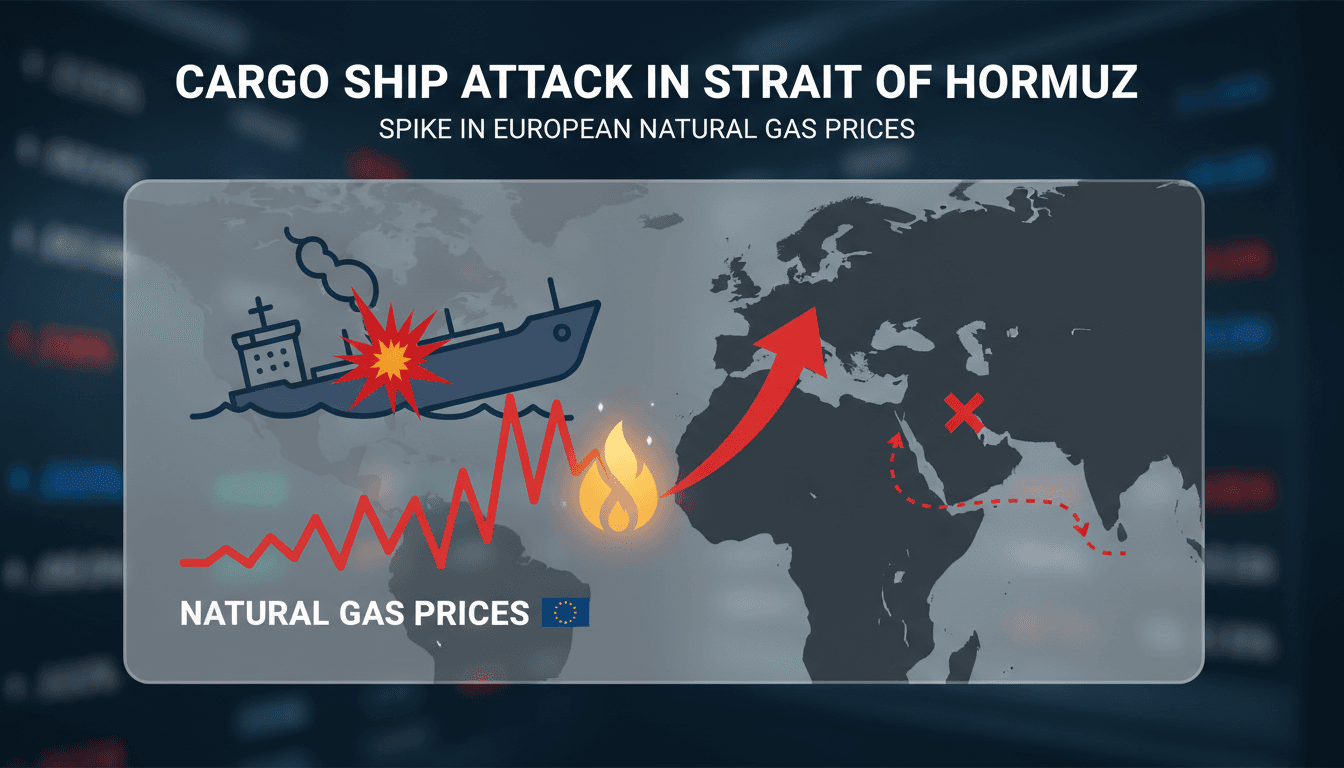
Cargo Ship Attack in Strait of Hormuz Causes Spike in European Natural Gas Prices
Here's what it means for you.
The recent attack on a cargo ship in the Strait of Hormuz has significant implications for European natural gas prices, which have already shown volatility due to geopolitical tensions. As the region is a crucial transit point for energy supplies, any disruption raises concerns among traders and policymakers alike. The temporary spike in prices reflects the market's sensitivity to security issues in key shipping lanes. As traffic in the Strait begins to normalize, traders will be closely monitoring developments that could further influence price stability. The situation underscores the interconnectedness of global energy markets and the importance of maritime security.
What happened
An attack on a cargo ship in the Strait of Hormuz has led to fluctuations in European natural gas prices. This incident has raised alarms regarding the safety of maritime transit in a region that is vital for global energy supplies. Following the attack, gas prices experienced a temporary increase as traders reacted to the heightened risks.
As the situation evolves, maritime traffic in the Strait is beginning to normalize, which has contributed to a stabilization of prices. However, the initial spike serves as a reminder of the fragility of energy markets in the face of geopolitical events.
The Context
The Strait of Hormuz is a critical waterway for global oil and gas shipments, accounting for approximately 20% of the world's oil trade. Recent attacks in the region have intensified fears about the security of maritime routes, prompting market reactions that have been mixed. While prices initially rose following the cargo ship attack, they have shown signs of stabilization as transit begins to return to normal levels.
The ongoing geopolitical tensions in the area are a significant concern for traders and policymakers, as they can directly impact energy prices and supply chains. The situation highlights the importance of maintaining secure shipping lanes for the stability of global energy markets.
Takeaway
Traders will continue to monitor developments in the Strait of Hormuz closely, as any further military actions or changes in global demand for natural gas could significantly influence prices. The outlook for European natural gas prices remains uncertain, heavily influenced by geopolitical dynamics and market reactions.
As the region stabilizes, the focus will shift to how these events shape future energy policies and market strategies. The interplay between security concerns and energy supply will remain a critical factor for stakeholders in the coming weeks.
Global markets, investing, and macroeconomics from a premier financial newsroom.
"Bloomberg is respected for in-depth financial reporting and data-driven analysis."
— A47 Editor
European Natural Gas Edges Higher as Traders Monitor Hormuz Risk
European natural gas prices have increased slightly following an attack on a cargo ship in the Strait of Hormuz, raising concerns about the safety of this vital maritime route. Traders are closely monitoring the situation as geopolitical tensions esc...
Oil, metals, and agriculture: supply/demand headlines, OPEC chatter, inventories, and price action.
"Solid tape for energy and metals traders tracking macro and micro catalysts."
— A47 Editor
European gas slips as Hormuz transit close to normalization
European gas prices have declined as the transit through the Strait of Hormuz approaches normalization, easing previous market tensions. This shift reflects a stabilization in energy supply routes that are critical for European gas imports.
Oil, metals, and agriculture: supply/demand headlines, OPEC chatter, inventories, and price action.
"Solid tape for energy and metals traders tracking macro and micro catalysts."
— A47 Editor
Europe gas extends fall as Hormuz traffic ramps up
European gas prices have continued to decline as traffic through the Strait of Hormuz increases, reflecting ongoing geopolitical developments that influence energy markets. This situation has led to a cautious market sentiment as traders assess the i...