
Gold prices stabilize amid fragile Israel-Iran ceasefire and inflation concerns
Here's what it means for you.
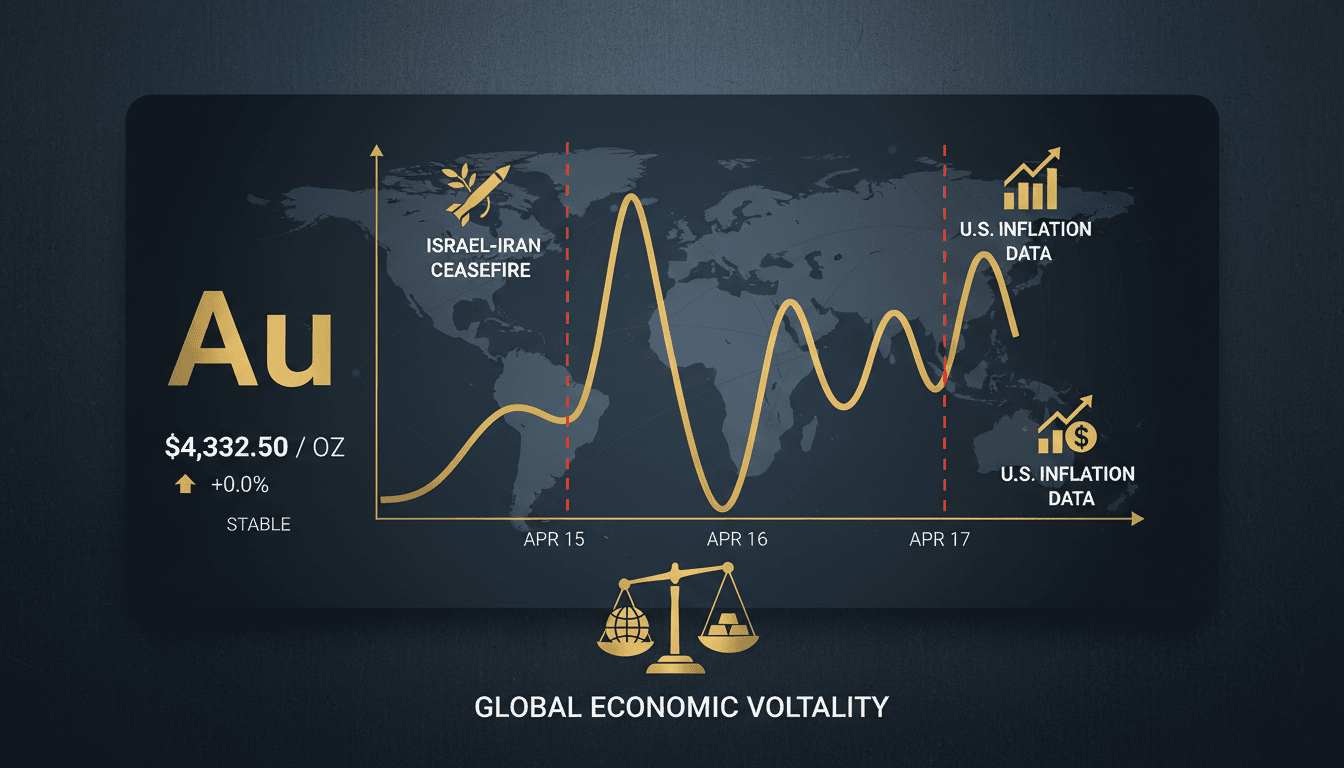
The stabilization of gold prices at $4,332.50 per ounce reflects a delicate balance between geopolitical tensions and economic indicators. As traders assess the fragile ceasefire between Israel and Iran, their focus on U.S. consumer inflation data could signal future interest rate adjustments. This interplay suggests that market participants must remain vigilant as both geopolitical and economic factors continue to evolve. The current situation indicates that gold may serve as a safe haven for investors amid uncertainty. However, fluctuations in inflation expectations could lead to volatility in the gold market, impacting investment strategies.
What happened
Gold prices have remained steady at $4,332.50 per ounce as traders evaluate the ongoing situation in the Middle East, particularly the fragile ceasefire between Israel and Iran. This stability comes after a nearly 2% drop in gold prices earlier, driven by traders reacting to inflation expectations. The market is currently balancing these geopolitical tensions with economic indicators that could influence future monetary policy.
As traders monitor the implications of the ceasefire, they are also keeping a close eye on U.S. consumer inflation data. This data is crucial as it may provide insights into potential interest rate changes that could affect gold prices moving forward.
The Context
The fragile ceasefire between Israel and Iran is a significant factor influencing gold prices, as geopolitical tensions often drive investors toward safe-haven assets like gold. The ongoing evaluations of this ceasefire highlight the uncertainty in the region, which can lead to market volatility. Additionally, traders are closely watching U.S. consumer inflation data, as it plays a critical role in shaping monetary policy and interest rate decisions.
Concerns about inflation have been prevalent, with recent market reactions indicating that traders are sensitive to economic indicators. The interplay between geopolitical events and economic data is crucial for understanding the current dynamics in the gold market.
Takeaway
Market participants will continue to monitor upcoming U.S. consumer inflation data releases and further developments regarding the Israel-Iran ceasefire. These factors are likely to influence gold price movements in the near future. As the situation evolves, the gold market may experience continued volatility, reflecting the ongoing interplay between geopolitical tensions and economic indicators.
Investors should remain alert to how these developments could impact their strategies, particularly in light of potential interest rate adjustments that may arise from inflation data.
Oil, metals, and agriculture: supply/demand headlines, OPEC chatter, inventories, and price action.
"Solid tape for energy and metals traders tracking macro and micro catalysts."
— A47 Editor
Gold falls nearly 2% as traders eye U.S. consumer inflation data for rate cues
Gold prices fell nearly 2% as traders focused on upcoming U.S. consumer inflation data, which is expected to influence Federal Reserve interest rate decisions. This decline reflects ongoing market volatility amid geopolitical tensions and economic in...
Pan-Arab news coverage spanning politics, business, sports, and regional affairs.
"Asharq Al-Awsat reflects a broad Arab editorial perspective with strong attention to regional geopolitics."
— A47 Editor
الذهب يستقر مع تقييم الهدنة بين إسرائيل وإيران وتوقعات بتأجيل خفض الفائدة لـ2027
Gold prices stabilized during trading on Tuesday as market participants assess the fragile ceasefire agreement between Israel and Iran. The ongoing evaluation reflects concerns over the durability of the truce and its potential impact on regional sta...
Pan-Arab political news and analysis.
"Al-Quds Al-Arabi is a London-based Arabic newspaper known for political coverage."
— A47 Editor
الذهب يستقر مع تقييم المتعاملين لهدنة إسرائيل وإيران واحتمالات التضخم
Gold prices stabilized on Tuesday as traders assessed the fragile ceasefire between Israel and Iran, while also monitoring broader Middle Eastern conflict developments and inflation concerns. Spot gold remained steady at $4,332.50 per ounce as of 02:...