
UK government borrowing reaches £24.3 billion in April 2026
Here's what it means for you.
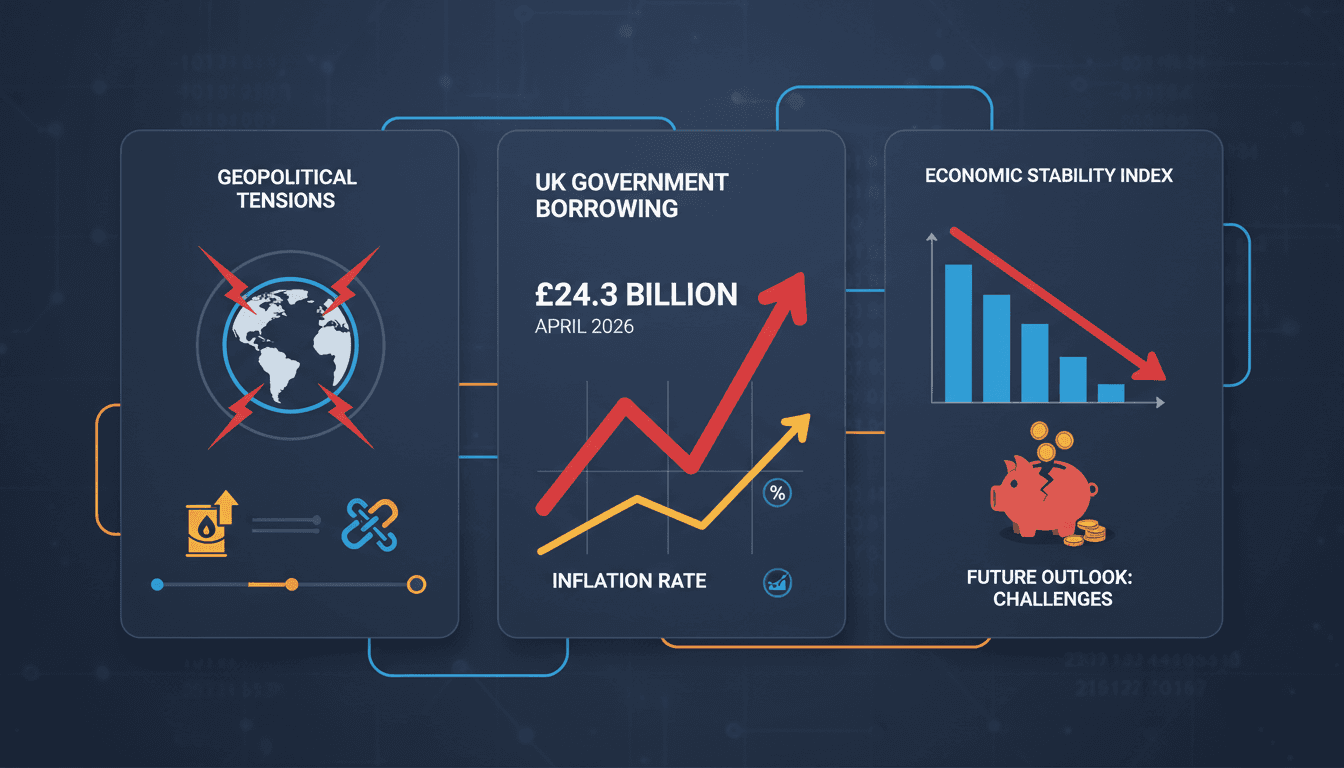
The UK's public sector net borrowing has surged to £24.3 billion in April 2026, a figure that surpasses expectations and highlights the ongoing economic challenges facing the nation. This increase is primarily driven by rising inflation and geopolitical tensions, which are straining public finances and may lead to further borrowing in the future. Stakeholders, including policymakers and consumers, will need to navigate this complex financial landscape as the implications of high borrowing levels unfold. As inflation continues to impact government spending and consumer behavior, the economic outlook remains uncertain. The combination of increased costs for pensions and benefits, alongside declining retail sales, signals a potential shift in the economic environment that could affect various sectors.
What happened
In April 2026, the UK government borrowed £24.3 billion, marking the highest level of borrowing since the onset of the COVID-19 pandemic. This figure is £4.9 billion higher than the same month in the previous year, indicating a significant increase in government debt. The rise in borrowing is largely attributed to escalating inflation, which has driven up costs for essential services such as pensions and benefits.
Additionally, geopolitical tensions, particularly those related to the Middle East, are contributing to economic uncertainty. As a result, the UK faces challenges in managing its public finances, with interest payments on debt reaching £10.3 billion due to rising bond market costs.
The Context
The current financial landscape in the UK is under considerable strain, driven by inflationary pressures and geopolitical instability. Rising costs are impacting government spending, particularly in areas such as social welfare, which is crucial for many citizens. The decline in retail sales, as consumers cut back on spending due to higher fuel prices, further complicates the economic recovery efforts.
The situation is exacerbated by ongoing geopolitical tensions that create an unpredictable environment for economic stability. As these factors converge, the implications for public finances become increasingly significant, raising concerns about the sustainability of the UK's fiscal policies.
Takeaway
Looking ahead, the UK may continue to experience high levels of borrowing as inflation persists and geopolitical tensions remain unresolved. Monitoring inflation trends will be crucial for understanding their impact on government finances and public spending. Additionally, developments in international relations could further influence economic stability, necessitating close attention from policymakers and stakeholders alike.
As the situation evolves, the potential for continued borrowing raises questions about the long-term sustainability of the UK's public finances. Stakeholders should remain vigilant as they navigate these challenges in the coming months.
UK and international business news, economics, and corporate coverage.
"The Guardian’s business section covers finance and markets with a progressive editorial tone."
— A47 Editor
UK bond yields set for biggest weekly drop since 2024; retail sales fall as drivers cut back on fuel - business live
UK bond yields are poised for their largest weekly decline since 2024, coinciding with a drop in retail sales as consumers reduce fuel purchases amid rising oil prices, which have increased by 3.3% to $105.92 per barrel.
Corporate news, economic trends, and markets with UK and global scope.
"BBC News is widely regarded as reputable and impartial, with a public service mandate."
— A47 Editor
Borrowing in April hit highest level since Covid
In April, borrowing levels in the UK reached their highest point since the onset of the Covid pandemic, exceeding expectations amid a backdrop of rising fuel prices and declining retail sales.
United Kingdom-focused news including local politics, business, and social issues.
"BBC News is widely regarded as a reputable international news organization, known for its impartial tone and public service mandate."
— A47 Editor
Borrowing in April hit highest level since Covid
In April, borrowing levels in the UK reached their highest point since the onset of the Covid pandemic, exceeding expectations amid a backdrop of rising fuel prices and declining retail sales.
UK and international business news, economics, and corporate coverage.
"The Guardian’s business section covers finance and markets with a progressive editorial tone."
— A47 Editor
UK borrows more than forecast in April as inflation adds to benefits bill
The UK government reported a public sector net borrowing of £24.3 billion in April 2026, exceeding forecasts by £4.9 billion, primarily driven by rising inflation that has increased the costs of pensions and benefits. This surge in borrowing coincide...
International coverage from The Guardian's global desks.
"The Guardian is known for its progressive editorial stance and in-depth analysis."
— A47 Editor
UK borrowed bigger than forecast £24.3bn in April as inflation adds to benefits bill
The UK government reported a public sector net borrowing of £24.3 billion in April 2026, exceeding forecasts by £4.9 billion, driven by rising inflation that has increased pension and benefits costs. This financial strain comes amid ongoing geopoliti...
Global political, business, and cultural coverage from WSJ international desks.
"The Wall Street Journal offers extensive international reporting with a reputation for financial insight and a center-right editorial stance."
— A47 Editor
U.K. Government Borrowing Rose in April as Interest Payments Jump
The U.K. government reported an increase in borrowing for April, surpassing figures from the previous year, primarily due to a significant rise in interest payments. This trend indicates potential challenges in reducing the budget deficit as inflatio...