
Gold prices surge to two-week high amid easing inflation concerns
Here's what it means for you.
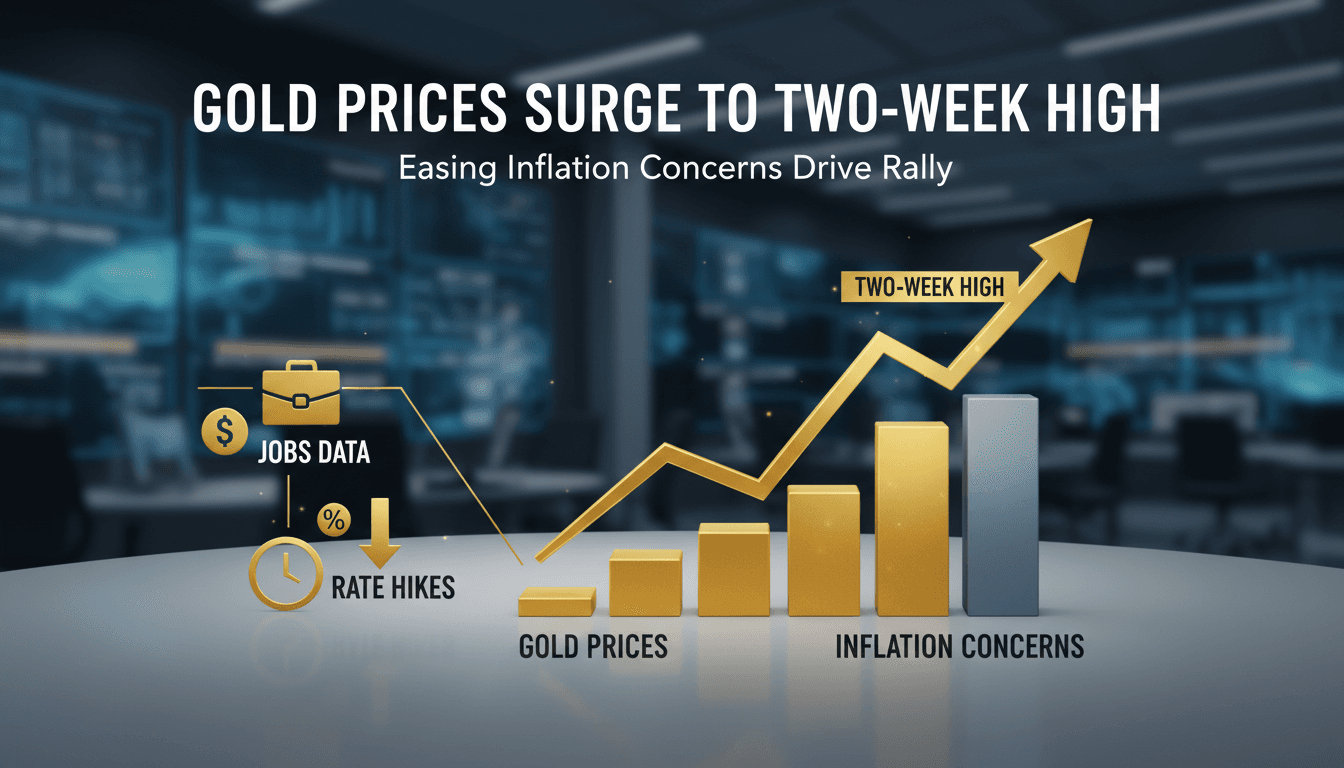
The recent surge in gold prices signals a shift in market sentiment, driven by easing inflation concerns and reduced expectations for interest rate hikes. Investors are increasingly turning to precious metals as a safe haven amidst fluctuating economic indicators. This trend may indicate a broader reassessment of asset values as the market reacts to changing economic conditions. As gold prices rise, it reflects a growing confidence in the stability of precious metals, which often thrive in low-interest-rate environments. For investors, this could mean a strategic pivot towards gold as a hedge against inflation and economic uncertainty.
What happened
Gold futures have reached their highest level since June 22, climbing to $4,186.70 per ounce, driven by softer US jobs data and diminished concerns over interest rate hikes. This increase marks a significant rebound in gold prices, reflecting a shift in investor sentiment towards precious metals. The recent US jobs report, which was weaker than expected, has reinforced expectations for a less aggressive monetary policy from the Federal Reserve.
As a result, gold has become more attractive to investors, who are responding to the changing economic landscape. The rise in gold prices is indicative of a broader trend where precious metals regain their appeal amidst ongoing inflation concerns.
The Context
Gold typically benefits from lower interest rates, as they decrease the opportunity cost of holding non-yielding assets. The recent softening of US jobs data has led to a more favorable outlook for gold, as expectations for interest rate hikes diminish. This shift is crucial for market dynamics, as it reflects investor confidence in gold as a stable investment during uncertain economic times.
Additionally, geopolitical factors and upcoming economic data will play a significant role in shaping market sentiment. Investors are closely monitoring these developments to gauge their potential impact on gold prices and overall market stability.
Takeaway
The outlook for gold remains positive as long as inflation concerns persist and interest rate hikes are kept at bay. Investors should keep an eye on upcoming US economic data, which could provide further insights into interest rate policies. Additionally, geopolitical developments, particularly in the Middle East, may influence market sentiment and investment strategies.
As the market continues to evolve, gold may attract further investment, reinforcing its status as a safe haven asset. The interplay between economic indicators and geopolitical events will be critical in determining the future trajectory of gold prices.
Markets desk coverage, trading insights, and investor updates.
"WSJ’s markets reporting provides in-depth analysis and context for investors."
— A47 Editor
Gold Rebounds to Highest Level in Two Weeks
Gold futures have rebounded to their highest level since June 22, settling at $4,112.70, as analysts attribute this rise to easing inflation concerns linked to ongoing peace efforts in the Middle East.
Business, markets, economy, and corporate news with strong UAE and regional relevance.
"Emirates 24|7 business coverage tends to center UAE markets, property, regulation, and regional economic developments."
— A47 Editor
Gold holds near two-week high as softer US jobs data boosts rate-cut hopes
Gold prices have stabilized near a two-week high, trading at approximately $4,174.66 per ounce, following a weaker-than-expected U.S. jobs report that has bolstered expectations for a more cautious approach to interest rate adjustments by the Federal...
Global markets, investing, and macroeconomics from a premier financial newsroom.
"Bloomberg is respected for in-depth financial reporting and data-driven analysis."
— A47 Editor
Gold Steadies After Weekly Gain as Rate-Hike Worries Recede
Gold prices have steadied after achieving their first weekly gain since May, buoyed by a decrease in expectations for interest rate hikes by the US Federal Reserve. This stabilization follows recent economic data that has alleviated inflation concern...