
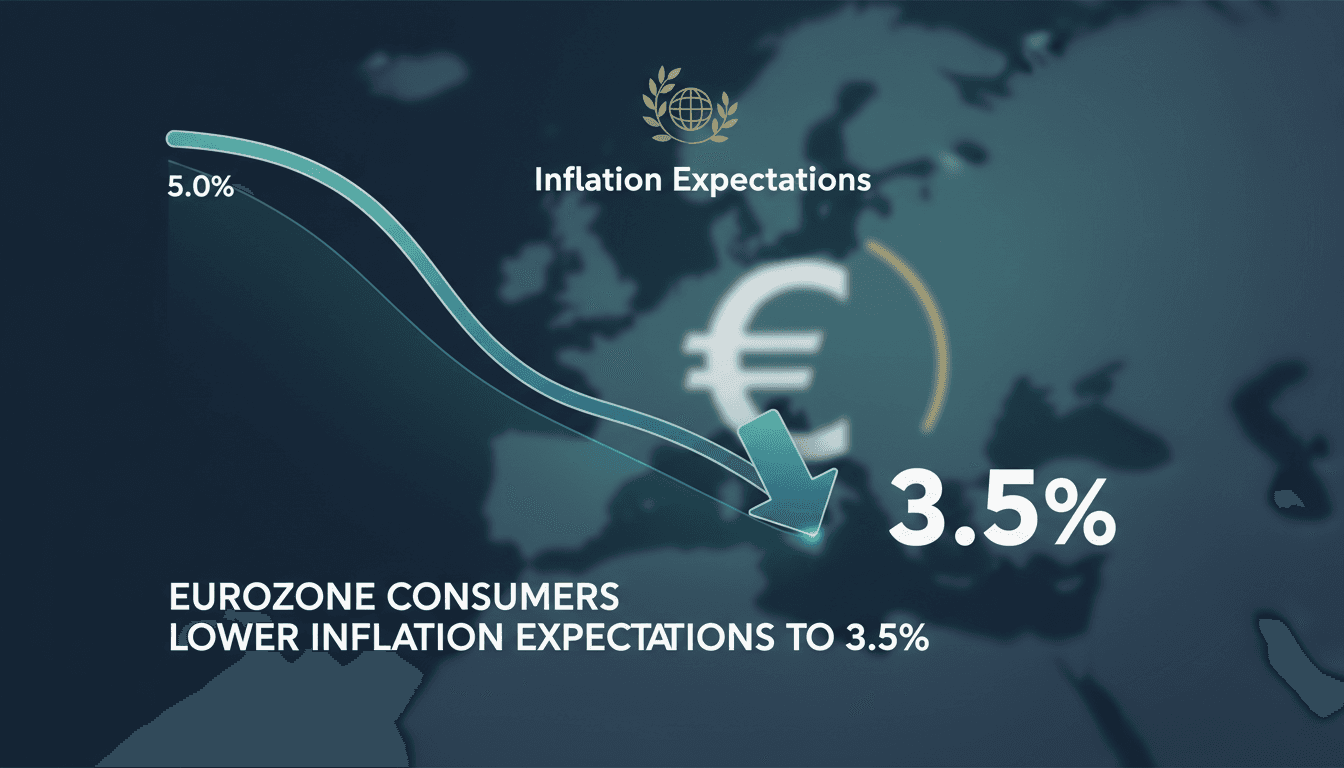
Eurozone consumers lower inflation expectations to 3.5%
Here's what it means for you.
The recent decline in inflation expectations among Eurozone consumers signals a potential shift in economic sentiment. With expectations now at 3.5%, this could influence the European Central Bank's (ECB) monetary policy decisions moving forward. A more stable inflation outlook may foster consumer confidence and spending, which are crucial for economic growth. As geopolitical tensions ease, particularly in the Middle East, the ECB may find it easier to manage inflationary pressures. This development is likely to be closely monitored by policymakers as they navigate the balance between stimulating growth and controlling inflation.
What happened
Eurozone consumers have significantly lowered their inflation expectations for the upcoming year, now forecasting a rate of 3.5%. This change reflects a response to easing geopolitical tensions, particularly in the Middle East. The European Central Bank is closely observing these expectations as they play a critical role in managing inflation effectively.
A recent survey conducted by the ECB revealed this reduction in short-term inflation expectations. The findings, published on June 26, 2026, indicate a positive sign for economic stability in the region. The decline in expectations is viewed favorably by the ECB, which is concerned about rising price pressures.
The Context
The reduction in inflation expectations is significant for various stakeholders, including consumers, businesses, and policymakers. As inflation expectations stabilize, the ECB may adjust its monetary policy strategies to foster economic growth while keeping inflation in check. This is particularly important in the current economic climate, where consumer sentiment can greatly influence spending and investment decisions.
The timing of this shift is crucial, as it comes amid ongoing geopolitical developments that have historically impacted economic conditions in the Eurozone. The ECB's ability to respond effectively to these changing expectations will be vital in maintaining economic stability and growth.
Takeaway
Looking ahead, it will be essential to monitor the ECB's responses to these changing inflation expectations. The central bank's policy decisions will likely be influenced by the current economic landscape and consumer sentiment. Additionally, further geopolitical developments could impact inflation expectations and consumer confidence in the future.
As the situation evolves, stakeholders should remain vigilant about how these dynamics may affect economic growth and inflation management strategies in the Eurozone.
Regional and international reporting focused on Middle Eastern politics, diplomacy, and economics.
"Asharq Al-Awsat is a Saudi-owned international newspaper reflecting mainstream Gulf political perspectives."
— A47 Editor
Euro Zone Consumers Cut Inflation Bets for the Next Year
Euro Zone consumers have reduced their inflation expectations for the upcoming year, indicating a shift in sentiment regarding economic conditions. This change reflects a growing confidence among consumers amid fluctuating inflation rates and economi...
Pan-Arab news coverage spanning politics, business, sports, and regional affairs.
"Asharq Al-Awsat reflects a broad Arab editorial perspective with strong attention to regional geopolitics."
— A47 Editor
مستهلكو منطقة اليورو يخفضون توقعات التضخم قصير المدى إلى 3.5 %
A survey conducted by the European Central Bank revealed that consumers in the Eurozone have lowered their short-term inflation expectations to 3.5% in May. This adjustment reflects changing perceptions among consumers regarding future price stabilit...
Social/economic commentary and analysis relevant to business and markets.
"WSJ blends data-driven economic insight with commentary on policy and society."
— A47 Editor
Eurozone Household Inflation Expectations Cooled in May
Inflation expectations among Eurozone households decreased in May, reflecting a response to easing geopolitical tensions in the Middle East, which may provide reassurance to European Central Bank (ECB) policymakers concerned about rising price pressu...