
US trade deficit reaches record high of $77.6 billion driven by AI imports
Here's what it means for you.
The U.S. trade deficit has surged to unprecedented levels, signaling potential shifts in economic policy and market dynamics. As imports, particularly in the artificial intelligence sector, continue to rise, businesses may need to adapt to changing trade conditions. This trend could influence investment strategies and prompt policymakers to reassess trade agreements and tariffs. The implications of this trade imbalance extend beyond immediate economic concerns, potentially affecting job markets and technological innovation. Stakeholders across various sectors should remain vigilant as these developments unfold.
What happened
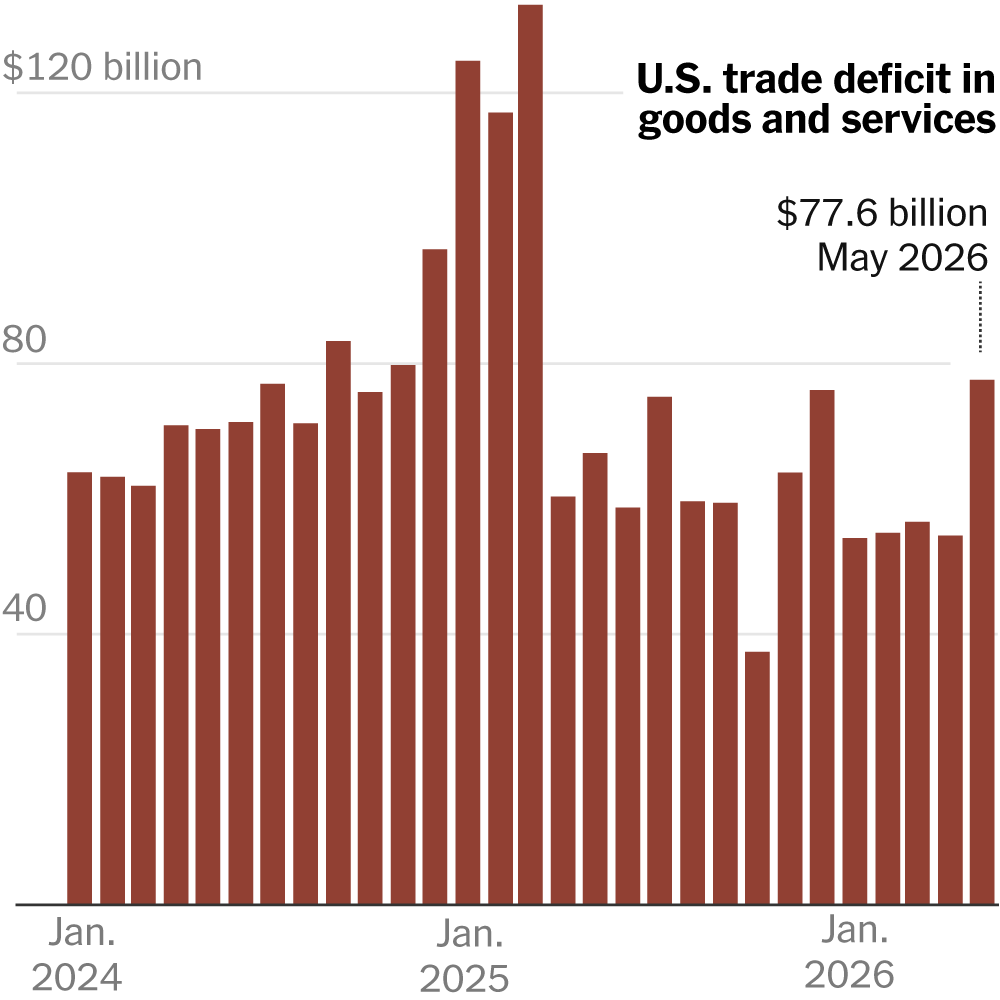
In May 2026, the U.S. trade deficit widened sharply to $77.6 billion, driven by a significant increase in imports. This surge was primarily fueled by record imports of capital goods, particularly in the artificial intelligence sector. Exports, on the other hand, fell by 3.2%, largely due to a decrease in gold sales, further exacerbating the trade imbalance.
The rise in imports reached a record high of $395.3 billion, marking a 3.3% increase and the highest level in 14 months. Capital goods imports alone hit an unprecedented $128 billion, reflecting the growing demand for advanced technologies. This increase in the trade deficit represents a 42.2% rise compared to the previous month, indicating significant economic pressures.
The Context
The widening trade deficit highlights ongoing challenges in the U.S. economy, particularly as investment in artificial intelligence continues to grow. The surge in imports of goods, especially pharmaceuticals and semiconductors, underscores the increasing reliance on foreign technology and products. This trend raises questions about the sustainability of the U.S. trade balance and its implications for domestic industries.
The timing of this deficit increase is critical, as it follows a previous high recorded in March 2025. As the demand for AI technology escalates, the U.S. may face ongoing trade imbalances that could prompt shifts in trade policy. Stakeholders, including policymakers and business leaders, must navigate these complexities to mitigate potential economic fallout.
Takeaway
Looking ahead, it is essential to monitor trends in AI-related imports and their impact on the trade balance. The ongoing investment in technology may continue to influence trade dynamics, prompting potential policy responses from the U.S. government. As the situation evolves, businesses and investors should stay informed about changes in trade policy that could affect their operations.
The implications of this trade deficit extend beyond immediate economic concerns, potentially reshaping the landscape of U.S. trade relations. Stakeholders should prepare for potential shifts in strategy as the government responds to these challenges.
Sports reporting with a focus on Saudi and regional competitions.
"Okaz sports coverage is broad and audience-friendly, with strong attention to Saudi teams and leagues."
— A47 Editor
أمريكا: العجز التجاري يقفز.. ارتفع 42.2%
The U.S. trade deficit widened sharply in May, increasing by 42.2% to reach $77.6 billion, the highest level since March 2025. This surge is attributed to a boom in artificial intelligence investment, which drove capital goods imports to unprecedente...
Social/economic commentary and analysis relevant to business and markets.
"WSJ blends data-driven economic insight with commentary on policy and society."
— A47 Editor
U.S. Trade Deficit Widened in May as Imports of AI Components Rose
The U.S. trade deficit widened in May, primarily driven by a 3.2% drop in American-made exports, notably due to a significant decline in gold sales to international markets, as reported by the Commerce Department.
Comprehensive coverage of Middle Eastern and global issues.
"Al Jazeera is a prominent voice from the Global South, especially the Middle East, with an emphasis on underreported stories."
— A47 Editor
US trade deficit surges amid artificial intelligence spending boom
The US trade deficit surged to $77.6 billion in May, driven by a significant increase in imports that outpaced exports, particularly in the pharmaceuticals and semiconductors sectors. This surge is attributed to a boom in artificial intelligence spen...
Global news coverage with extensive reporting on Middle Eastern conflicts and geopolitics.
"Al Jazeera is a Qatar-based broadcaster known for wide regional coverage and alternative perspectives."
— A47 Editor
US trade deficit surges amid artificial intelligence spending boom
The US trade deficit surged to $77.6 billion in May, driven by a significant increase in imports that outpaced exports, particularly in the pharmaceuticals and semiconductors sectors. This surge is attributed to a boom in artificial intelligence spen...
Pan-Arab news coverage spanning politics, business, sports, and regional affairs.
"Asharq Al-Awsat reflects a broad Arab editorial perspective with strong attention to regional geopolitics."
— A47 Editor
العجز التجاري الأميركي يتسع في مايو مع ارتفاع واردات السلع الرأسمالية
The U.S. trade deficit widened sharply in May, driven by a record increase in imports of capital goods amid an investment boom linked to artificial intelligence. This significant rise in imports indicates a growing demand for advanced technology and ...
Markets, economy, and company analysis from NYT’s business desk.
"The New York Times is a globally recognized newspaper offering authoritative reporting with a center-left editorial stance."
— A47 Editor
U.S. Trade Deficit Widens in May on Record Goods Imports
The U.S. trade deficit widened in May, reaching its highest level in over a year, primarily due to record imports of foreign goods, including pharmaceuticals and data center equipment.
Key macro releases (CPI, jobs, PMIs), surprise indexes, and market implications.
"Great for data-print awareness and instant read-through to rates and risk assets."
— A47 Editor
US trade deficit widens sharply in May as capital goods imports hit record high
The US trade deficit widened sharply in May, driven by a record high in capital goods imports, indicating a significant imbalance in trade. This development reflects ongoing challenges in the US economy, particularly in manufacturing and consumer dem...