
Financial markets react to Trump's Iran deal comments and Federal Reserve policy shift
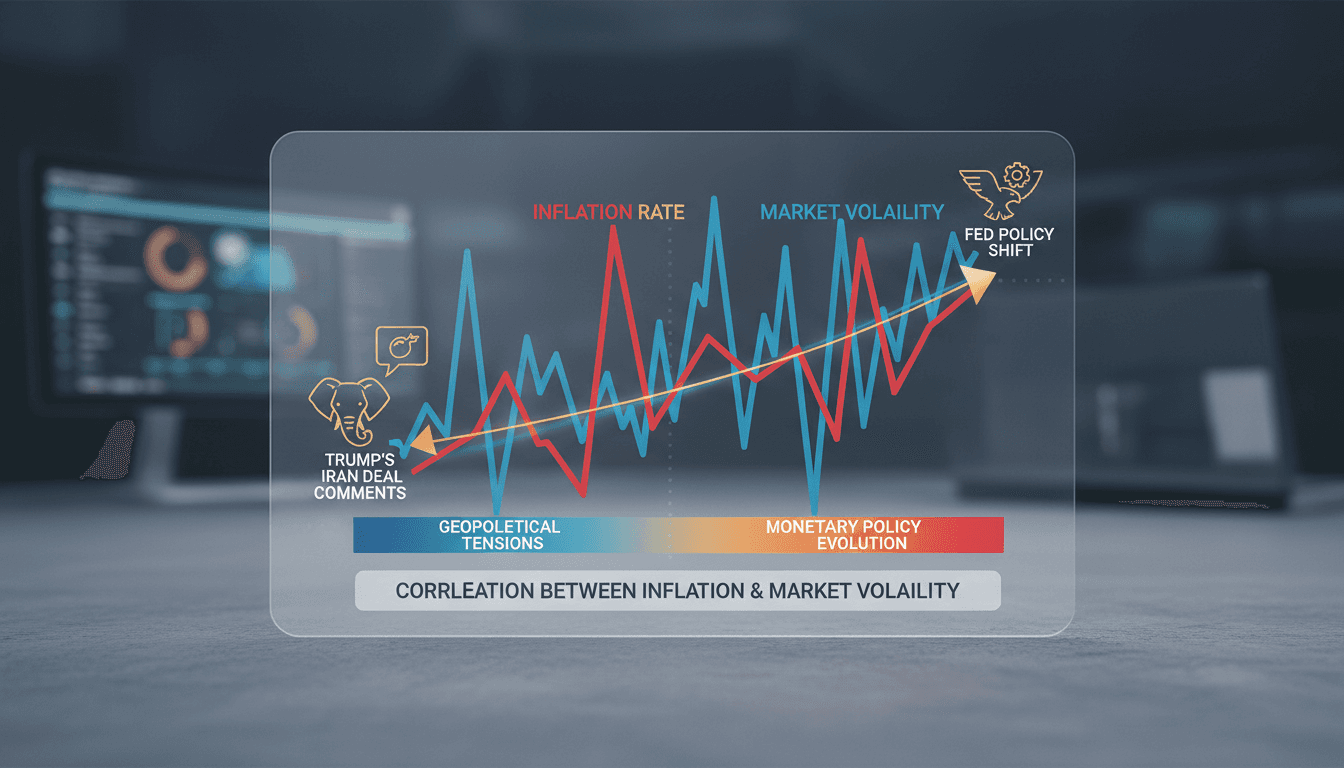
Here's what it means for you.
The recent volatility in financial markets highlights the interconnectedness of geopolitical events and monetary policy. President Trump's comments on the Iran peace deal, coupled with the Federal Reserve's shift under Chair Kevin Warsh, have raised inflation concerns that are affecting investor sentiment. As inflation approaches double the Fed's target, market participants must navigate a landscape fraught with uncertainty. Investors should remain vigilant as these developments unfold, as they could lead to further fluctuations in both traditional and cryptocurrency markets. The evolving situation underscores the importance of staying informed about key economic indicators and policy changes.
What happened
Financial markets have reacted negatively to mixed signals from President Trump regarding the Iran peace deal and the Federal Reserve's new direction under Chair Kevin Warsh. Trump's defense of the Iran deal comes amid rising inflation, which is reported to be nearly double the Federal Reserve's target. This economic pressure is impacting both traditional markets and the cryptocurrency sector, which is particularly sensitive to such developments.
The shift in policy under Kevin Warsh marks a significant change in the Federal Reserve's approach to monetary policy. As Warsh begins his tenure, investors are closely monitoring how these changes will influence economic conditions moving forward.
The Context
President Trump's comments on the Iran deal come at a time when inflation concerns are mounting, creating a complex backdrop for financial markets. The Federal Reserve's leadership transition to Kevin Warsh signifies a potential shift in monetary policy that could have far-reaching implications. Retail sales have shown an increase despite the prevailing market volatility, indicating that consumer behavior may be resilient in the face of economic uncertainty.
As geopolitical tensions continue to evolve, the interplay between these factors will be crucial for market participants. Understanding the motivations and actions of key stakeholders, including the Federal Reserve and the Trump administration, is essential for navigating this turbulent environment.
Takeaway
Investors should brace for continued market fluctuations as geopolitical tensions and monetary policy evolve. Monitoring further comments from President Trump regarding Iran will be critical, as will keeping an eye on the Federal Reserve's upcoming policy decisions under Kevin Warsh. The current economic landscape suggests that volatility may persist, necessitating a proactive approach from market participants.
As the situation develops, staying alert to both geopolitical events and central bank actions will be vital for making informed investment decisions. The ongoing dialogue surrounding inflation and economic policy will shape the market's trajectory in the coming months.
Covers blockchain, cryptocurrency news, project analysis, and market insights.
"Cointelegraph is a leading crypto-focused media outlet known for timely news, analysis, and educational content related to blockchain and digital assets."
— A47 Editor
Crypto market treads thin ice following Warsh FOMC, Trump Iran comments
The cryptocurrency market experienced volatility following mixed comments from President Trump regarding the Iran peace deal and Federal Reserve Chair Kevin Warsh's indication of a shift in monetary policy. This uncertainty has led to concerns among ...
Markets desk coverage, trading insights, and investor updates.
"WSJ’s markets reporting provides in-depth analysis and context for investors."
— A47 Editor
Markets Rattled by Warsh Poker Face
Markets experienced volatility following President Trump's announcement of a completed peace deal with Iran, which aims to stabilize relations and reopen the strategically important Strait of Hormuz. This development coincides with a shift in the Fed...
Editor-curated FT homepage stories spanning markets, business, world, and opinion.
"The Financial Times is a globally respected business publication with a centrist/center-left tone and strong markets focus."
— A47 Editor
Fed drops bias for rate cuts as Kevin Warsh era begins
The Federal Reserve has shifted its stance on interest rates under new chair Kevin Warsh, moving away from a bias towards rate cuts as inflation, exacerbated by Donald Trump's policies in Iran, has surged to nearly double the central bank's target.