
IEA Projects First Decline in Global Oil Demand Since COVID-19 Pandemic
Here's what it means for you.
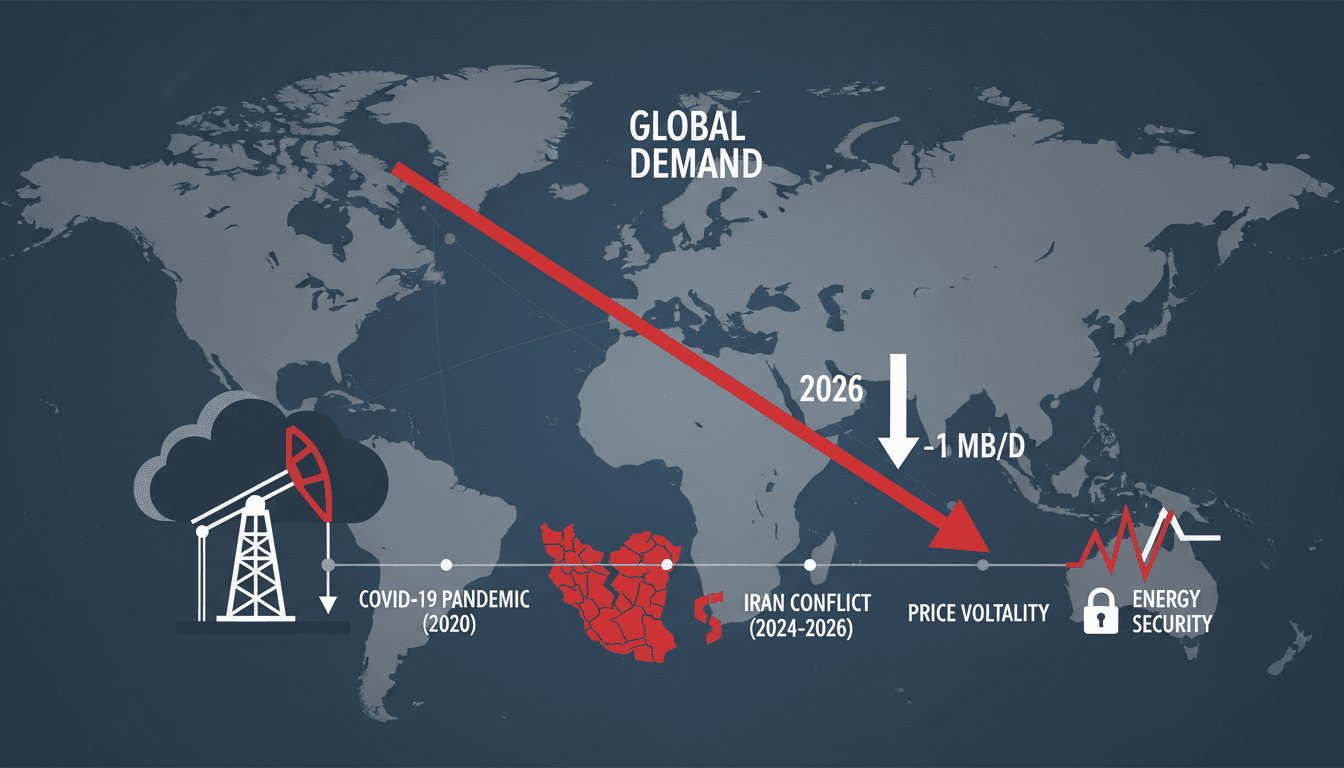
The International Energy Agency's forecast of a 1 million barrels per day decline in global oil demand by 2026 signals a significant shift in the energy landscape. This decline, the first since the COVID-19 pandemic, underscores the impact of geopolitical tensions, particularly the ongoing conflict in Iran. As supply struggles to meet demand, market volatility may increase, raising concerns about energy security and pricing stability. The implications extend beyond immediate market reactions, affecting policy decisions and investment strategies in the energy sector. Stakeholders must remain vigilant as developments in conflict zones could further influence oil supply dynamics.
What happened
The International Energy Agency (IEA) has announced a forecast predicting a decline in global oil demand, estimating a drop of 1 million barrels per day by 2026. This marks the first decrease in oil demand since the COVID-19 pandemic, primarily driven by disruptions caused by the ongoing conflict in Iran. The IEA's report highlights that the war has severely impacted oil production and exports in the Middle East.
As a result, global oil supply is projected to fall short of demand by 860,000 barrels per day in 2026. This forecast reflects the fragility of the energy market amid geopolitical tensions, emphasizing the need for stakeholders to adapt to changing conditions.
The Context
The anticipated decline in oil demand is significant as it represents the first such decrease since 2020, a year marked by unprecedented disruptions due to the pandemic. The conflict in Iran has created a ripple effect, severely affecting oil production and exports in the region, which are critical to global supply chains. The IEA's report indicates that while oil supply increased by 4.1 million barrels per day in June, it remains below pre-war levels.
The situation is further complicated by the geopolitical landscape, where ongoing tensions can lead to rapid changes in market conditions. As the IEA continues to monitor these developments, the energy sector must brace for potential volatility in both supply and demand.
Takeaway
Looking ahead, stakeholders should closely monitor developments in the Iran conflict and their effects on oil exports. The IEA's forecasts may evolve based on changing market conditions, making it essential for industry players to stay informed. The ongoing geopolitical tensions are likely to influence global oil supply and demand dynamics in the coming years.
As the energy market navigates this uncertain terrain, the potential for increased volatility in oil prices remains a critical concern. Stakeholders must prepare for rapid shifts that could impact energy security and pricing strategies.
Global business headlines with AI angles.
"General business outlet that frequently covers AI."
— A47 Editor
US Bucks The Trend Despite Price Spike, But Oil Demand Set To Slump: When Is A Recovery Expected
The International Energy Agency (IEA) has reported a projected decline in global oil demand for the first time since the COVID-19 pandemic, attributing this downturn to ongoing geopolitical tensions, particularly the conflict in Iran.
Economic trends, financial markets, corporate news, and policy from a Russian perspective.
"RT is widely criticized for promoting pro-Kremlin narratives and is considered by many to be a state propaganda outlet."
— A47 Editor
IEA issues oil demand warning
The International Energy Agency (IEA) has issued a warning regarding a projected decline in global oil demand, forecasting a drop of 1 million barrels per day by 2026, largely attributed to ongoing disruptions in Middle Eastern exports due to the Ira...
Global business headlines with AI angles.
"General business outlet that frequently covers AI."
— A47 Editor
Global Oil Demand To Drop For The First Time In More Than Five Years, IEA Says
The International Energy Agency (IEA) has announced that global oil demand is projected to decline for the first time since 2020, primarily due to a significant drop in traffic through the Strait of Hormuz amid ongoing conflict in Iran.
Sports reporting with a focus on Saudi and regional competitions.
"Okaz sports coverage is broad and audience-friendly, with strong attention to Saudi teams and leagues."
— A47 Editor
«الطاقة الدولية»: نتوقع انخفاض الطلب على النفط لأول مرة منذ 2020
The International Energy Agency (IEA) has projected a decline in global oil demand for the first time since 2020, attributing this downturn to the severe impacts of the Iranian war, which has significantly disrupted production and export operations i...
Regional and international reporting focused on Middle Eastern politics, diplomacy, and economics.
"Asharq Al-Awsat is a Saudi-owned international newspaper reflecting mainstream Gulf political perspectives."
— A47 Editor
IEA Says Global Oil Demand Picks Up Despite War Fears
The International Energy Agency (IEA) has reported an increase in global oil demand despite ongoing fears of conflict in the Middle East, indicating resilience in the market. This uptick comes amid geopolitical tensions that have historically impacte...