
Brent crude oil prices decline amid heightened Middle East tensions
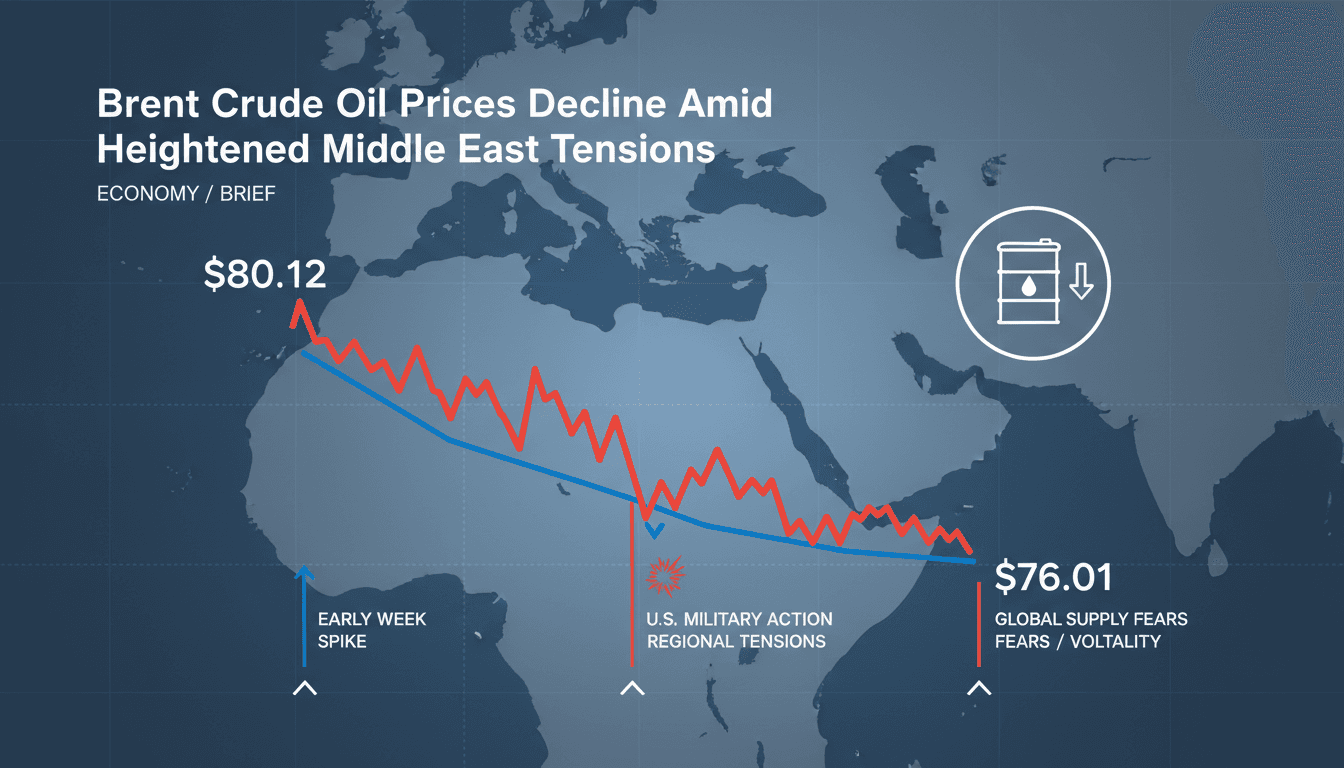
Here's what it means for you.
The recent decline in Brent crude oil prices signals a turbulent period for the energy market, influenced by geopolitical tensions in the Middle East. As prices fell to $76.01 per barrel, concerns over supply disruptions are likely to impact both consumers and businesses reliant on stable oil prices. Stakeholders should prepare for potential volatility as developments in U.S. foreign policy and military actions unfold. The fluctuations in oil prices can affect everything from transportation costs to inflation rates, making it crucial for policymakers and investors to stay informed. Monitoring these trends will be essential for anticipating market shifts and making informed decisions.
What happened
Brent crude oil prices fell to $76.01 per barrel after experiencing a brief rise earlier in the week. This decline follows U.S. military actions in the Middle East, which have heightened concerns about the stability of oil supply routes. Earlier in the week, prices had peaked at $78.80, reflecting initial market reactions to the geopolitical situation.
The recent military actions, particularly U.S. airstrikes against Iran, have intensified fears of supply disruptions, especially in critical areas like the Strait of Hormuz. As these tensions continue, the oil market is responding with notable volatility, indicating a complex interplay between geopolitical events and market dynamics.
The Context
The backdrop of this price fluctuation is rooted in ongoing geopolitical tensions in the Middle East, particularly involving U.S. military operations. The region is a vital artery for global oil supply, and any instability can lead to significant market reactions. Stakeholders, including oil producers and consumers, are closely monitoring these developments as they unfold.
The recent rise in Brent crude prices earlier in the week was a direct response to the heightened tensions, but the subsequent decline reflects a cautious market sentiment. As the situation evolves, the implications for global oil supply and pricing remain uncertain, making it a critical area for ongoing observation.
Takeaway
Looking ahead, the oil market is likely to remain sensitive to geopolitical developments, particularly U.S. foreign policy actions in the Middle East. Investors and policymakers should keep a close eye on potential changes in oil supply and demand dynamics, as these could lead to further price fluctuations.
As tensions persist, the interplay between military actions and market responses will be crucial in shaping the future of oil prices. Stakeholders should prepare for continued volatility and adjust their strategies accordingly.
Arabic-language economic and business reporting with strong UAE market relevance.
"Emarat Al Youm business coverage often centers UAE property, banking, consumer issues, and economic policy."
— A47 Editor
«برنت» يستقر عند 76.01 دولاراً للبرميل «برنت» يستقر عند 76.01 دولاراً للبرميل
Oil prices have settled at $76.01 per barrel for Brent crude, reflecting a decline of 29 cents or 0.38% at the close of trading on Friday. This drop follows a series of fluctuations in the oil market, indicating ongoing volatility influenced by vario...
Jordanian news and regional updates.
"Roya News is a Jordanian outlet focused on breaking news and local affairs."
— A47 Editor
أسعار النفط تنخفض إلى 76.01 دولارا رغم مخاطر اضطراب الإمدادات
Oil prices have decreased to $76.01, reflecting a slight decline in recent trading sessions despite ongoing concerns about supply disruptions. This drop indicates a volatile market environment where prices are sensitive to geopolitical and economic f...
Arabic-language coverage of Saudi, regional, and international affairs.
"Al Bilad offers mainstream Saudi newspaper coverage across domestic and broader Arab topics."
— A47 Editor
النفط يقفز والذهب ينخفض مع تجدد التوتر في الشرق الأوسط
Oil prices surged today following new U.S. airstrikes against Iran, dampening hopes for an end to the conflict and the complete reopening of the Strait of Hormuz. Brent crude futures rose by 78 cents, or 1%, reaching $78.8 per barrel, while West Texa...