
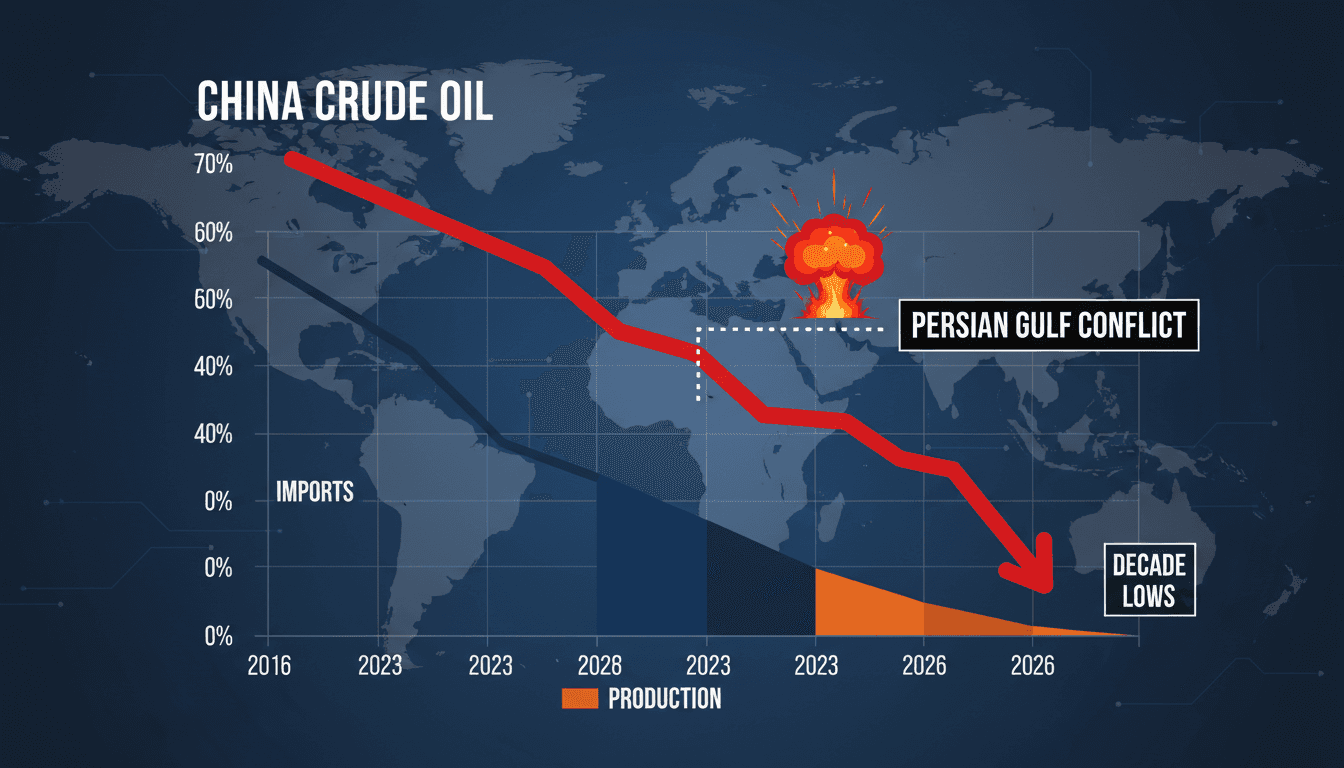
China's crude oil imports and production reach decade lows amid Persian Gulf conflict
Here's what it means for you.
The significant decline in China's crude oil imports and production signals a critical shift in the global energy landscape. As the ongoing conflict in the Persian Gulf disrupts supply chains, stakeholders must reassess their energy strategies. This situation could lead to increased volatility in global oil prices and necessitate adjustments in China's domestic energy policies. The implications extend beyond immediate market reactions, as long-term energy sourcing and consumption strategies may need reevaluation. Policymakers and industry leaders should closely monitor these developments to navigate the evolving landscape effectively.
What happened
In June 2026, China's crude oil imports and production fell to their lowest levels in nearly a decade. This decline is primarily attributed to the ongoing war in the Persian Gulf, which has severely disrupted oil supply chains. Additionally, a significant drop in domestic demand has compounded the situation, leading to the lowest refinery operating rates in China in ten years.
The decrease in oil production marks the lowest output since the onset of the COVID-19 pandemic, highlighting the severity of the current energy crisis. As a result, China's energy sector faces unprecedented challenges that could reshape its future.
The Context
The war in the Persian Gulf has created a precarious environment for oil supply, impacting not only China but also global markets. With domestic demand for oil sharply declining, China's reliance on imported crude has become increasingly problematic. The current situation underscores the interconnectedness of geopolitical tensions and energy markets, emphasizing the need for strategic foresight.
As refinery operating rates hit a decade low, the implications for China's energy landscape are profound. Stakeholders must navigate these challenges while considering the broader economic impacts and potential shifts in energy policy.
Takeaway
Looking ahead, the ongoing geopolitical tensions in the Persian Gulf will likely continue to influence China's oil import and production levels. Monitoring developments in this conflict will be crucial for understanding its impact on global oil prices and supply chains. Additionally, changes in China's domestic energy policies and demand recovery will be essential to watch as the country adapts to these challenges.
The energy sector must remain agile, as the current landscape may necessitate strategic adjustments in sourcing and consumption. Stakeholders should prepare for potential volatility as these dynamics unfold.
Pan-Arab news coverage spanning politics, business, sports, and regional affairs.
"Asharq Al-Awsat reflects a broad Arab editorial perspective with strong attention to regional geopolitics."
— A47 Editor
إنتاج الصين من النفط في يونيو يُسجل أدنى مستوى منذ 6 سنوات
China's crude oil production in June has dropped to its lowest level since the onset of the COVID-19 pandemic, primarily due to the impact of the Iran conflict and rising prices, which have suppressed demand in the world's second-largest economy.
Regional and international reporting focused on Middle Eastern politics, diplomacy, and economics.
"Asharq Al-Awsat is a Saudi-owned international newspaper reflecting mainstream Gulf political perspectives."
— A47 Editor
China’s June Oil Imports Hit Near 10-Year Low Amid Iran War
China's oil imports in June have plummeted to their lowest levels in nearly a decade, largely attributed to the ongoing conflict involving Iran. The geopolitical tensions have disrupted supply chains and impacted global oil markets, leading to signif...
Pan-Arab news coverage spanning politics, business, sports, and regional affairs.
"Asharq Al-Awsat reflects a broad Arab editorial perspective with strong attention to regional geopolitics."
— A47 Editor
واردات الصين النفطية تهبط لأدنى مستوى في نحو 10 سنوات مع تداعيات الحرب
China's crude oil imports fell to their lowest level in nearly a decade in June, coinciding with a significant drop in refinery operating rates, which are also at a ten-year low. This decline reflects the ongoing impacts of the war, affecting the cou...
Global markets, investing, and macroeconomics from a premier financial newsroom.
"Bloomberg is respected for in-depth financial reporting and data-driven analysis."
— A47 Editor
China’s Crude Imports Plunge to Lowest in Nearly a Decade
China's crude oil imports fell sharply in June to their lowest level in nearly a decade, primarily due to a significant slowdown in domestic demand and ongoing conflicts in the Persian Gulf. This decline highlights the challenges faced by the world's...