
OPEC Lowers 2026 Oil Demand Growth Forecast Amid Geopolitical Tensions
Here's what it means for you.
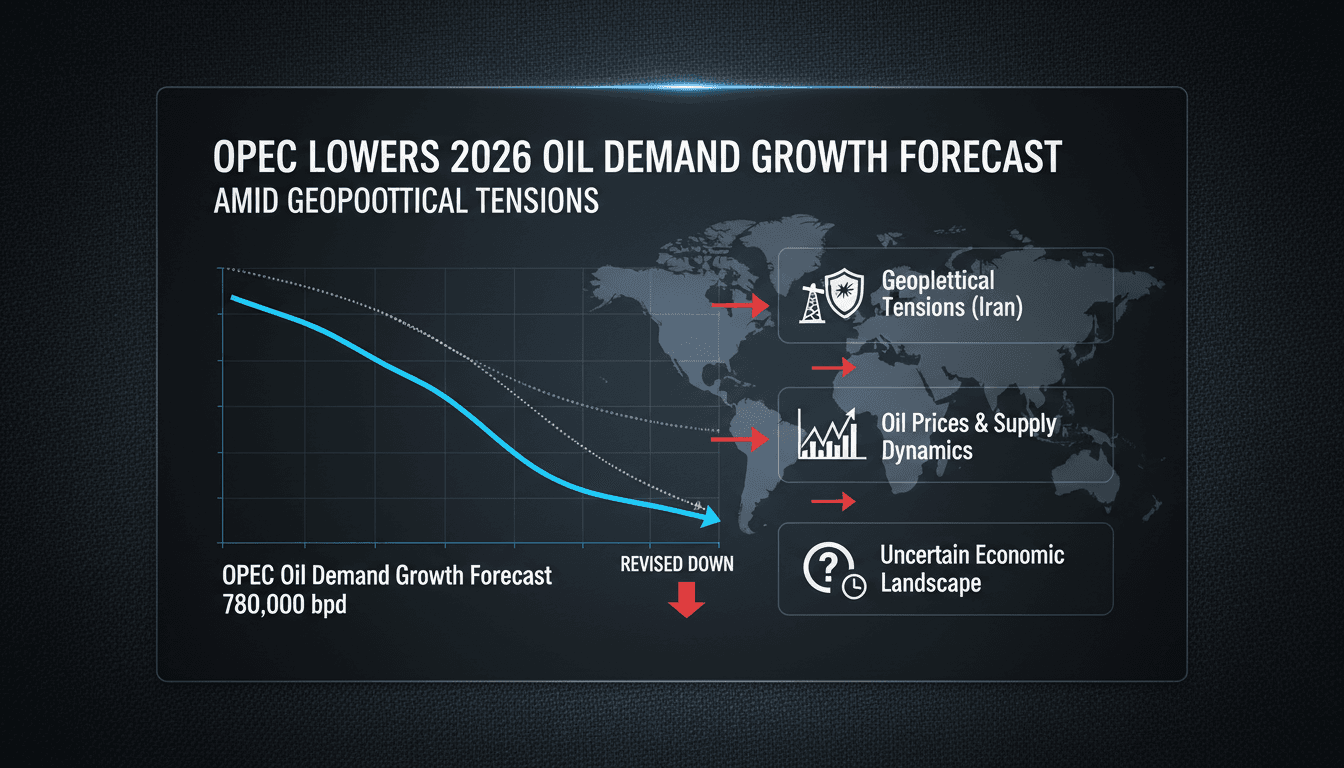
OPEC's recent revision of its oil demand growth forecast signals a cautious outlook for the global oil market. The reduction to 780,000 barrels per day for 2026 reflects the impact of geopolitical tensions, particularly those involving Iran, which are influencing oil prices and supply dynamics. Stakeholders in the energy sector should prepare for potential volatility as these factors continue to evolve. As OPEC adjusts its forecasts, market participants may need to reassess their strategies in light of these developments. The organization’s optimistic projection for 2027, however, suggests a possible recovery that could reshape market expectations.
What happened
OPEC has officially lowered its oil demand growth forecast for 2026 to 780,000 barrels per day. This adjustment marks a significant decrease from the previous estimate of 970,000 barrels per day. The organization also raised its demand growth estimate for 2027 to 1.9 million barrels per day, indicating a more optimistic view for the following year.
This revision is part of a broader trend, as OPEC has made downward adjustments for three consecutive months. The ongoing geopolitical tensions, particularly those involving Iran, are cited as key factors affecting oil prices and supply dynamics.
The Context
The recent changes in OPEC's forecasts come amid a backdrop of heightened geopolitical tensions that are impacting the oil market. Iran's role in these tensions is particularly significant, as it has implications for oil supply and pricing. The adjustments reflect not only current market conditions but also the uncertainties that lie ahead.
OPEC's forecasts are closely monitored by various stakeholders, including governments, investors, and energy companies. The timing of these revisions is critical, as they coincide with ongoing discussions about global economic recovery and demand for oil in the coming years.
Takeaway
Looking ahead, it will be essential to monitor developments in U.S.-Iran relations and their potential impact on oil supply. OPEC's forecasts may continue to evolve as economic conditions change, and further revisions could be on the horizon. The organization’s cautious stance suggests that the oil market will remain sensitive to geopolitical developments and economic uncertainties.
As the situation unfolds, stakeholders should remain vigilant and prepared for potential shifts in demand dynamics that could influence pricing and supply strategies.
Algerian and regional news coverage.
"Echorouk is a major Algerian outlet with broad national reporting."
— A47 Editor
أوبك تخفض توقعاتها لنمو الطلب العالمي على النفط إلى 780 ألف برميل يوميا
OPEC has once again revised down its forecast for global oil demand growth for 2026 to 780,000 barrels per day, marking the third consecutive downward adjustment. This revision comes despite the organization's continued expectations for an improvemen...
Sports reporting with a focus on Saudi and regional competitions.
"Okaz sports coverage is broad and audience-friendly, with strong attention to Saudi teams and leagues."
— A47 Editor
ما توقعات «أوبك» لنمو الطلب على النفط في العالم؟
The Organization of the Petroleum Exporting Countries (OPEC) has raised its forecast for global oil demand growth for the coming year while lowering its estimates for the current year for the third consecutive month. The organization adjusted its for...
Pan-Arab news coverage spanning politics, business, sports, and regional affairs.
"Asharq Al-Awsat reflects a broad Arab editorial perspective with strong attention to regional geopolitics."
— A47 Editor
«أوبك» تخفض توقعات الطلب في 2026... وترفعها بقوة لعام 2027
The Organization of the Petroleum Exporting Countries (OPEC) has revised its global oil demand growth forecast for 2026, lowering it to 780,000 barrels per day from a previous estimate of 970,000 barrels per day. This adjustment reflects changing mar...