
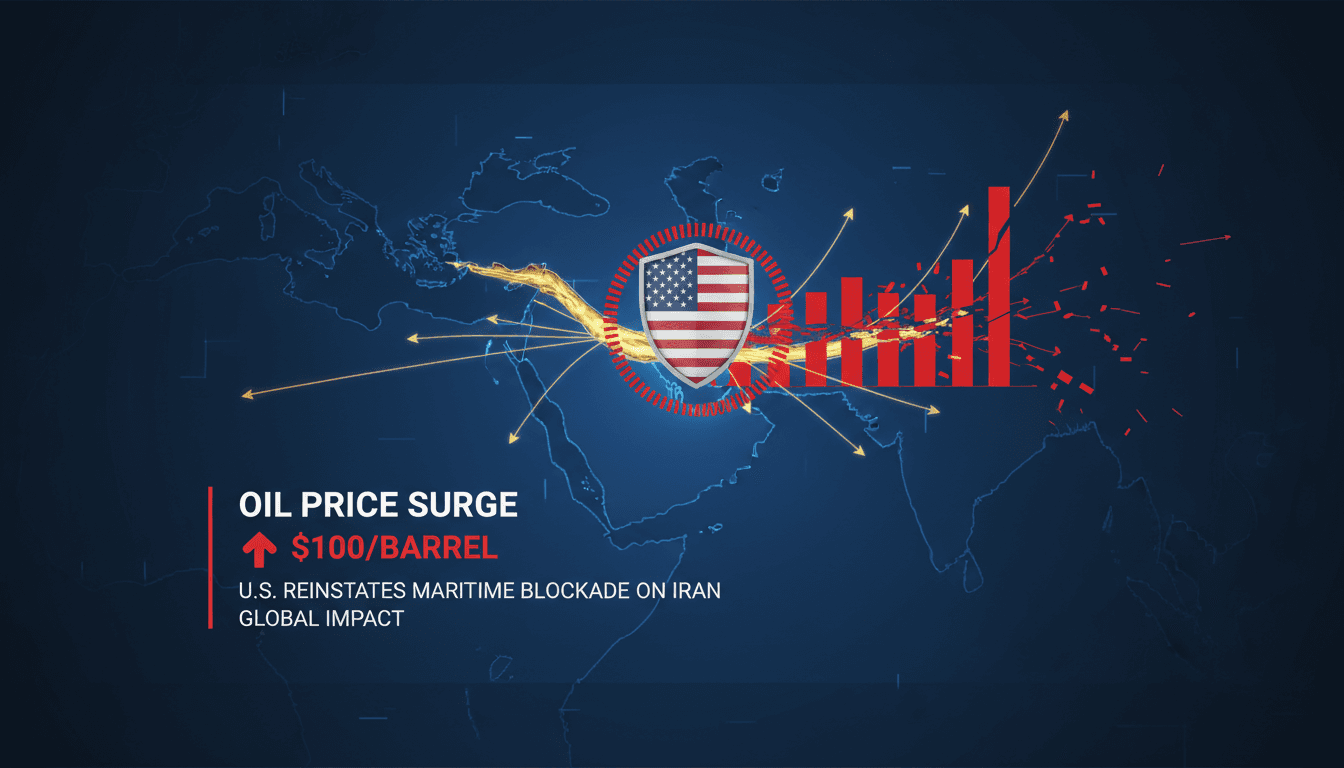
U.S. reinstates maritime blockade on Iran causing oil prices to surge
Here's what it means for you.
The re-imposition of the U.S. maritime blockade on Iran has significant implications for global oil markets. As tensions escalate in the Strait of Hormuz, a vital transit route for oil, prices are likely to remain volatile. Industry stakeholders should prepare for potential disruptions that could impact supply chains and pricing strategies. The situation underscores the fragility of energy markets, where geopolitical events can lead to rapid price fluctuations. Companies and consumers alike may feel the effects as oil prices rise, potentially influencing broader economic conditions.
What happened
U.S. President Donald Trump has reinstated a maritime blockade on Iran, which has resulted in a sharp increase in oil prices. Following this announcement, Brent crude oil prices rose by 58 cents to $85.31 per barrel, while West Texas Intermediate increased by 35 cents to $79.69 per barrel. The blockade has led to a significant market reaction, with oil prices increasing by over 4% since the announcement.
This escalation in military actions between the U.S. and Iran is particularly concerning given that approximately 20% of global oil and LNG supplies transit through the Strait of Hormuz. The heightened tensions have pushed Brent crude to its highest level in a month, reflecting the market's anxiety over potential supply disruptions.
The Context
The Strait of Hormuz is a critical chokepoint for global energy supplies, making the recent military escalations between the U.S. and Iran particularly significant. With about 20% of the world's oil and liquefied natural gas passing through this narrow waterway, any disruption could have far-reaching consequences for energy prices and availability.
The geopolitical landscape has become increasingly tense, with both nations engaging in military posturing. Analysts are closely monitoring the situation, as further escalation could lead to oil prices reaching $100 per barrel, which would have a profound impact on the global energy market.
Takeaway
As military tensions continue in the region, the outlook for oil prices remains uncertain. Analysts suggest that the potential for further conflict could drive prices even higher, impacting both consumers and businesses. Stakeholders should keep a close eye on diplomatic efforts aimed at de-escalating the situation, as well as any additional military actions that could affect oil supply.
The market's reaction to these developments will be crucial in determining the future trajectory of oil prices. With the strategic importance of the Strait of Hormuz, any significant changes in the geopolitical landscape could lead to further volatility in the energy sector.
Sports reporting with a focus on Saudi and regional competitions.
"Okaz sports coverage is broad and audience-friendly, with strong attention to Saudi teams and leagues."
— A47 Editor
النفط يرتفع.. أسعار برنت صوب 86 دولاراً
Oil prices have risen following President Donald Trump's reimposition of a maritime blockade on all Iranian ports, prompting Iran to launch attacks on U.S. infrastructure in the region. Brent crude increased by 58 cents to $85.31 per barrel, while We...
Arabic-language coverage of international news and geopolitics.
"RT Arabic is a Russian state-funded outlet often criticized for promoting Kremlin-aligned narratives."
— A47 Editor
أسعار النفط عند أعلى مستوى في شهر
Oil prices surged to their highest level in four weeks on Tuesday as the United States reinstated its maritime blockade on Iran, leading to increased tensions between the two nations in the Strait of Hormuz.
Arabic-language coverage of Saudi, regional, and international affairs.
"Al Bilad offers mainstream Saudi newspaper coverage across domestic and broader Arab topics."
— A47 Editor
ارتفاع أسعار النفط بأكثر من 4%
Oil prices surged by more than 4% today following statements from U.S. President Donald Trump regarding the imposition of a maritime blockade on Iran. Brent crude futures increased by $3.21 per barrel, or 4.22%, reaching $79.22 per barrel, while West...