
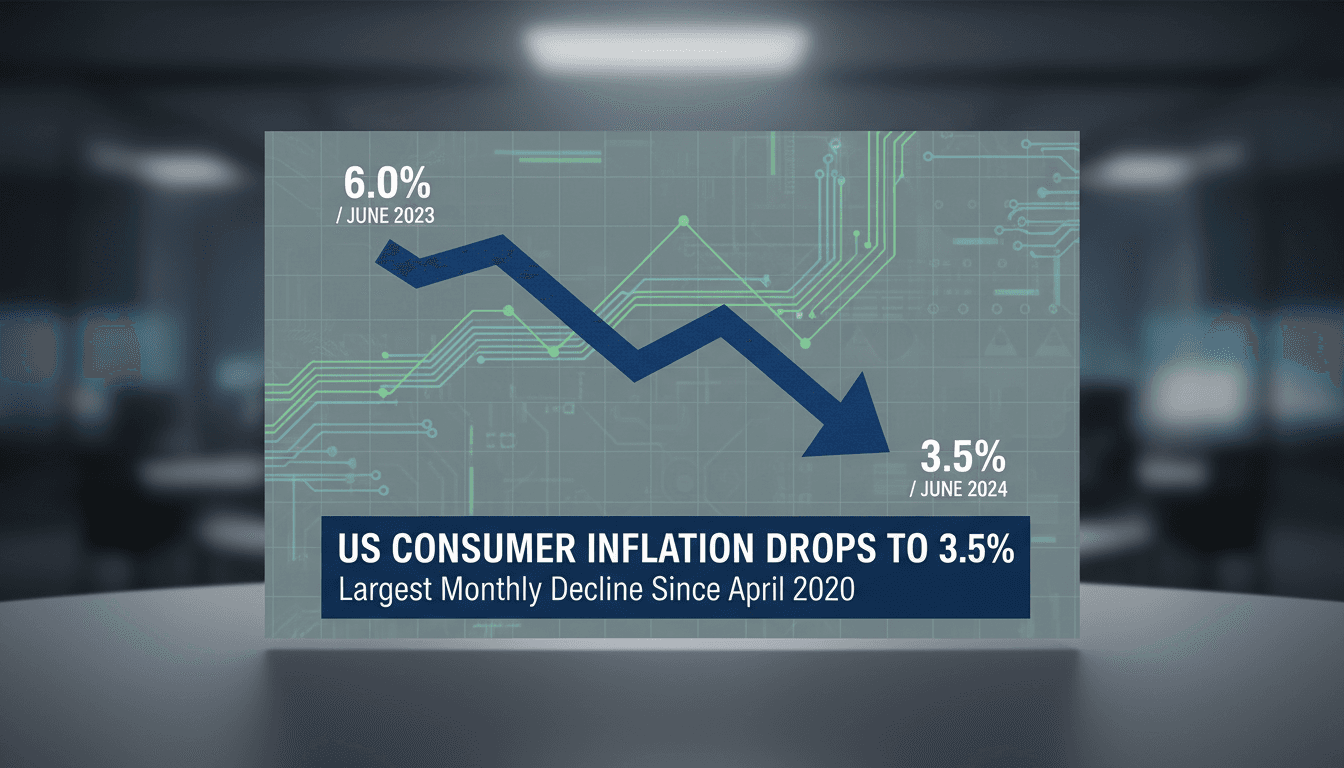
US consumer inflation drops to 3.5% in June
Here's what it means for you.
The recent drop in U.S. consumer inflation to 3.5% signals a significant shift in economic conditions, primarily influenced by falling energy prices. This decline may lead to a more stable interest rate environment, as the Federal Reserve reassesses its monetary policy approach. For consumers and businesses alike, this could mean a reprieve from rising costs and a potential boost to economic growth. As inflation cools, market participants are likely to adjust their expectations regarding future interest rate hikes. The Federal Reserve's decisions in the coming months will be crucial in shaping the economic landscape, impacting everything from borrowing costs to consumer spending.
What happened
U.S. consumer inflation fell to 3.5% in June, marking the largest monthly decrease since April 2020. This decline is a notable shift from the previous month's rate of 4.2%. The Consumer Price Index (CPI) reflects this change, primarily driven by a significant drop in energy prices, particularly petrol. As a result, traders are recalibrating their forecasts for Federal Reserve interest rate actions.
The easing of inflation rates has led to reduced expectations for a rate hike by the Fed in July. This adjustment in market sentiment underscores the importance of energy costs in influencing overall inflation trends.
The Context
The recent inflation figures indicate a broader economic trend that stakeholders are closely monitoring. The slowdown in the CPI's annual increase highlights the impact of easing energy costs on consumer prices. With inflation now at its lowest since April 2020, the Federal Reserve faces a critical juncture in its monetary policy strategy.
Traders and economists are particularly focused on how this cooling inflation will affect the Fed's approach to interest rates. The upcoming Federal Reserve meetings will be pivotal as policymakers weigh the implications of these new inflation figures against the backdrop of economic growth and consumer spending patterns.
Takeaway
Looking ahead, the Federal Reserve's response to the latest inflation data will be crucial. As inflation cools, there is a possibility that the Fed may choose to maintain current interest rates to support ongoing economic growth. Observers should closely monitor upcoming Federal Reserve meetings for any policy announcements that could impact market dynamics.
Additionally, further inflation data will be essential in assessing the trajectory of economic trends. The interplay between energy prices and consumer spending will continue to shape the economic landscape in the months to come.
Global business headlines with AI angles.
"General business outlet that frequently covers AI."
— A47 Editor
Inflation Cooled More Than Expected. Traders Now Think the Fed Will Hold Rates Steady in July
The Consumer Price Index (CPI) increased by 3.5% over the past year through June, a decrease from the 4.2% rise noted in May, indicating a cooling of inflation that exceeded expectations.
Stock market news, investing ideas, and trading analysis.
"TheStreet provides market news and retail-investor-focused analysis."
— A47 Editor
Cooler inflation delivers big win for Fed interest-rate bets
A significant drop in U.S. consumer prices in June has led to a positive sentiment among investors and consumers, reducing expectations for an interest-rate hike by the Federal Reserve later this month. This development marks the largest one-month de...
Macro commentary, policy analysis, growth/inflation themes, and global outlooks.
"Contextual macro coverage that complements day-to-day market headlines."
— A47 Editor
U.S. headline consumer inflation posts biggest one-month decrease since April 2020
U.S. headline consumer inflation has recorded its largest one-month decrease since April 2020, reflecting a significant shift in price trends. This decline indicates a potential easing of inflationary pressures that have affected the economy in recen...
Editor-curated FT homepage stories spanning markets, business, world, and opinion.
"The Financial Times is a globally respected business publication with a centrist/center-left tone and strong markets focus."
— A47 Editor
US inflation fell more than expected to 3.5% in June as petrol prices tumbled
US inflation decreased to 3.5% in June, surpassing expectations, primarily due to a significant drop in petrol prices. This decline in inflation is seen as a positive development, easing concerns over rising costs linked to geopolitical tensions in t...