
Iran's Foreign Minister Confirms No Negotiations with the U.S. Amid Maritime Route Discussions
Here's what it means for you.
The current standoff between Iran and the United States continues to impact regional stability and maritime security. Iran's insistence on U.S. compliance with previous agreements before resuming negotiations underscores the fragility of diplomatic relations. As Iran collaborates with Oman to redefine maritime routes in the Strait of Hormuz, the implications for global shipping and energy markets remain significant. The absence of negotiations may lead to heightened tensions in the region, affecting not only Iran and the U.S. but also neighboring countries reliant on these maritime routes. Stakeholders should closely monitor developments as they could influence broader geopolitical dynamics.
What happened
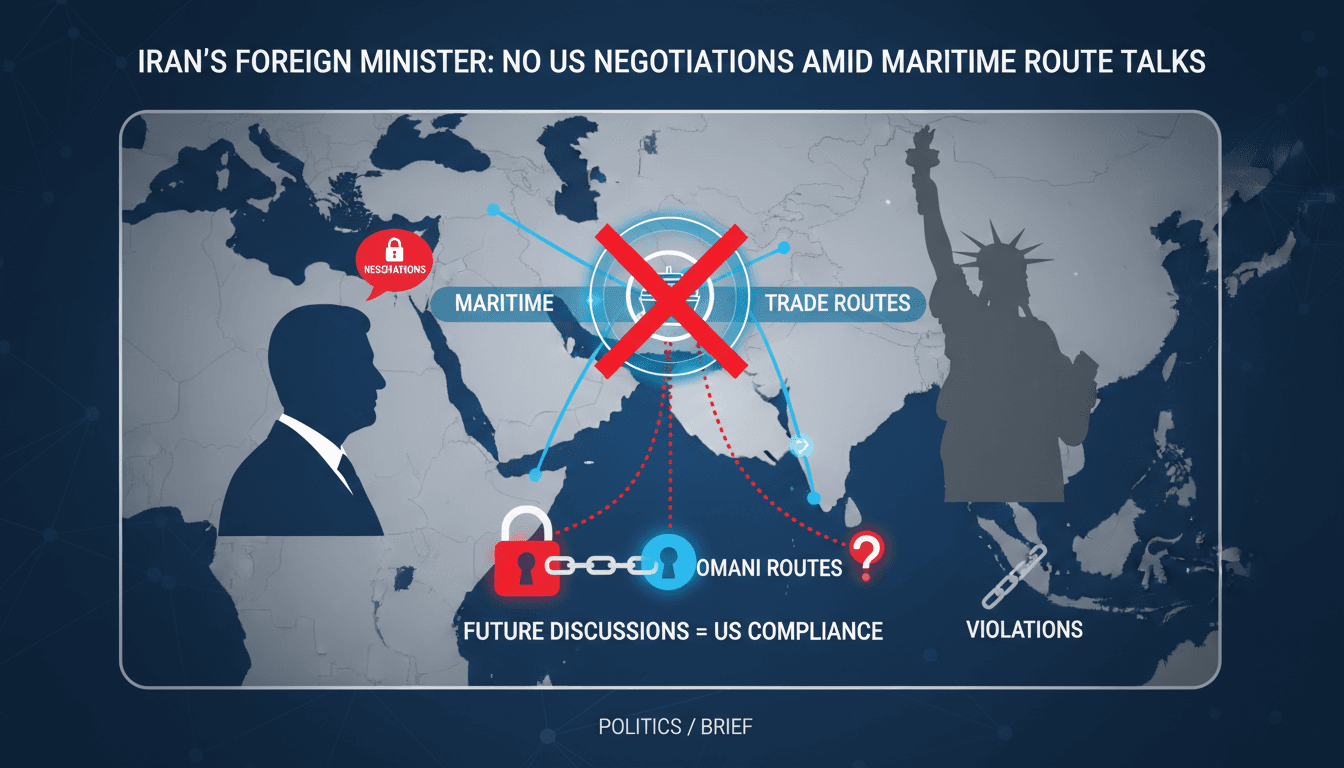
Iran's Foreign Minister Abbas Araqchi has confirmed that there are currently no negotiations taking place with the United States. He emphasized that any future discussions would depend on the U.S. addressing its violations of a recent memorandum of understanding. This statement highlights the ongoing diplomatic impasse between the two nations.
Araqchi noted that communications are limited to message exchanges through intermediaries, indicating a lack of direct dialogue. Meanwhile, Iran is in the final stages of negotiating new maritime routes in the strategically important Strait of Hormuz with Oman. However, this agreement does not guarantee the reopening of the strait.
The Context
The backdrop of this situation involves longstanding tensions between the U.S. and Iran, particularly regarding compliance with international agreements. Araqchi has made it clear that U.S. violations must cease and compensations paid before negotiations can resume. This sets a high bar for any potential diplomatic engagement.
The Strait of Hormuz is a critical maritime route, and the original pathways established in 1968 are now under review. Iran's collaboration with Oman to redefine these routes reflects its strategic interests in maintaining control over this vital passage. The implications of these negotiations extend beyond Iran and Oman, affecting global shipping and energy supply chains.
Takeaway
The future of U.S.-Iran negotiations remains uncertain, hinging on U.S. compliance with previous agreements. Stakeholders should monitor developments regarding the memorandum of understanding, as any progress or setbacks could significantly impact regional stability. Additionally, updates on maritime negotiations with Oman will be crucial for understanding the broader implications for shipping and security in the region.
As Iran sets strict conditions for negotiations, the geopolitical landscape will continue to evolve. Observers should remain vigilant as these dynamics unfold, particularly in light of the strategic importance of the Strait of Hormuz.
Pan-Arab political news and analysis.
"Al-Quds Al-Arabi is a London-based Arabic newspaper known for political coverage."
— A47 Editor
عراقجي: لا نجري حاليا أي مفاوضات مع الولايات المتحدة
Iranian Foreign Minister Abbas Araqchi stated that Iran is currently not engaged in any negotiations with the United States, emphasizing that talks will not resume unless Washington addresses the terms it violated in the recent memorandum of understa...
Jordanian news and regional updates.
"Roya News is a Jordanian outlet focused on breaking news and local affairs."
— A47 Editor
إيران توضح طبيعة التفاهمات مع مسقط وتحدد شروطا تعجيزية لأمريكا لإعادة فتح مضيق هرمز
Iranian Foreign Minister Abbas Araghchi reaffirmed the imminent conclusion of an agreement with Oman, clarifying the nature of discussions between the two nations regarding the strategic Strait of Hormuz. He emphasized that the terms set for the Unit...
Arabic-language coverage of political affairs and current events.
"Okaz political coverage typically follows mainstream Saudi framing on national and regional affairs."
— A47 Editor
عراقجي: نتبادل الرسائل.. ولا مفاوضات مع واشنطن
Iranian Foreign Minister Abbas Araqchi announced that there are currently no negotiations with the United States, only message exchanges through intermediaries. He emphasized that negotiations cannot resume as long as the U.S. continues to violate th...
Arabic-language coverage of international news and geopolitics.
"RT Arabic is a Russian state-funded outlet often criticized for promoting Kremlin-aligned narratives."
— A47 Editor
عراقجي: لا مفاوضات مع واشنطن قبل وقف الانتهاكات ودفع التعويضات
Iranian Foreign Minister Abbas Araqchi stated that Tehran is not currently engaged in negotiations with the United States, emphasizing that any resumption of talks is contingent upon the cessation of American violations and the payment of compensatio...
Arabic-language coverage of international news and geopolitics.
"RT Arabic is a Russian state-funded outlet often criticized for promoting Kremlin-aligned narratives."
— A47 Editor
عراقجي: الاتفاق مع عُمان لا يعني إعادة فتح مضيق هرمز
Iranian Foreign Minister Abbas Araghchi stated on Saturday that the agreement with Oman does not imply the reopening of the Strait of Hormuz. This statement clarifies the nature of the agreement and its limitations regarding maritime access in the st...