
Iran's Supreme Leader Reshapes Military Leadership Amidst Ongoing Conflict
What happened
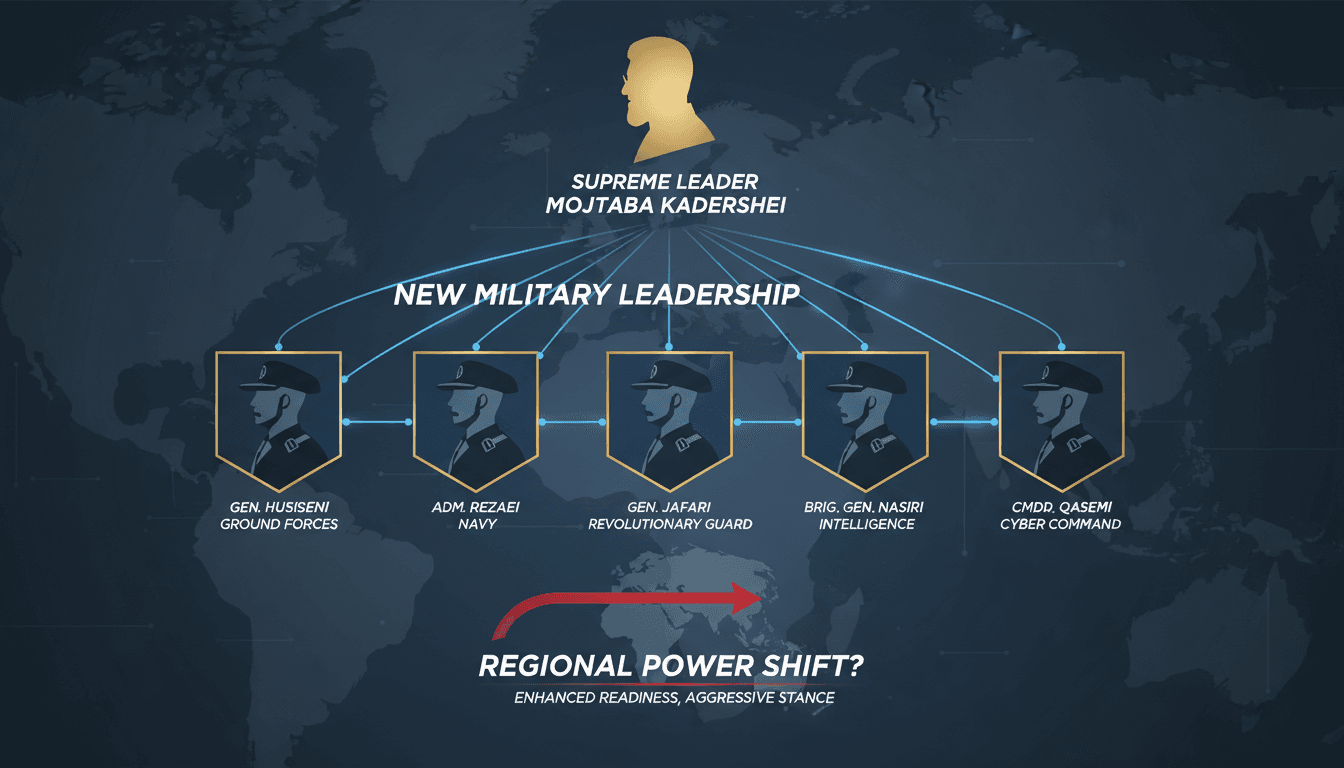
Iran's Supreme Leader, Mojtaba Khamenei, has appointed six new military leaders in a significant restructuring of the armed forces. This decision follows the recent assassination of several key military figures during ongoing conflicts. The new appointments include General Ali Abdollahi as Chief of Staff of the Armed Forces, Ahmad Vahidi as commander of the Revolutionary Guard, and Hussein Taeb as head of the Basij militia.
These changes reflect a strategic shift in Iran's military posture, aimed at enhancing readiness for potential future confrontations. Khamenei's leadership remains under scrutiny as these appointments are made in the context of ongoing economic challenges within the country.
The Context
The military leadership changes come in the wake of significant losses within Iran's military ranks, particularly following the assassination of several leaders. This restructuring is seen as a necessary response to bolster Iran's military command structure and address both internal and external security threats. The timing of these appointments is crucial, as they occur amidst heightened regional tensions and ongoing conflicts.
Khamenei's decisions are likely influenced by the need to project strength and stability in a volatile environment. The new leaders are expected to prioritize military capabilities, which may lead to a more aggressive stance in regional affairs.
Takeaway
The recent military appointments may indicate Iran's readiness to confront perceived threats more assertively. Observers should monitor Iran's military activities closely, particularly in response to regional tensions. The impact of these leadership changes on Iran's internal stability and external relations will be critical to watch in the coming months.
As the new leadership settles in, their strategies will likely shape Iran's military posture and influence its interactions with neighboring countries. The implications of these changes could resonate beyond Iran, affecting broader geopolitical dynamics in the region.
Arabic-language coverage of international news and geopolitics.
"RT Arabic is a Russian state-funded outlet often criticized for promoting Kremlin-aligned narratives."
— A47 Editor
طهران.. تغييرات واستعداد للمواجهة
Tehran has undergone military and security changes with new appointments in sensitive positions made by Supreme Leader Mojtaba Khamenei, reflecting the city's readiness to confront perceived threats.
Arabic-language coverage of political affairs and current events.
"Okaz political coverage typically follows mainstream Saudi framing on national and regional affairs."
— A47 Editor
بعد تصفية قادتها.. خامنئي يعيد بناء هرم إيران العسكري
In a significant move to restructure Iran's military leadership following recent conflicts that resulted in the assassination of several military commanders, Iranian Supreme Leader Mojtaba Khamenei announced a series of high-level appointments within...
Arabic-language coverage of international news and geopolitics.
"RT Arabic is a Russian state-funded outlet often criticized for promoting Kremlin-aligned narratives."
— A47 Editor
مجتبى خامنئي يصدر أمرا بـ 6 تعيينات في مناصب عسكرية كبرى بينها رئيس الأركان وقيادة الحرس الثوري
Iranian Supreme Leader Mojtaba Khamenei has issued orders for six new high-level military appointments, including the Chief of Staff and leadership positions within the Revolutionary Guard, as announced by the General Staff of the Iranian Armed Force...
Pan-Arab news coverage spanning politics, business, sports, and regional affairs.
"Asharq Al-Awsat reflects a broad Arab editorial perspective with strong attention to regional geopolitics."
— A47 Editor
خامنئي يعيد تشكيل القيادة العسكرية الإيرانية
Iranian Supreme Leader Mojtaba Khamenei implemented significant changes in the military leadership on Monday, affecting six senior commanders within the armed forces, including the Islamic Revolutionary Guard Corps (IRGC) and the Basij militia.