
Iran Declares Closure of Strait of Hormuz Until US Meets Demands
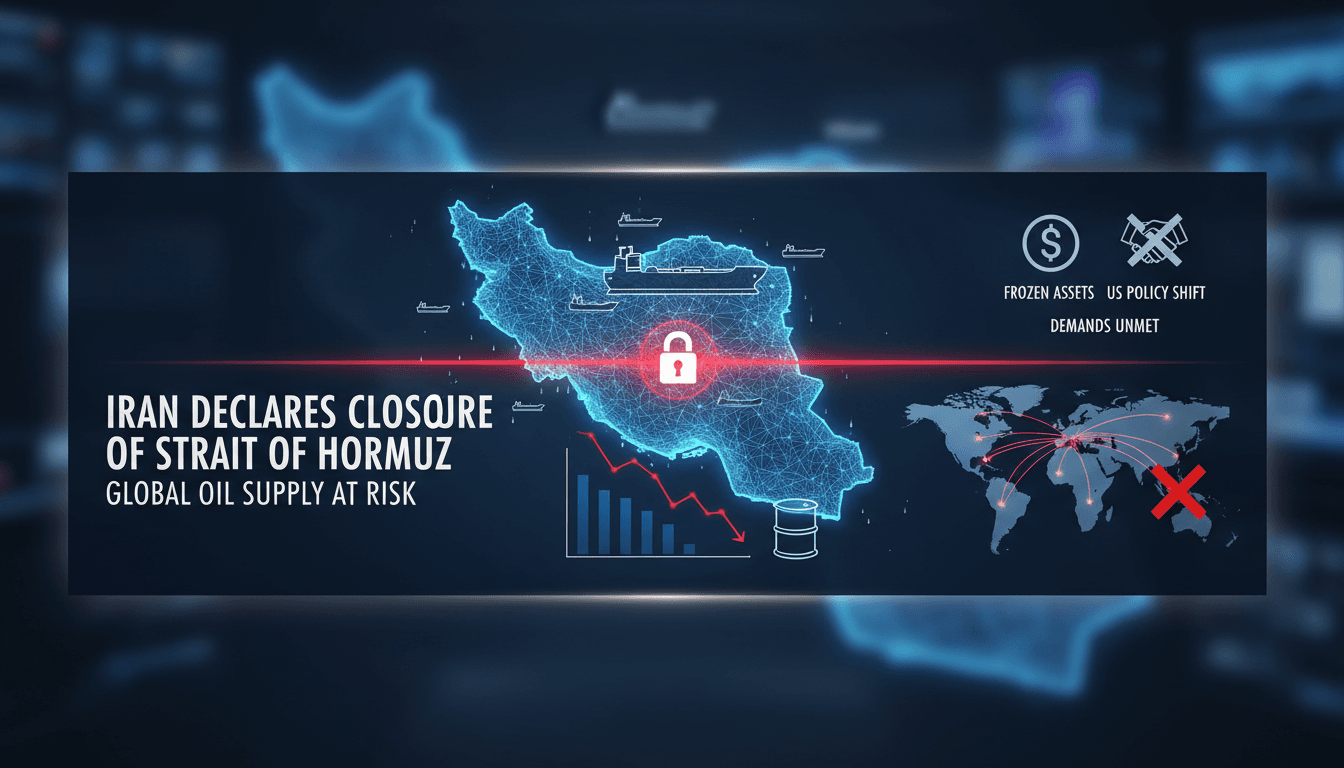
Here's what it means for you.
The closure of the Strait of Hormuz by Iran poses significant implications for global oil supply and market stability. As a critical maritime route, any disruption could lead to increased oil prices and economic strain worldwide. Stakeholders in energy markets should closely monitor developments, as the situation may escalate if diplomatic resolutions are not pursued.
What happened
Iran's National Security Council Secretary, Mohsen Rezaei, announced that the Strait of Hormuz will remain closed until the United States meets Iran's demands. These demands include the cessation of hostilities and the release of frozen Iranian assets. Rezaei emphasized that Iran is in a critical phase and will not compromise on its rights amid perceived threats.
This declaration marks a significant escalation in tensions between Iran and the U.S., particularly in the context of ongoing geopolitical conflicts. The closure of this vital waterway could have far-reaching consequences for international trade and energy security.
The Context
The Strait of Hormuz is a crucial maritime route for global oil shipments, with a substantial portion of the world's oil passing through it. Iran's demands reflect a broader context of escalating tensions with the U.S., which have intensified in recent years. The situation underscores the strategic importance of the Strait and the potential for significant disruptions to global oil supply if diplomatic solutions are not sought.
Iran's conditions for reopening the Strait have been communicated to the U.S., indicating a firm stance from Tehran. As military presence in the region may increase, the implications for regional security and international relations are profound.
Takeaway
The ongoing standoff between Iran and the U.S. suggests that tensions in the region may escalate further if diplomatic avenues are not explored. Observers should watch for potential U.S. responses to Iran's demands, which could shape the future of this conflict. Additionally, the impact of the Strait's closure on global oil prices will be a critical factor for markets and economies worldwide.
As the situation develops, the likelihood of increased military presence in the region may rise, complicating the dynamics further and potentially leading to confrontations.
Arabic-language coverage of international news and geopolitics.
"RT Arabic is a Russian state-funded outlet often criticized for promoting Kremlin-aligned narratives."
— A47 Editor
إيران: مضيق هرمز سيبقى مغلقا حتى تحقيق كافة شروطنا
Iranian National Security Council Secretary Mohsen Rezaei announced that the Strait of Hormuz will remain closed until all conditions set by Iran are met. This statement underscores Iran's firm stance on its strategic maritime interests and its willi...
Pan-Arab political news and analysis.
"Al-Quds Al-Arabi is a London-based Arabic newspaper known for political coverage."
— A47 Editor
مسؤول إيراني: مضيق هرمز سيظل مغلقا ما لم تستجب أمريكا لشروط طهران
Mohsen Rezai, the Secretary of Iran's Supreme National Security Council, stated that the Strait of Hormuz will remain closed unless the United States alters its behavior and accepts Iran's conditions. He emphasized the need for the U.S. to end hostil...
Jordanian news and regional updates.
"Roya News is a Jordanian outlet focused on breaking news and local affairs."
— A47 Editor
الأمن القومي الإيراني: مضيق هرمز لن يُفتح ما لم تغير واشنطن سلوكها وتقبل شروطنا
Mohsen Rezaei, the Secretary of Iran's Supreme National Security Council, emphasized that the Strait of Hormuz will remain closed unless Washington alters its behavior and accepts Iran's conditions. This statement reflects Iran's ongoing stance regar...
Jordanian news and regional updates.
"Roya News is a Jordanian outlet focused on breaking news and local affairs."
— A47 Editor
أمين الأمن القومي الإيراني: نمر بمرحلة مصيرية ولن نتراجع عن حقوقنا أمام التهديدات
Mohsen Rezaei, the Secretary of Iran's Supreme National Security Council, emphasized that Iran is currently at a critical juncture and will not back down from its rights in the face of threats. He made these statements during a recent address, highli...