
US Demands Israel Withdraw from Southern Lebanon Amid Hezbollah Disarmament Standoff
What happened
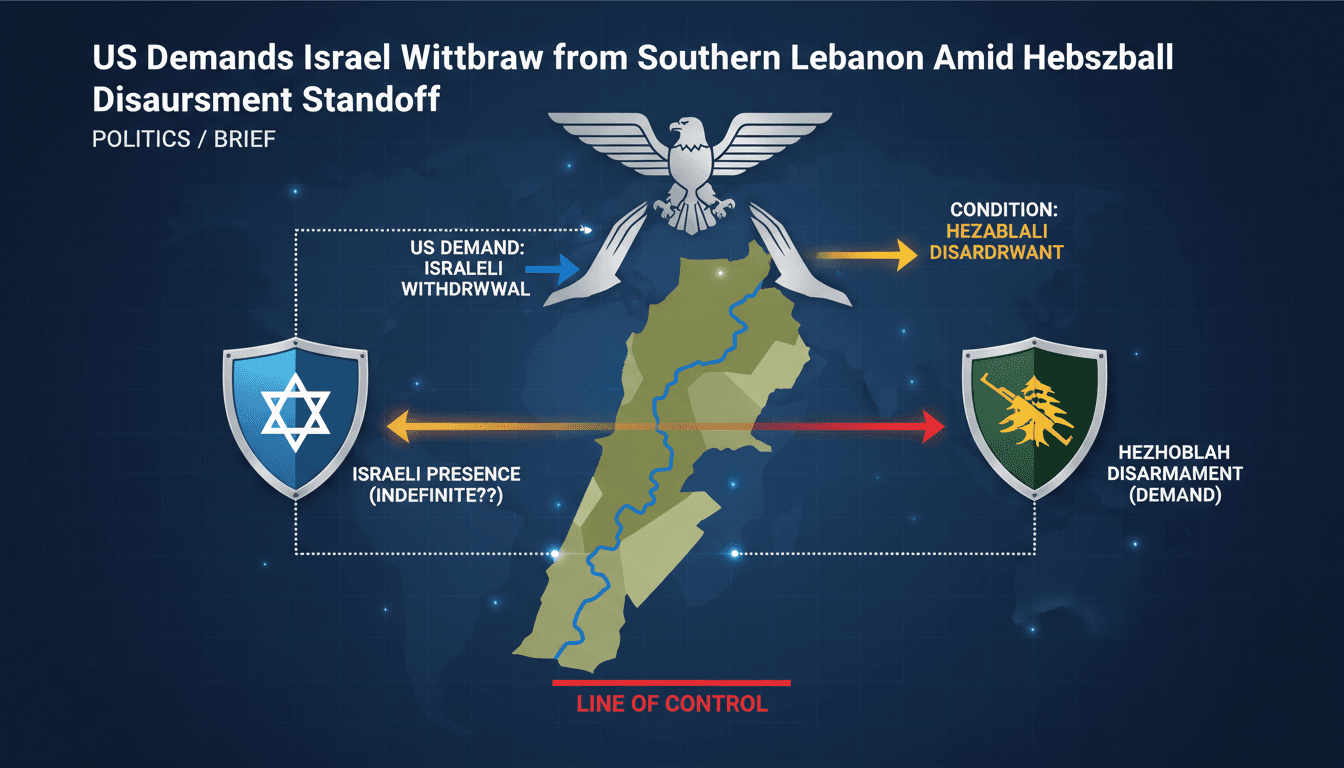
The U.S. has officially demanded that Israel withdraw its forces from southern Lebanon, a territory where Israel has expressed a desire to maintain a presence indefinitely. In response to this demand, Israel's defense minister stated that any withdrawal would be contingent upon the disarmament of Hezbollah. This linkage complicates the situation, as Hezbollah's disarmament remains a contentious issue.
Israel has established a security zone in southern Lebanon, which it is reluctant to abandon despite U.S. criticism. The ongoing tensions between Israel and Hezbollah are likely to complicate U.S.-Israel relations and regional stability in the long term.
The Context
The backdrop of this demand involves Israel's long-standing security concerns regarding Hezbollah, which has been a significant player in the region. The U.S. has expressed increasing concerns over Israel's indefinite occupation of southern Lebanon, urging a reevaluation of its military presence. Israel's insistence on linking its withdrawal to Hezbollah's disarmament reflects broader regional dynamics and security concerns.
The situation is further complicated by the historical context of conflict between Israel and Hezbollah, which has shaped the current security landscape. As the U.S. seeks to mediate, the stakes are high for all involved parties, making the resolution of this issue critical for regional stability.
Takeaway
The future of Israel's presence in southern Lebanon hinges on the disarmament of Hezbollah, a condition that remains contentious. Continued U.S. involvement may influence the dynamics, but the situation is likely to remain complex and fraught with tension. Observers should watch for potential developments in U.S.-Israel negotiations regarding Lebanon and any reactions from Hezbollah and other regional actors.
As the standoff continues, the implications for U.S.-Israel relations and regional stability will be significant. The evolving situation will require careful monitoring to understand its impact on broader geopolitical dynamics.
Pan-Arab news coverage spanning politics, business, sports, and regional affairs.
"Asharq Al-Awsat reflects a broad Arab editorial perspective with strong attention to regional geopolitics."
— A47 Editor
إسرائيل تتشدد في رفض الانسحاب وتمضي في «تخريب» جنوب لبنان
Israel has intensified its refusal to withdraw from Lebanese territory, obstructing U.S. mediation efforts by insisting on remaining in the newly established 'security zone.' This stance complicates the ongoing tensions in the region, particularly co...
Regional and international reporting focused on Middle Eastern politics, diplomacy, and economics.
"Asharq Al-Awsat is a Saudi-owned international newspaper reflecting mainstream Gulf political perspectives."
— A47 Editor
After US Criticism, Israel Ties Lebanon Withdrawal to Hezbollah Disarmament
Following U.S. criticism, Israeli Defense Minister Israel Katz announced that Israel will not withdraw its military forces from southern Lebanon until Hezbollah is disarmed. This statement clarifies previous comments that suggested a prolonged occupa...
Regional coverage and analysis focused on politics, diplomacy, and business across the Middle East.
"Al-Monitor is known for analytical reporting on Middle East politics and policy developments."
— A47 Editor
After US criticism, Israel ties Lebanon withdrawal to Hezbollah disarmament
Israeli Defense Minister Israel Katz stated that Israel will not withdraw its military forces from southern Lebanon until Hezbollah is disarmed, clarifying earlier comments that suggested a prolonged occupation. This statement follows U.S. criticism ...