
Saudi Arabia, Turkey, and Pakistan sign Makkah Agreement for mutual defense
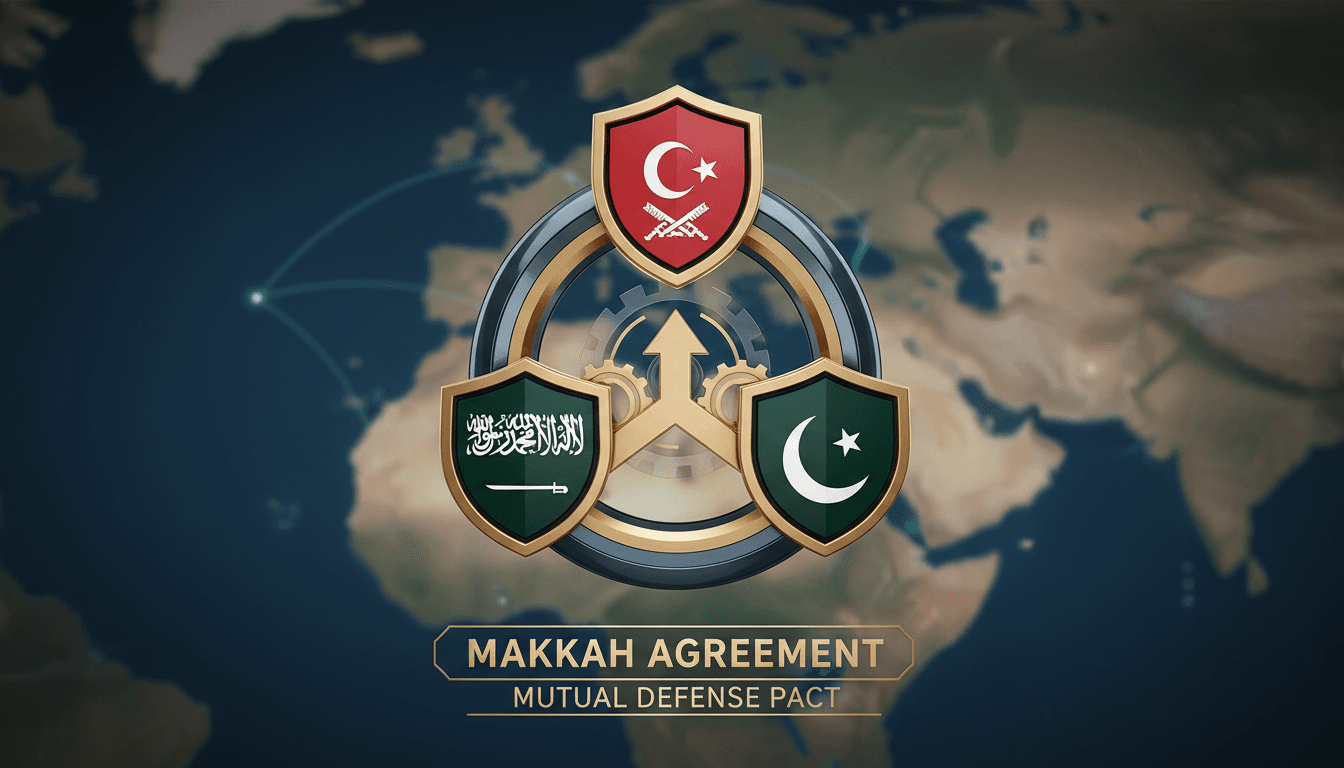
Here's what it means for you.
The signing of the Makkah Agreement signifies a pivotal shift in Middle Eastern geopolitics, as three key nations align their defense strategies. This mutual defense pact may enhance regional security and reduce reliance on U.S. support, potentially reshaping alliances in the area. Stakeholders in international relations should closely monitor the implications of this agreement for future military collaborations and regional stability.
What happened
Saudi Arabia, Turkey, and Pakistan have officially signed the Makkah Agreement, establishing a mutual defense pact. This agreement is comparable to NATO's Article 5, which asserts that an attack on one member is considered an attack on all. The signing reflects a growing trend towards regional alliances that seek to bolster self-defense capabilities independent of U.S. influence.
Pakistani Prime Minister Shehbaz Sharif expressed gratitude to President Trump for his support regarding the agreement. The endorsement from Trump underscores the significance of this pact in enhancing regional security. Experts suggest that this agreement could lead to a new regional order in the Middle East.
The Context
The Makkah Agreement comes at a time when Middle Eastern nations are increasingly seeking to establish their own security frameworks. The involvement of Saudi Arabia, Turkey, and Pakistan highlights the importance of these three nations in the region's geopolitical landscape. This agreement is seen as a response to evolving security dynamics, particularly in light of shifting U.S. foreign policy.
The timing of the agreement is crucial, as it reflects a broader trend of nations looking to strengthen their military ties and capabilities. The implications of this pact may extend beyond the signatory nations, influencing the security strategies of other Middle Eastern countries. As these nations collaborate more closely, the potential for a unified regional defense posture becomes increasingly likely.
Takeaway
As the Makkah Agreement takes shape, its impact on regional security and international relations will be closely observed. Analysts will monitor reactions from other Middle Eastern countries, particularly regarding their stance on this new alliance. Additionally, potential military collaborations or joint exercises among Saudi Arabia, Turkey, and Pakistan could further solidify their defense strategies.
The long-term implications of this agreement may lead to a reconfiguration of security dynamics in the Middle East. Stakeholders should remain vigilant as this development unfolds, as it may foster closer military collaboration among these nations and reshape the region's geopolitical landscape.
Arabic-language coverage of international news and geopolitics.
"RT Arabic is a Russian state-funded outlet often criticized for promoting Kremlin-aligned narratives."
— A47 Editor
شهباز شريف يشكر ترامب على دعمه لاتفاقية مكة ويشيد بقيادته الشجاعة والحاسمة
Pakistani Prime Minister Shahbaz Sharif responded to a tweet from U.S. President Donald Trump, who welcomed the signing of the 'Makkah Agreement for Collective Defense' between Saudi Arabia, Turkey, and Pakistan. Sharif expressed gratitude for Trump'...
Arabic-language coverage of political affairs and current events.
"Okaz political coverage typically follows mainstream Saudi framing on national and regional affairs."
— A47 Editor
ترمب يرحّب بتوقيع «اتفاقية مكة» بين السعودية وتركيا وباكستان
U.S. President Donald Trump welcomed the signing of the Mecca Agreement for mutual defense between Saudi Arabia, Turkey, and Pakistan, describing it as a significant and bold step. Trump expressed his satisfaction on his Truth Social account, highlig...
Pan-Arab political news and analysis.
"Al-Quds Al-Arabi is a London-based Arabic newspaper known for political coverage."
— A47 Editor
خبير أمريكي: “اتفاقية مكة” ترسم ملامح نظام إقليمي جديد في الشرق الأوسط بعيدا عن واشنطن
Recently, Pakistan, Saudi Arabia, and Turkey signed the 'Makkah Agreement for Joint Defense,' although no official text has been released. Reports suggest that the agreement aligns with a clause similar to Article 5 of the NATO treaty, indicating tha...