
US Expands Secondary Sanctions on Iran Amid Economic Crisis Claims
Here's what it means for you.
If you engage in global trade, heightened compliance risks could impact your operations.
Why it matters
The escalation of US sanctions on Iran could reshape global trade dynamics and financial relationships.
What happened (in 30 seconds)
- On August 25, 2026, the US announced expanded secondary sanctions targeting foreign entities trading with Iran.
- President Trump claimed Iran is "completely collapsing," signaling a shift from military action to economic isolation.
- Treasury Secretary Bessent described this as the largest financial campaign against an adversary, focusing on sectors like technology and oil.
The context you actually need
- US-Iran tensions escalated in February 2026, leading to military confrontations and a naval blockade that severely reduced Iranian oil exports.
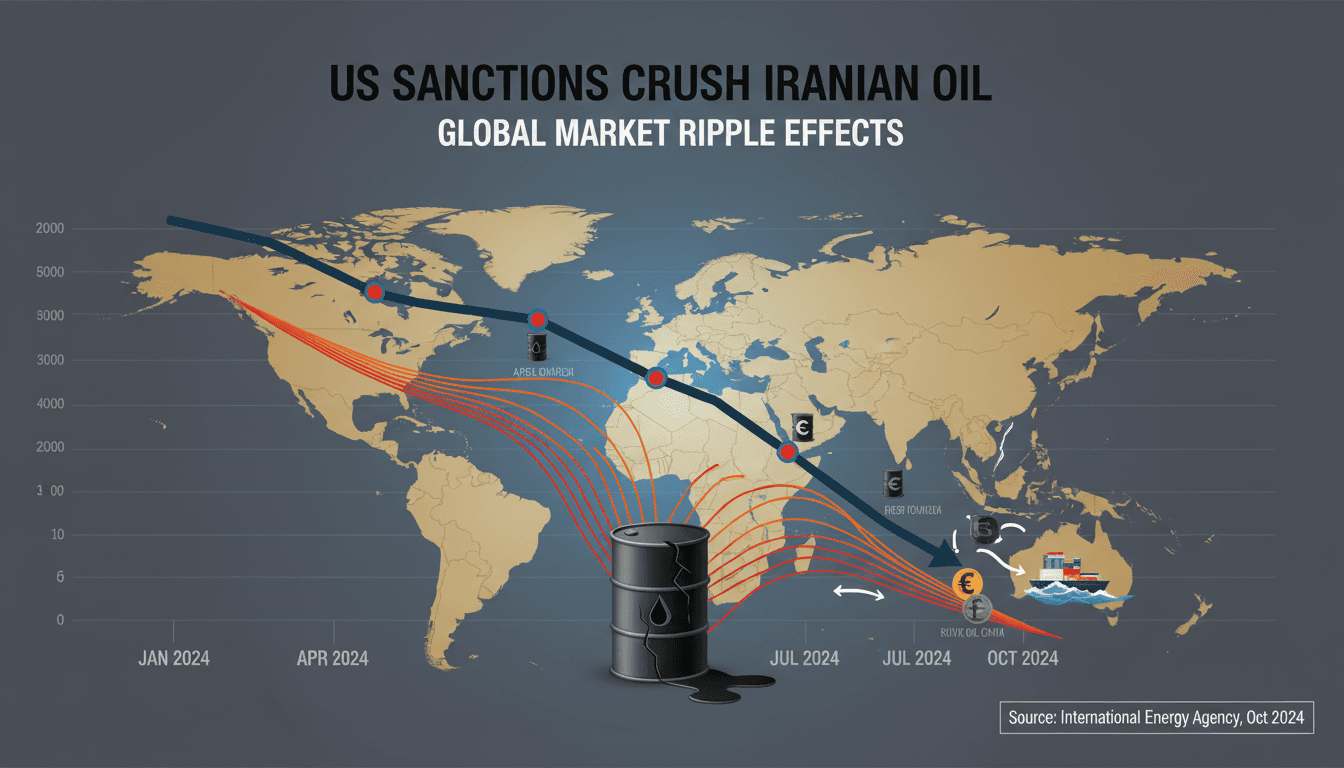
- By mid-August 2026, Iranian oil exports plummeted to 0.4 million barrels per day, down from 2 million barrels per day pre-conflict.
- Negotiations stalled after a 60-day period, prompting the US to pivot to economic measures to further constrain Iran's revenue.
What's really happening
The recent intensification of US secondary sanctions on Iran marks a significant shift in the strategy employed by the Trump administration. Following a series of military confrontations that began in February 2026, the US has moved away from direct military engagement and is now focusing on crippling Iran's economy through financial isolation. This strategy is encapsulated in the announcement of what Treasury Secretary Scott Bessent termed "Operation Economic Outcast," which aims to impose the broadest financial measures against Iran and its global partners.
The sanctions specifically target foreign entities involved in trade with designated Iranian sectors, including digital assets, technology, gold, aviation, and shipping. This expansion of secondary sanctions raises the stakes for global banks, companies, and states that maintain commercial ties with Iran. The goal is to sever Iran's remaining economic lifelines without resorting to immediate military action, thereby increasing the pressure on Tehran to comply with US demands.
The implications of these sanctions extend beyond Iran's borders. Dubai-based traders and financial institutions, for instance, face heightened compliance risks when engaging with Iranian counterparties. The potential for secondary sanctions exposure could disrupt regional trade flows and prompt a reevaluation of Gulf-Iran commercial links. As oil prices fluctuate in response to these developments, the broader oil market could experience volatility, affecting global supply chains and pricing structures.
Moreover, the Iranian government has dismissed these sanctions as a sign of US weakness, vowing to implement countermeasures. This could lead to retaliatory actions that further complicate the geopolitical landscape. The interconnectedness of global markets means that the repercussions of these sanctions will likely be felt across various sectors, from energy to technology, as companies reassess their exposure to Iranian trade.
Who feels it first (and how)
- Global banks: Increased compliance scrutiny and potential penalties for engaging with Iranian entities.
- Traders in Dubai: Heightened risks in regional trade flows and potential disruptions in supply chains.
- Energy sector: Fluctuating oil prices and potential supply shocks affecting profitability and market stability.
What to watch next
- Compliance measures: Monitor how global banks and companies adjust their compliance frameworks in response to the new sanctions.
- Iran's countermeasures: Watch for any retaliatory actions from Iran that could escalate tensions or disrupt markets.
- Oil market reactions: Keep an eye on oil price fluctuations and supply chain disruptions as the sanctions take effect.
The US has expanded secondary sanctions targeting Iran and its trading partners.
Global financial institutions will reassess their exposure to Iranian trade, leading to potential disruptions.
The long-term effectiveness of these sanctions in achieving US policy goals regarding Iran.
Frequently Asked Questions
- Why it matters?
- The escalation of US sanctions on Iran could reshape global trade dynamics and financial relationships.
- What happened (in 30 seconds)?
- On August 25, 2026, the US announced expanded secondary sanctions targeting foreign entities trading with Iran. President Trump claimed Iran is "completely collapsing," signaling a shift from military action to economic isolation. Treasury Secretary Bessent described this as the largest financial campaign against an adversary, focusing on sectors like technology and oil.
- What's really happening?
- The recent intensification of US secondary sanctions on Iran marks a significant shift in the strategy employed by the Trump administration. Following a series of military confrontations that began in February 2026, the US has moved away from direct military engagement and is now focusing on crippling Iran's economy through financial isolation. This strategy is encapsulated in the announcement of what Treasury Secretary Scott Bessent termed "Operation Economic Outcast," which aims to impose the
- Who feels it first (and how)?
- Global banks: Increased compliance scrutiny and potential penalties for engaging with Iranian entities. Traders in Dubai: Heightened risks in regional trade flows and potential disruptions in supply chains. Energy sector: Fluctuating oil prices and potential supply shocks affecting profitability and market stability.
- What to watch next?
- Compliance measures: Monitor how global banks and companies adjust their compliance frameworks in response to the new sanctions. Iran's countermeasures: Watch for any retaliatory actions from Iran that could escalate tensions or disrupt markets. Oil market reactions: Keep an eye on oil price fluctuations and supply chain disruptions as the sanctions take effect.
Arabic-language coverage of Saudi, regional, and international affairs.
"Al Bilad offers mainstream Saudi newspaper coverage across domestic and broader Arab topics."
— A47 Editor
واشنطن تواصل الضغط.. وترمب: إيران «تنهار بالكامل» قبل أكبر هجوم مالي
The United States has intensified its pressure on Iran, preparing to expand secondary sanctions against Tehran and its trading partners. This escalation coincides with President Donald Trump's strong statements asserting that Iran is 'collapsing comp...
Arabic-language coverage of international news and geopolitics.
"RT Arabic is a Russian state-funded outlet often criticized for promoting Kremlin-aligned narratives."
— A47 Editor
ترامب يصعّد بالعقوبات وإيران تهدد برد مزلزل
Former President Trump has intensified sanctions against Iran, prompting a strong warning from Iranian officials about a potential devastating response. This escalation in tensions highlights the ongoing conflict between the U.S. and Iran, particular...
Regional and international reporting focused on Middle Eastern politics, diplomacy, and economics.
"Asharq Al-Awsat is a Saudi-owned international newspaper reflecting mainstream Gulf political perspectives."
— A47 Editor
Trump Says Iran 'Collapsing' Ahead of Sanctions Announcement
Former President Donald Trump has claimed that Iran is 'collapsing' as he prepares to announce a new wave of economic sanctions aimed at crippling the Iranian economy. This assertion comes amid escalating military tensions and ongoing conflicts in th...
Arabic-language coverage of international news and geopolitics.
"RT Arabic is a Russian state-funded outlet often criticized for promoting Kremlin-aligned narratives."
— A47 Editor
ترامب يعلن "انهيار إيران" قبيل عقوبات تاريخية
U.S. President Donald Trump announced on his Truth Social platform that Iran is experiencing a complete collapse, coinciding with an anticipated announcement regarding new economic sanctions set to be revealed on Monday.
Arabic-language coverage of political affairs and current events.
"Okaz political coverage typically follows mainstream Saudi framing on national and regional affairs."
— A47 Editor
وزير الخزانة الأمريكي: زمن التسامح مع إيران انتهى.. والعقوبات تدخل مرحلة الحسم
U.S. Treasury Secretary Scott Pisent announced that the Trump administration is entering a new phase of pressure on Iran, launching a comprehensive financial campaign aimed at severing the remaining economic and trade channels relied upon by the Iran...