
UN Calls for International Protection Forces in Palestinian Territories Amid Rising Settler Violence
Here's what it means for you.
The ongoing conflict in the Palestinian territories could influence global humanitarian policies and international relations.
Why it matters
The UN's call for international protection forces highlights the escalating violence in the West Bank, which could affect international diplomatic stances and humanitarian aid.
What happened (in 30 seconds)
- On August 24, 2026, UN Special Rapporteur Francesca Albanese urged for international protection forces in the West Bank, East Jerusalem, and Gaza Strip.
- Albanese's statement followed documented incidents of violence by Israeli settlers against Palestinian civilians, including video evidence of assaults.
- The UN Security Council remains paralyzed due to repeated vetoes, limiting effective international response to the situation.
The context you actually need
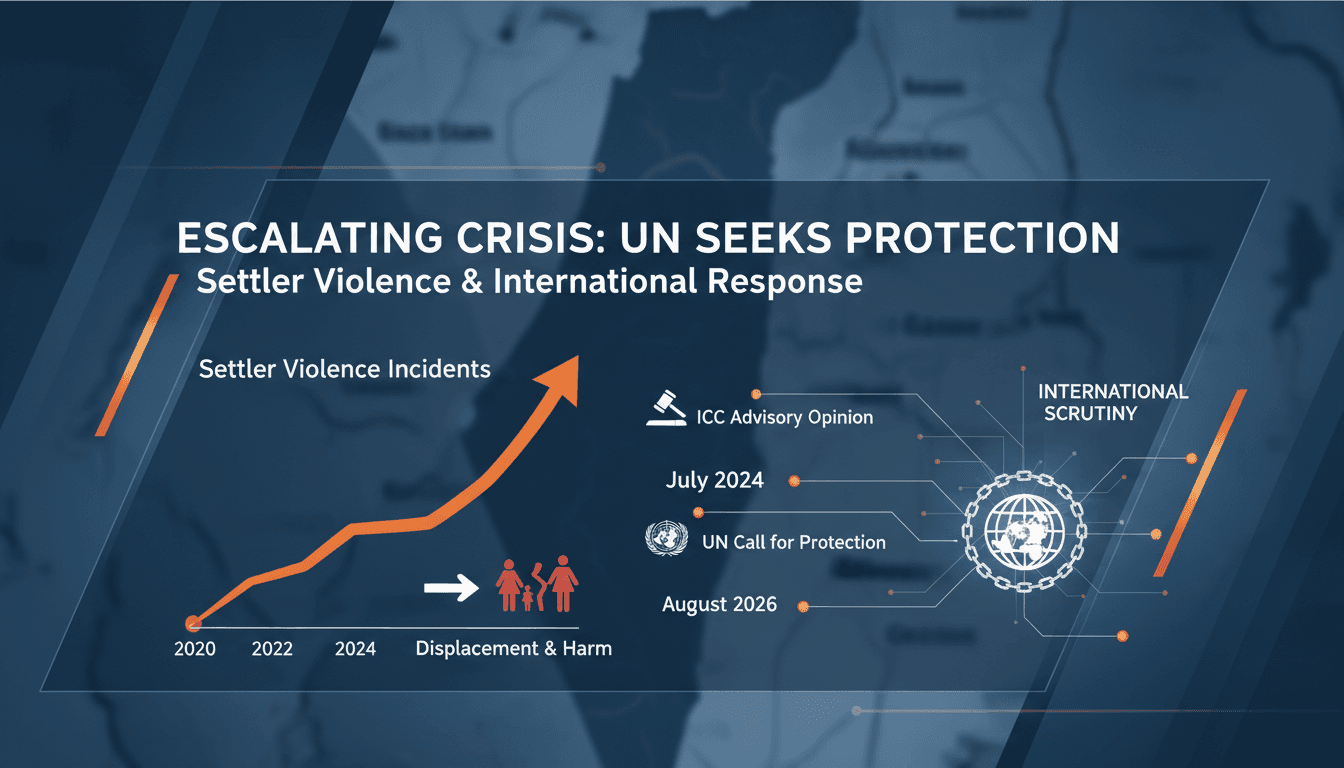
- Escalating violence: Over 1,084 documented settler attacks in the West Bank since October 2023 have resulted in significant casualties among Palestinians.
- Legal obligations: The July 2024 International Court of Justice advisory opinion mandates third states to act against the unlawful occupation, complicating international relations.
- UN inaction: The UN Security Council's inability to address the situation stems from consistent U.S. vetoes, which block resolutions regarding Gaza and the West Bank.
What's really happening
Francesca Albanese's call for international protection forces is a response to a troubling trend of escalating violence against Palestinian civilians by Israeli settlers. The documented incidents, including assaults on farmers and vulnerable individuals, underscore a deteriorating security situation in the occupied territories. Albanese's statement is not merely a reaction to recent events; it reflects a broader pattern of violence that has been intensifying over the years, particularly amid the ongoing Israel-Hamas conflict.
The July 2024 advisory opinion from the International Court of Justice (ICJ) has added a layer of urgency to the situation. It asserts the illegality of the Israeli occupation and obligates third states to refrain from actions that would support its continuation. This legal framework places pressure on the international community to respond, yet the paralysis of the UN Security Council due to repeated U.S. vetoes has stymied any meaningful action. Albanese's emphasis on the need for practical measures beyond mere statements highlights the frustration with the current diplomatic landscape.
The video evidence shared by Albanese serves as a stark reminder of the human cost of this conflict. It illustrates not only the immediate danger faced by Palestinian civilians but also the broader implications for international human rights norms. The call for international protection forces raises questions about the effectiveness of existing frameworks for protecting civilians in conflict zones. If the international community fails to act, it risks normalizing violence and undermining the principles of human rights and humanitarian law.
Moreover, the lack of immediate governmental responses or market shifts following Albanese's statement indicates a troubling trend of desensitization to violence in the region. The absence of new UN actions or diplomatic initiatives suggests that the international community may be struggling to find a viable path forward. This stagnation could have long-term implications for peace efforts and the stability of the region.
Who feels it first (and how)
- Palestinian civilians: Directly affected by violence and instability, facing increased risks to their safety and livelihoods.
- International NGOs: Organizations focused on human rights and humanitarian aid may see increased demand for their services and advocacy efforts.
- Global policymakers: Governments and international bodies will need to navigate the complex implications of the UN's call, influencing diplomatic relations and aid strategies.
What to watch next
- International responses: Monitor how various countries and organizations react to the UN's call for protection forces, as this could reshape diplomatic relations in the region.
- Settler violence trends: Keep an eye on the frequency and severity of settler attacks, as these incidents may influence public opinion and policy decisions globally.
- UN Security Council dynamics: Watch for any shifts in the U.S. stance or changes in veto patterns that could enable more decisive action from the UN regarding the situation in Palestine.
The documented increase in settler violence and its impact on Palestinian civilians.
Continued calls for international intervention and potential shifts in humanitarian aid strategies.
The effectiveness of international legal frameworks in prompting action from third states and the UN.
Frequently Asked Questions
- Why it matters?
- The UN's call for international protection forces highlights the escalating violence in the West Bank, which could affect international diplomatic stances and humanitarian aid.
- What happened (in 30 seconds)?
- On August 24, 2026, UN Special Rapporteur Francesca Albanese urged for international protection forces in the West Bank, East Jerusalem, and Gaza Strip. Albanese's statement followed documented incidents of violence by Israeli settlers against Palestinian civilians, including video evidence of assaults. The UN Security Council remains paralyzed due to repeated vetoes, limiting effective international response to the situation.
- What's really happening?
- Francesca Albanese's call for international protection forces is a response to a troubling trend of escalating violence against Palestinian civilians by Israeli settlers. The documented incidents, including assaults on farmers and vulnerable individuals, underscore a deteriorating security situation in the occupied territories. Albanese's statement is not merely a reaction to recent events; it reflects a broader pattern of violence that has been intensifying over the years, particularly amid the
- Who feels it first (and how)?
- Palestinian civilians: Directly affected by violence and instability, facing increased risks to their safety and livelihoods. International NGOs: Organizations focused on human rights and humanitarian aid may see increased demand for their services and advocacy efforts. Global policymakers: Governments and international bodies will need to navigate the complex implications of the UN's call, influencing diplomatic relations and aid strategies.
- What to watch next?
- International responses: Monitor how various countries and organizations react to the UN's call for protection forces, as this could reshape diplomatic relations in the region. Settler violence trends: Keep an eye on the frequency and severity of settler attacks, as these incidents may influence public opinion and policy decisions globally. UN Security Council dynamics: Watch for any shifts in the U.S. stance or changes in veto patterns that could enable more decisive action from the UN rega
Algerian and regional news coverage.
"Echorouk is a major Algerian outlet with broad national reporting."
— A47 Editor
بسبب اعتداءات المستوطنين المتكررة.. هذا ما دعت إليه فرانشيسكا ألبانيز
Francesca Albanese, the UN Special Rapporteur, has called for the deployment of international protection forces in the West Bank, East Jerusalem, and Gaza due to repeated attacks by Israeli settlers on Palestinians. Albanese shared footage showing yo...
Arabic-language coverage of international news and geopolitics.
"RT Arabic is a Russian state-funded outlet often criticized for promoting Kremlin-aligned narratives."
— A47 Editor
مقررة الأمم المتحدة تدعو لنشر قوات حماية دولية في الضفة وغزة والقدس
Francesca Albanese, the UN Special Rapporteur, has called for the deployment of international protection forces in the West Bank, East Jerusalem, and the Gaza Strip. This appeal highlights the ongoing concerns regarding the safety and security of civ...
RT is a Russian state-funded network covering global events from a Russian perspective.
"RT is widely criticized for promoting pro-Kremlin narratives and is considered by many to be a state propaganda outlet."
— A47 Editor
UN expert urges peacekeepers in Palestinian territories as settler attacks surge
UN Special Rapporteur Francesca Albanese has called for the establishment of an international protection force in the Palestinian territories amid a surge in violent attacks by Israeli settlers. This appeal comes as the situation in the West Bank det...