
Former Grand Mufti of Syria Sentenced to Life Imprisonment for War Crimes
Here's what it means for you.
The sentencing of a high-profile religious figure in Syria signals a shift towards accountability that could influence global perceptions of transitional justice.
Why it matters
This ruling reflects ongoing efforts to hold former regime figures accountable, impacting international relations and humanitarian policies.
What happened (in 30 seconds)
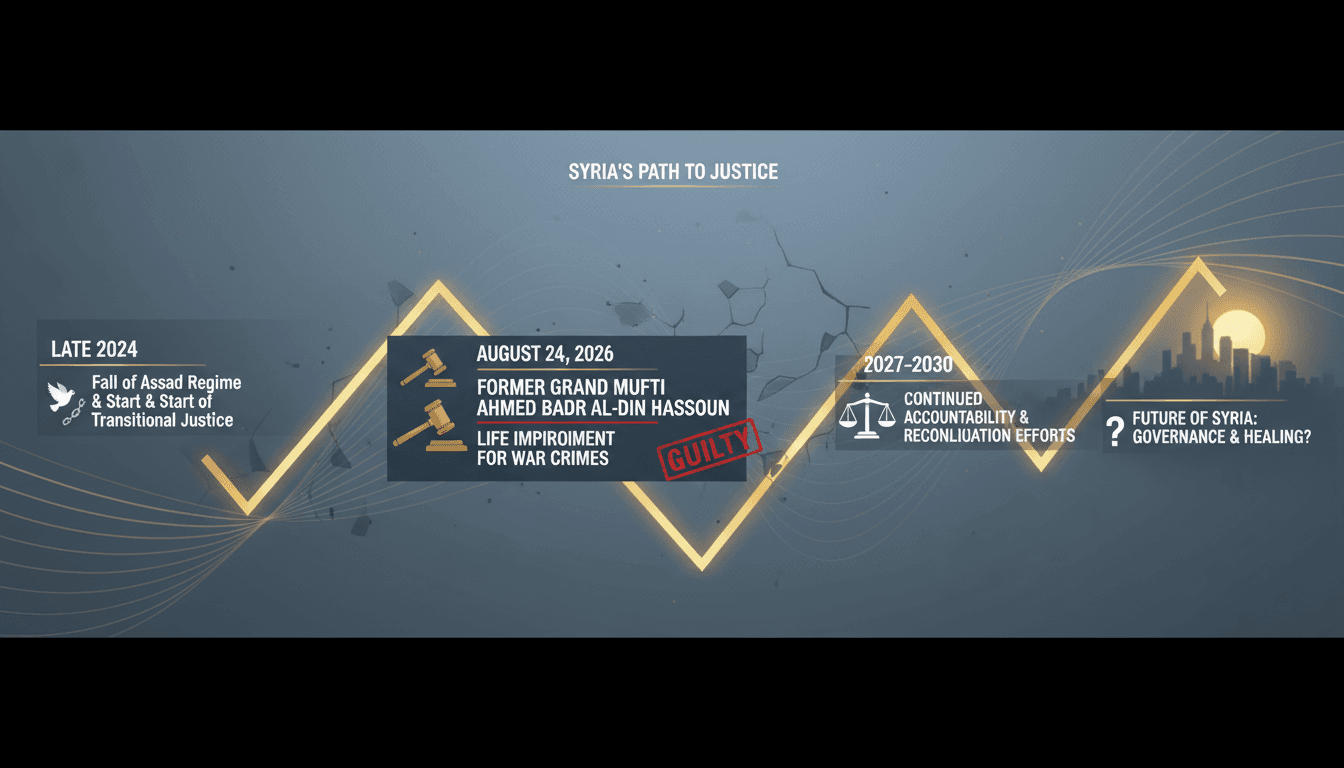
- On August 24, 2026, former Grand Mufti Ahmed Badr al-Din Hassoun was sentenced to life imprisonment for war crimes and incitement.
- The Fourth Criminal Court in Damascus also ordered the confiscation of his assets, barring any future amnesty.
- This verdict is part of Syria's transitional justice process following the fall of the Assad regime in late 2024.
The context you actually need
- Hassoun served as Grand Mufti from 2005 until the position was abolished in 2021, supporting the Assad regime throughout the civil war.
- His trial began in June 2026, focusing on his role in inciting violence and legitimizing military operations against civilians.
- This sentencing marks the tenth conviction of a former regime figure, indicating a broader trend towards accountability in Syria.
What's really happening
The sentencing of Ahmed Badr al-Din Hassoun is a significant milestone in Syria's transitional justice efforts, which aim to address the atrocities committed during the civil war. Hassoun, who served as Grand Mufti from 2005 until the position's abolition in 2021, was a vocal supporter of the Assad regime, providing religious justification for military actions that resulted in civilian casualties. His conviction for war crimes and incitement reflects a systematic approach to dismantling the ideological support structures that enabled the regime's violent tactics.
The court's ruling, which includes life imprisonment and asset confiscation, underscores the seriousness of the charges against Hassoun. It also sends a clear message to other former regime figures that accountability is being pursued rigorously. The trial revealed how Hassoun exploited his religious authority to forge connections with security officials and military leaders, facilitating a network that supported regime violence. This exploitation of religious office for personal gain and political influence is a critical aspect of the transitional justice narrative, as it highlights the intertwining of religion and state power in Syria.
The broader implications of this ruling extend beyond individual accountability. It signifies a shift in the legal landscape of Syria, where transitional authorities are actively working to establish mechanisms for justice and reconciliation. The trial and sentencing of Hassoun are part of a larger trend, as evidenced by the recent convictions of other high-profile figures associated with the Assad regime. This collective accountability effort aims to restore trust in the judicial system and provide a framework for addressing the grievances of victims and survivors of the conflict.
As the transitional justice process unfolds, it is likely to influence international perceptions of Syria and its future governance. The commitment to holding former officials accountable may impact foreign relations, humanitarian aid, and the potential for reconstruction efforts in the country. The ruling also raises questions about the role of religious leaders in conflict and their accountability for inciting violence, which could resonate in other regions facing similar challenges.
Who feels it first (and how)
- Syrian civilians: Victims of the regime's violence may feel a sense of justice and hope for accountability.
- International NGOs: Organizations focused on human rights and transitional justice will monitor these developments closely.
- Religious leaders: Those in positions of authority may reassess their roles and responsibilities in conflict situations.
What to watch next
- Future convictions: Monitor upcoming trials of other regime figures, which could further shape the narrative of accountability in Syria.
- International response: Watch for reactions from foreign governments and NGOs regarding the implications of this ruling on humanitarian aid and diplomatic relations.
- Transitional justice mechanisms: Keep an eye on the establishment of legal frameworks that may emerge as part of Syria's ongoing transition.
Ahmed Hassoun has been sentenced to life imprisonment for war crimes.
Additional trials of former regime figures will occur as part of the transitional justice process.
The long-term impact of these convictions on Syria's political landscape and international relations remains uncertain.
Frequently Asked Questions
- Why it matters?
- This ruling reflects ongoing efforts to hold former regime figures accountable, impacting international relations and humanitarian policies.
- What happened (in 30 seconds)?
- On August 24, 2026, former Grand Mufti Ahmed Badr al-Din Hassoun was sentenced to life imprisonment for war crimes and incitement. The Fourth Criminal Court in Damascus also ordered the confiscation of his assets, barring any future amnesty. This verdict is part of Syria's transitional justice process following the fall of the Assad regime in late 2024.
- What's really happening?
- The sentencing of Ahmed Badr al-Din Hassoun is a significant milestone in Syria's transitional justice efforts, which aim to address the atrocities committed during the civil war. Hassoun, who served as Grand Mufti from 2005 until the position's abolition in 2021, was a vocal supporter of the Assad regime, providing religious justification for military actions that resulted in civilian casualties. His conviction for war crimes and incitement reflects a systematic approach to dismantling the ideo
- Who feels it first (and how)?
- Syrian civilians: Victims of the regime's violence may feel a sense of justice and hope for accountability. International NGOs: Organizations focused on human rights and transitional justice will monitor these developments closely. Religious leaders: Those in positions of authority may reassess their roles and responsibilities in conflict situations.
- What to watch next?
- Future convictions: Monitor upcoming trials of other regime figures, which could further shape the narrative of accountability in Syria. International response: Watch for reactions from foreign governments and NGOs regarding the implications of this ruling on humanitarian aid and diplomatic relations. Transitional justice mechanisms: Keep an eye on the establishment of legal frameworks that may emerge as part of Syria's ongoing transition.
Arabic-language coverage of Saudi, regional, and international affairs.
"Al Bilad offers mainstream Saudi newspaper coverage across domestic and broader Arab topics."
— A47 Editor
المؤبد لأحمد حسون مفتي النظام السوري السابق
The Fourth Criminal Court in Damascus has sentenced Ahmad Hassoun, the former Mufti of the Syrian regime under President Bashar al-Assad, to life imprisonment after convicting him of inciting violence and justifying murder. The trial began on June 25...
Pan-Arab news coverage spanning politics, business, sports, and regional affairs.
"Asharq Al-Awsat reflects a broad Arab editorial perspective with strong attention to regional geopolitics."
— A47 Editor
الحكم بالمؤبد على «مفتي البراميل» في سوريا
A Syrian court has sentenced former Grand Mufti Ahmad Badreddin Hassoun to life imprisonment after convicting him of multiple crimes, including inciting sectarian tensions. This ruling marks a significant legal action against a prominent religious fi...
Arabic-language coverage of political affairs and current events.
"Okaz political coverage typically follows mainstream Saudi framing on national and regional affairs."
— A47 Editor
القضاء السوري : السجن المؤبد مدى الحياة لمفتي نظام بشار الأسد
A Syrian court has sentenced former Mufti Ahmad Hassoun to life imprisonment for inciting violence, justifying killings, and abusing his position, as part of ongoing transitional justice efforts in Syria. The ruling highlights the role of the officia...
Regional and international reporting focused on Middle Eastern politics, diplomacy, and economics.
"Asharq Al-Awsat is a Saudi-owned international newspaper reflecting mainstream Gulf political perspectives."
— A47 Editor
Syria Sentences Assad-Era Top Muslim Cleric to Life Imprisonment
A Syrian court has sentenced Ahmad Hassoun, a prominent Muslim cleric known for his allegiance to the Assad regime, to life imprisonment for inciting violence and other crimes during the ongoing civil war. This ruling underscores the legal repercussi...
Arabic-language coverage of international news and geopolitics.
"RT Arabic is a Russian state-funded outlet often criticized for promoting Kremlin-aligned narratives."
— A47 Editor
الحكم على مفتي سوريا السابق أحمد حسون بالسجن المؤبد
The Fourth Criminal Court in Damascus has sentenced former Syrian Mufti Ahmad Hassoun to life imprisonment, convicting him of inciting violence and justifying murder. This ruling reflects the court's stance on accountability for actions that contribu...
Comprehensive coverage of Middle Eastern and global issues.
"Al Jazeera is a prominent voice from the Global South, especially the Middle East, with an emphasis on underreported stories."
— A47 Editor
‘Barrel bomb mufti’ Ahmad Hassoun handed life sentence in Syria trial
Ahmad Hassoun, known as the 'barrel bomb mufti' for his close ties to the Assad regime, has been sentenced to life in prison by Judge Fakhr al-Din al-Aryan for inciting violence and other crimes in Syria. This ruling highlights the ongoing legal cons...
Global news coverage with extensive reporting on Middle Eastern conflicts and geopolitics.
"Al Jazeera is a Qatar-based broadcaster known for wide regional coverage and alternative perspectives."
— A47 Editor
‘Barrel bomb mufti’ Ahmad Hassoun handed life sentence in Syria trial
Ahmad Hassoun, known as the 'barrel bomb mufti' for his close ties to the Assad regime, has been sentenced to life in prison by Judge Fakhr al-Din al-Aryan for inciting violence and other crimes in Syria. This ruling highlights the ongoing legal cons...