
Trump Declares Iran on Verge of Collapse Ahead of New Sanctions Announcement
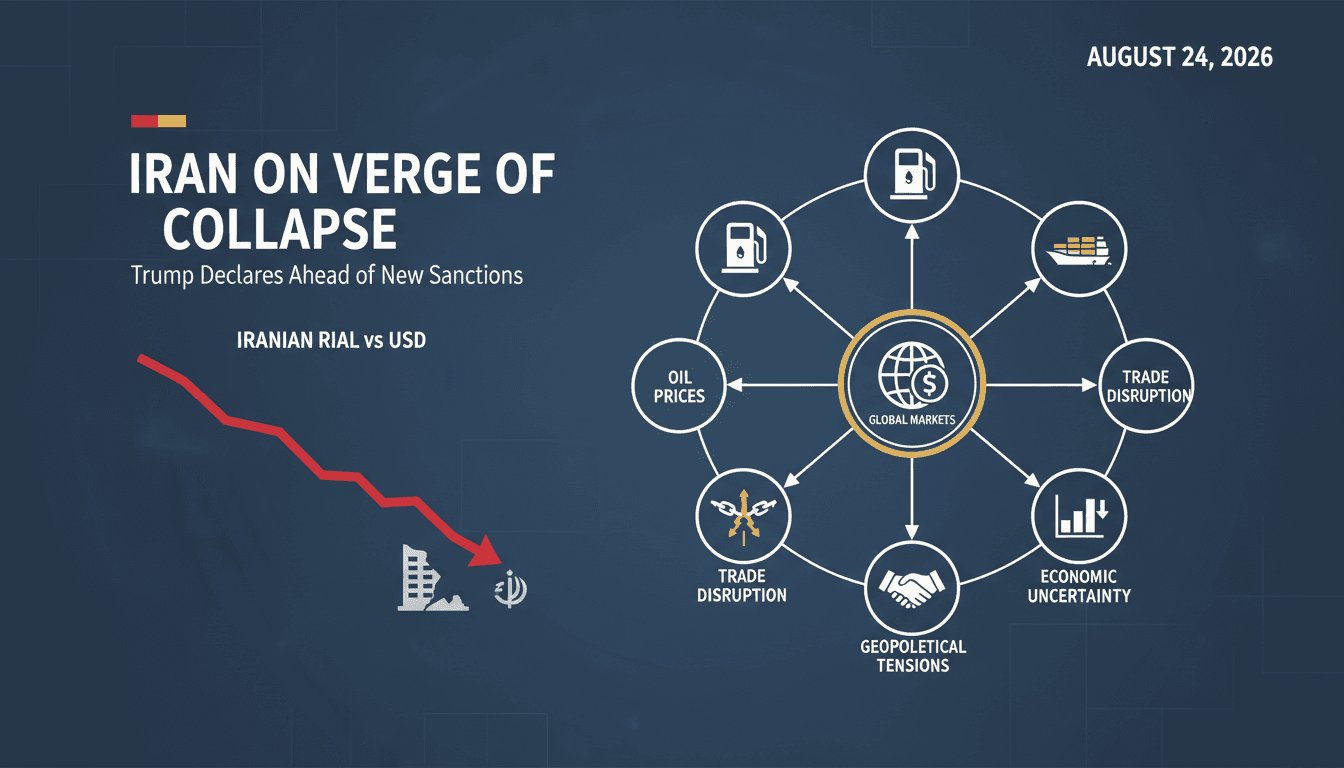
Here's what it means for you.
The intensifying sanctions against Iran could ripple through global markets, affecting energy prices and trade dynamics.
Why it matters
The new sanctions are poised to disrupt not only Iran's economy but also regional trade networks, impacting global supply chains.
What happened (in 30 seconds)
- Trump declared Iran 'completely collapsing' just hours before announcing new sanctions aimed at crippling Tehran's economy.
- Treasury Secretary Scott Bessent described the sanctions as the 'toughest in history,' targeting Iran's financial lifelines and trade partners.
- Iran's currency hit a record low, trading at over 2 million rials per US dollar, reflecting severe economic distress.
The context you actually need
- Escalating tensions between the US and Iran have included military exchanges and a naval blockade, heightening the stakes for regional stability.
- The interim peace agreement signed in June 2026 collapsed, leading to renewed economic and military pressure from the US.
- UAE authorities suspended financial transactions with Iran, jeopardizing Dubai's role as a key hub for Iranian trade and logistics.
What's really happening
On August 24, 2026, President Trump’s emphatic declaration on Truth Social about Iran's economic collapse set the stage for a significant escalation in US-Iran relations. This statement came just before Treasury Secretary Scott Bessent's press conference, where he was expected to unveil a new wave of sanctions described as unprecedented in their severity. The sanctions target not only Iran but also its trade partners, aiming to cut off financial lifelines that sustain its economy.
The Iranian rial's staggering decline to over 2 million rials per US dollar reflects a broader economic crisis exacerbated by years of sanctions and military confrontations. The Trump administration's strategy, known as the maximum pressure campaign, combines military threats with economic isolation, aiming to force Tehran to abandon its nuclear ambitions and regional interventions.
The implications of these sanctions extend beyond Iran. The UAE's decision to halt all financial transactions with Iran directly impacts Dubai, a critical re-export and financial hub. This disruption could lead to significant changes in local commerce, logistics, and free-zone activities that rely on regional trade flows. As Iran's economy continues to deteriorate, the potential for retaliatory measures, such as disruptions in oil exports, could further destabilize energy markets.
Moreover, the sanctions are likely to create volatility in regional currencies and energy prices, affecting global markets. Investors and businesses must prepare for a landscape where Iranian oil exports could be severely curtailed, leading to tighter supply and potentially higher prices at the pump.
The structural implications of these sanctions are profound. They signal a shift in how the US engages with adversarial states, prioritizing economic warfare as a primary tool of foreign policy. This approach could set a precedent for future engagements with other nations, reshaping global trade dynamics and alliances.
Who feels it first (and how)
- Energy sector professionals: Fluctuations in oil prices could impact jobs and investments.
- Businesses in Dubai: Companies reliant on Iranian trade may face disruptions and financial losses.
- Investors: Market volatility could affect portfolios, particularly in energy and emerging markets.
- Consumers: Potential increases in energy prices could lead to higher costs for goods and services.
What to watch next
- Iran's response: Watch for potential retaliatory measures, including disruptions in oil exports, which could impact global energy prices.
- Regional trade dynamics: Monitor how other countries, particularly in the Gulf, adjust their trade policies in response to US sanctions.
- Market volatility: Keep an eye on fluctuations in energy prices and regional currencies as the sanctions take effect.
The sanctions will target Iran's economy and its trade partners.
Increased volatility in energy prices and regional currencies as markets react.
The long-term effectiveness of the sanctions in achieving US foreign policy goals.
Frequently Asked Questions
- Why it matters?
- The new sanctions are poised to disrupt not only Iran's economy but also regional trade networks, impacting global supply chains.
- What happened (in 30 seconds)?
- Trump declared Iran 'completely collapsing' just hours before announcing new sanctions aimed at crippling Tehran's economy. Treasury Secretary Scott Bessent described the sanctions as the 'toughest in history,' targeting Iran's financial lifelines and trade partners. Iran's currency hit a record low, trading at over 2 million rials per US dollar, reflecting severe economic distress.
- What's really happening?
- On August 24, 2026, President Trump’s emphatic declaration on Truth Social about Iran's economic collapse set the stage for a significant escalation in US-Iran relations. This statement came just before Treasury Secretary Scott Bessent's press conference, where he was expected to unveil a new wave of sanctions described as unprecedented in their severity. The sanctions target not only Iran but also its trade partners, aiming to cut off financial lifelines that sustain its economy. The Iranian r
- Who feels it first (and how)?
- Energy sector professionals: Fluctuations in oil prices could impact jobs and investments. Businesses in Dubai: Companies reliant on Iranian trade may face disruptions and financial losses. Investors: Market volatility could affect portfolios, particularly in energy and emerging markets. Consumers: Potential increases in energy prices could lead to higher costs for goods and services.
- What to watch next?
- Iran's response: Watch for potential retaliatory measures, including disruptions in oil exports, which could impact global energy prices. Regional trade dynamics: Monitor how other countries, particularly in the Gulf, adjust their trade policies in response to US sanctions. Market volatility: Keep an eye on fluctuations in energy prices and regional currencies as the sanctions take effect.
Regional and international reporting focused on Middle Eastern politics, diplomacy, and economics.
"Asharq Al-Awsat is a Saudi-owned international newspaper reflecting mainstream Gulf political perspectives."
— A47 Editor
Trump Says Iran 'Collapsing' Ahead of Sanctions Announcement
Former President Donald Trump has declared that Iran is 'collapsing' as he prepares to announce a new round of severe economic sanctions aimed at crippling the Iranian economy. This statement comes amidst escalating military tensions and a backdrop o...
Arabic-language coverage of international news and geopolitics.
"RT Arabic is a Russian state-funded outlet often criticized for promoting Kremlin-aligned narratives."
— A47 Editor
ترامب يعلن "انهيار إيران" قبيل عقوبات تاريخية
U.S. President Donald Trump announced on his Truth Social platform that Iran is experiencing a complete collapse, coinciding with an anticipated announcement regarding new economic sanctions set to be revealed on Monday.
Arabic-language political and world news coverage for UAE readers.
"Emarat Al Youm world coverage usually presents international developments through a UAE and Arab audience lens."
— A47 Editor
ترامب: إيران "تنهار" بشكل كامل ترامب: إيران "تنهار" بشكل كامل
On August 24, 2026, U.S. President Donald Trump stated that Iran is experiencing complete collapse, coinciding with the announcement of new economic sanctions by his administration. This remark reflects the ongoing tensions between the United States ...