
EU Member States Advocate for Enhanced Arctic Strategy at Rovaniemi Summit
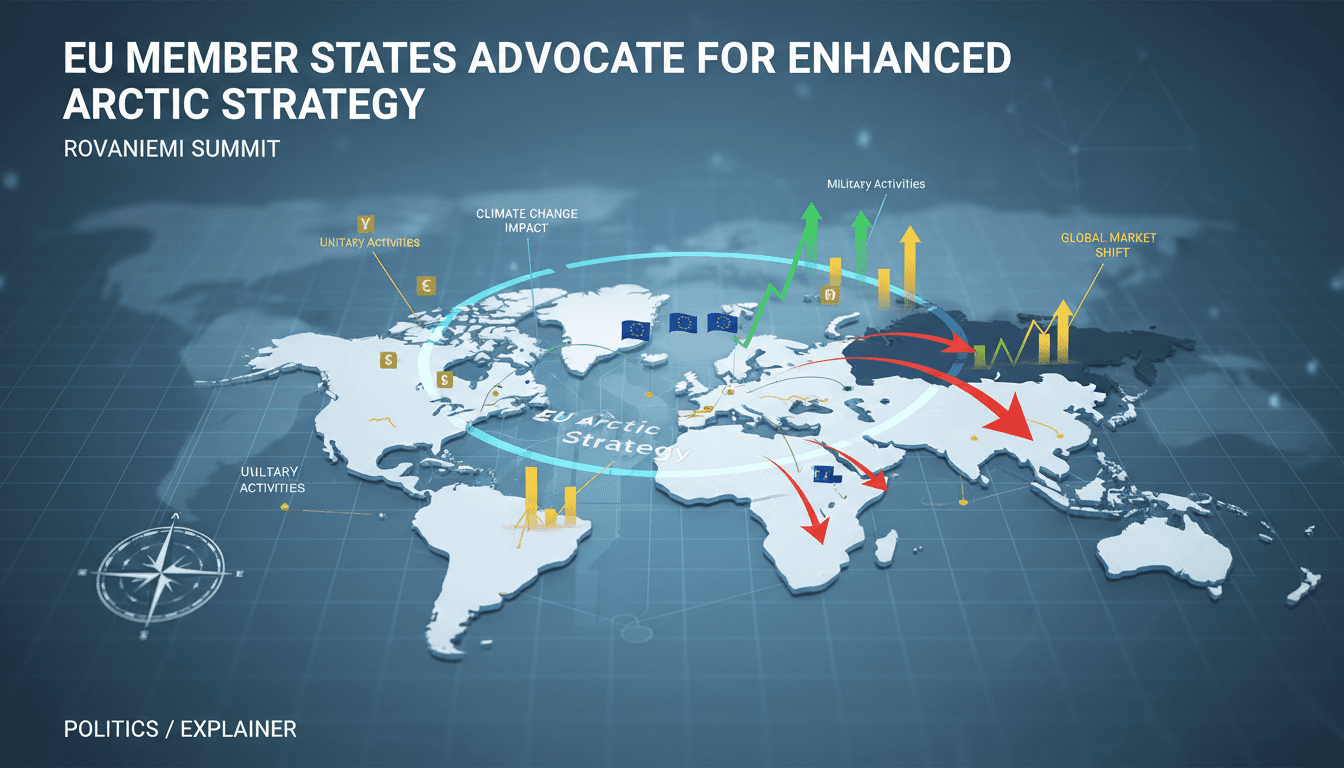
Why it matters
The Arctic's strategic importance is rising amid geopolitical competition, affecting global markets and security dynamics.
What happened (in 30 seconds)
- Twelve EU member states convened the European Arctic Summit in Rovaniemi, Finland, on September 13-14, 2026.
- A joint declaration was issued, urging the EU to adopt a more proactive role in Arctic affairs amid rising tensions with Russia.
- Key investments in military mobility, critical infrastructure, and icebreakers were highlighted as essential for Arctic security.
The context you actually need
- Climate change is opening new shipping routes and access to resources in the Arctic, increasing its geopolitical significance.
- Russia's military activities and the fallout from its invasion of Ukraine have disrupted traditional cooperation in the region.
- NATO's expansion with Finland and Sweden joining has heightened the alliance's presence in the Arctic, prompting EU member states to reassess their strategies.
What's really happening
The European Arctic Summit in Rovaniemi marks a pivotal moment for EU member states as they collectively recognize the need for a stronger presence in the Arctic region. The joint declaration, driven by Finland, Denmark, and nine other nations, reflects a growing consensus that the Arctic is not just a remote area but a critical frontier for European security and economic interests.
The backdrop of this summit is the evolving geopolitical landscape, particularly the implications of Russia's military actions and the broader impacts of climate change. As ice melts and new shipping routes emerge, the Arctic is becoming increasingly accessible, leading to heightened competition for resources and strategic advantages. The EU's previous Arctic policy, established in 2021, is now under revision to address these new realities, particularly in light of Russian militarization and the interests of other global players like China.
The summit's leaders, including German Chancellor Friedrich Merz and Estonian Prime Minister Kristen Michal, identified Russia as the primary long-term threat to Arctic security. Their emphasis on hybrid threats—ranging from military aggression to economic coercion—underscores the urgency for the EU to bolster its preparedness. The call for investments in icebreakers and critical infrastructure is not merely about enhancing capabilities; it reflects a strategic pivot towards ensuring that the EU can effectively respond to emerging challenges in the Arctic.
Moreover, the summit aligns with NATO's expanded presence following the accession of Finland and Sweden, which has shifted the security dynamics in the region. The EU's foreign policy chief, Kaja Kallas, highlighted the need for vigilance towards China, indicating that the Arctic is not just a battleground for Russia and the West but also a space where global powers are vying for influence.
As the European Commission prepares to release its updated Arctic strategy in October 2026, the implications of this summit will resonate beyond the Arctic itself. The focus on critical minerals and infrastructure investments signals a broader recognition that Arctic developments could influence global supply chains and energy markets.
Who feels it first (and how)
- Energy companies: Fluctuations in energy prices may occur as Arctic resources become more accessible.
- Shipping industries: New routes could alter shipping costs and logistics, impacting global trade.
- Defense sectors: Increased military investments in the Arctic may lead to shifts in defense contracts and priorities.
- Environmental organizations: Climate change impacts and resource extraction will heighten scrutiny and advocacy efforts.
- Consumers: Potential increases in costs for goods and energy as market dynamics shift.
What to watch next
- EU Arctic Strategy Release: The updated strategy in October 2026 will outline specific actions and investments, shaping future EU policies.
- Market Reactions: Watch for shifts in energy and shipping markets as Arctic routes and resources become more prominent.
- Geopolitical Developments: Monitor Russia's response to EU actions and any changes in NATO's posture in the Arctic region.
Twelve EU member states signed the joint declaration advocating for a stronger EU Arctic role.
The EU will increase investments in Arctic infrastructure and military capabilities.
The long-term impact on global energy prices and shipping costs remains speculative.
Frequently Asked Questions
- Why it matters?
- The Arctic's strategic importance is rising amid geopolitical competition, affecting global markets and security dynamics.
- What happened (in 30 seconds)?
- Twelve EU member states convened the European Arctic Summit in Rovaniemi, Finland, on September 13-14, 2026. A joint declaration was issued, urging the EU to adopt a more proactive role in Arctic affairs amid rising tensions with Russia. Key investments in military mobility, critical infrastructure, and icebreakers were highlighted as essential for Arctic security.
- What's really happening?
- The European Arctic Summit in Rovaniemi marks a pivotal moment for EU member states as they collectively recognize the need for a stronger presence in the Arctic region. The joint declaration, driven by Finland, Denmark, and nine other nations, reflects a growing consensus that the Arctic is not just a remote area but a critical frontier for European security and economic interests. The backdrop of this summit is the evolving geopolitical landscape, particularly the implications of Russia's mi
- Who feels it first (and how)?
- Energy companies: Fluctuations in energy prices may occur as Arctic resources become more accessible. Shipping industries: New routes could alter shipping costs and logistics, impacting global trade. Defense sectors: Increased military investments in the Arctic may lead to shifts in defense contracts and priorities. Environmental organizations: Climate change impacts and resource extraction will heighten scrutiny and advocacy efforts. Consumers: Potential increases in costs for goods and
- What to watch next?
- EU Arctic Strategy Release: The updated strategy in October 2026 will outline specific actions and investments, shaping future EU policies. Market Reactions: Watch for shifts in energy and shipping markets as Arctic routes and resources become more prominent. Geopolitical Developments: Monitor Russia's response to EU actions and any changes in NATO's posture in the Arctic region.
RT is a Russian state-funded network covering global events from a Russian perspective.
"RT is widely criticized for promoting pro-Kremlin narratives and is considered by many to be a state propaganda outlet."
— A47 Editor
EU members plot Arctic expansion
European leaders are advocating for a more prominent role for the EU in the Arctic region, particularly in response to NATO's expanding military presence. This call for action comes amid rising geopolitical tensions, especially concerning Russia's mi...
European current affairs, EU politics, and regional developments.
"France 24 is viewed as a globally focused outlet with balanced coverage and a European perspective."
— A47 Editor
Leaders urge EU to boost Arctic role to tackle Russia 'threat'
Twelve European countries convened in Finland, urging the European Union to enhance its Arctic presence in response to perceived threats from Russia and geopolitical tensions involving the United States, particularly during the Trump administration.
International news coverage curated for readers in the UAE and Gulf region.
"Emirates 24|7 world coverage presents global developments through a UAE-facing and Gulf-relevant editorial lens."
— A47 Editor
European leaders discuss Arctic security as melting ice opens new trade routes
European leaders convened in Rovaniemi, Finland, to address the increasing competition in the Arctic region, driven by climate change that is creating new shipping routes and access to natural resources. The summit included discussions on security co...