
Trump Rejects Military Support for Saudi Arabia Against Houthis in Yemen
Why it matters
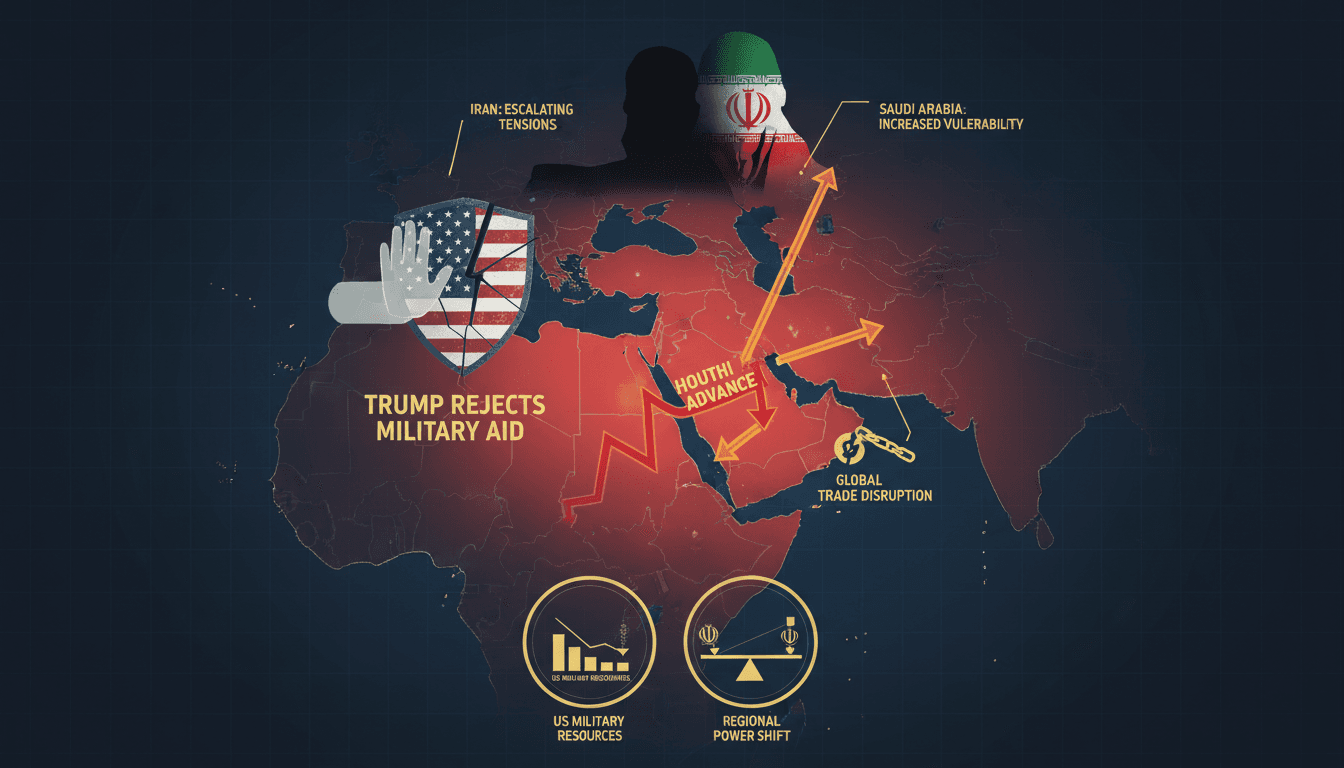
The U.S. decision to avoid direct military intervention in Yemen exposes Saudi Arabia to increased risks, affecting global energy markets and trade routes.
What happened (in 30 seconds)
- On September 16, 2026, President Trump declined Saudi Arabia's request for direct military strikes against Houthi forces in Yemen.
- Houthi rebels have launched a rapid offensive along Yemen's Red Sea coast, threatening key shipping routes and Saudi interests.
- Saudi Arabia has responded with airstrikes while seeking additional military support from allies amid rising tensions.
The context you actually need
- U.S.-Houthi ceasefire: A ceasefire brokered in 2025 had previously halted attacks on American shipping, but Houthi forces resumed targeting Saudi interests in mid-2026.
- Saudi frustration: Crown Prince Mohammed bin Salman has expressed dissatisfaction with the U.S. stance, as Saudi Arabia faces threats from multiple Iranian-aligned fronts.
- Regional escalation: The ongoing U.S.-Iran conflict has intensified the situation, with Houthis declaring a blockade on Saudi shipping in the Red Sea.
What's really happening
In early September 2026, Houthi forces launched a significant offensive along Yemen's Red Sea coast, capturing territory and posing a direct threat to the Bab al-Mandab strait, a crucial maritime chokepoint for global trade. This escalation prompted Saudi Crown Prince Mohammed bin Salman to reach out to President Trump multiple times, requesting direct military intervention to counter the Houthi advances. However, Trump rebuffed these requests, opting instead for a hands-off policy that emphasizes intelligence sharing and advisory support rather than direct military action.
The U.S. decision stems from several factors, including the overstretch of the Navy and munitions constraints, which have made direct military engagement less feasible. The Trump administration's focus on avoiding new military fronts reflects a broader strategy to prioritize existing commitments and manage resources effectively. This approach has left Saudi Arabia feeling exposed, as it faces simultaneous threats from various Iranian-aligned groups, including the Houthis.
In response to the Houthi offensive, Saudi forces have conducted approximately 450 airstrikes in just one week, targeting Houthi positions and infrastructure. Despite these efforts, the Houthis have continued to target Saudi energy sites and military bases, further escalating tensions in the region. The U.S. has confirmed its role is limited to monitoring the situation without direct intervention, which has only heightened Saudi frustration.
The implications of this standoff are significant, particularly for global energy markets. As the Houthis target Saudi-linked shipping and energy infrastructure, the potential for disruptions in oil supply increases, which could lead to elevated energy prices and volatility in the markets. Additionally, the ongoing conflict poses risks to shipping routes critical for global trade, affecting economies reliant on these channels.
Who feels it first (and how)
- Saudi Arabia: Increased military strain and economic vulnerability due to Houthi attacks on energy infrastructure.
- Global energy markets: Potential price volatility and supply chain disruptions affecting oil prices.
- Dubai residents: Risks of elevated energy prices and supply chain delays impacting the UAE's import-dependent economy.
- Shipping companies: Increased operational risks and insurance costs due to threats in the Red Sea.
What to watch next
- Saudi military support requests: Watch for Saudi Arabia's efforts to secure missile defense support from allies like the UK and Pakistan, which could alter the balance of power in the region.
- Houthi actions: Monitor Houthi military operations and their impact on shipping routes, as any escalation could lead to significant disruptions in global trade.
- U.S.-Iran relations: Keep an eye on developments in U.S.-Iran relations, as any shifts could influence the dynamics of the conflict and the U.S. stance in the region.
The U.S. has adopted a hands-off policy regarding Houthi advances in Yemen.
Saudi Arabia will continue to seek military support from allies while escalating its airstrikes against Houthi positions.
The long-term implications for global energy prices and trade routes remain uncertain as the conflict evolves.
Frequently Asked Questions
- Why it matters?
- The U.S. decision to avoid direct military intervention in Yemen exposes Saudi Arabia to increased risks, affecting global energy markets and trade routes.
- What happened (in 30 seconds)?
- On September 16, 2026, President Trump declined Saudi Arabia's request for direct military strikes against Houthi forces in Yemen. Houthi rebels have launched a rapid offensive along Yemen's Red Sea coast, threatening key shipping routes and Saudi interests. Saudi Arabia has responded with airstrikes while seeking additional military support from allies amid rising tensions.
- What's really happening?
- In early September 2026, Houthi forces launched a significant offensive along Yemen's Red Sea coast, capturing territory and posing a direct threat to the Bab al-Mandab strait, a crucial maritime chokepoint for global trade. This escalation prompted Saudi Crown Prince Mohammed bin Salman to reach out to President Trump multiple times, requesting direct military intervention to counter the Houthi advances. However, Trump rebuffed these requests, opting instead for a hands-off policy that emphasiz
- Who feels it first (and how)?
- Saudi Arabia: Increased military strain and economic vulnerability due to Houthi attacks on energy infrastructure. Global energy markets: Potential price volatility and supply chain disruptions affecting oil prices. Dubai residents: Risks of elevated energy prices and supply chain delays impacting the UAE's import-dependent economy. Shipping companies: Increased operational risks and insurance costs due to threats in the Red Sea.
- What to watch next?
- Saudi military support requests: Watch for Saudi Arabia's efforts to secure missile defense support from allies like the UK and Pakistan, which could alter the balance of power in the region. Houthi actions: Monitor Houthi military operations and their impact on shipping routes, as any escalation could lead to significant disruptions in global trade. U.S.-Iran relations: Keep an eye on developments in U.S.-Iran relations, as any shifts could influence the dynamics of the conflict and the U.S
Capitol Hill news, legislation, and policy insight.
"The Hill specializes in U.S. politics and policy, with a focus on Capitol Hill developments and a reputation for insider reporting."
— A47 Editor
Trump is hands-off on Houthis and the Saudis aren't happy
President Trump is adopting a hands-off approach regarding the Iran-backed Houthi rebels in Yemen, which has led to increased tensions with Saudi Arabia as the Houthis gain control over strategic areas, including the Red Sea coastline.
International coverage from The Guardian's global desks.
"The Guardian is known for its progressive editorial stance and in-depth analysis."
— A47 Editor
US opts not to back Saudi Arabia in Yemen after meeting Houthi leaders
The United States has opted not to support Saudi Arabia in its conflict with Houthi leaders in Yemen following a recent meeting in Muscat, Oman. The Houthi group, backed by Iran, assured US officials that a ceasefire agreement from 2025 remains intac...
UAE-based English-language newspaper covering regional politics, economics, and global affairs.
"The National reflects Emirati policy perspectives while maintaining international editorial standards."
— A47 Editor
Houthi gains test Trump’s limits on US military involvement and ties with Saudi Arabia
The Houthi rebels in Yemen have escalated their military operations, capturing strategic locations such as the port city of Mocha and the island of Perim, which are critical for controlling the Bab el-Mandeb Strait. This intensification of conflict p...