
US Proposes $10 Billion PACT Fund to Rebuild Gulf Energy Infrastructure Damaged in Iran War
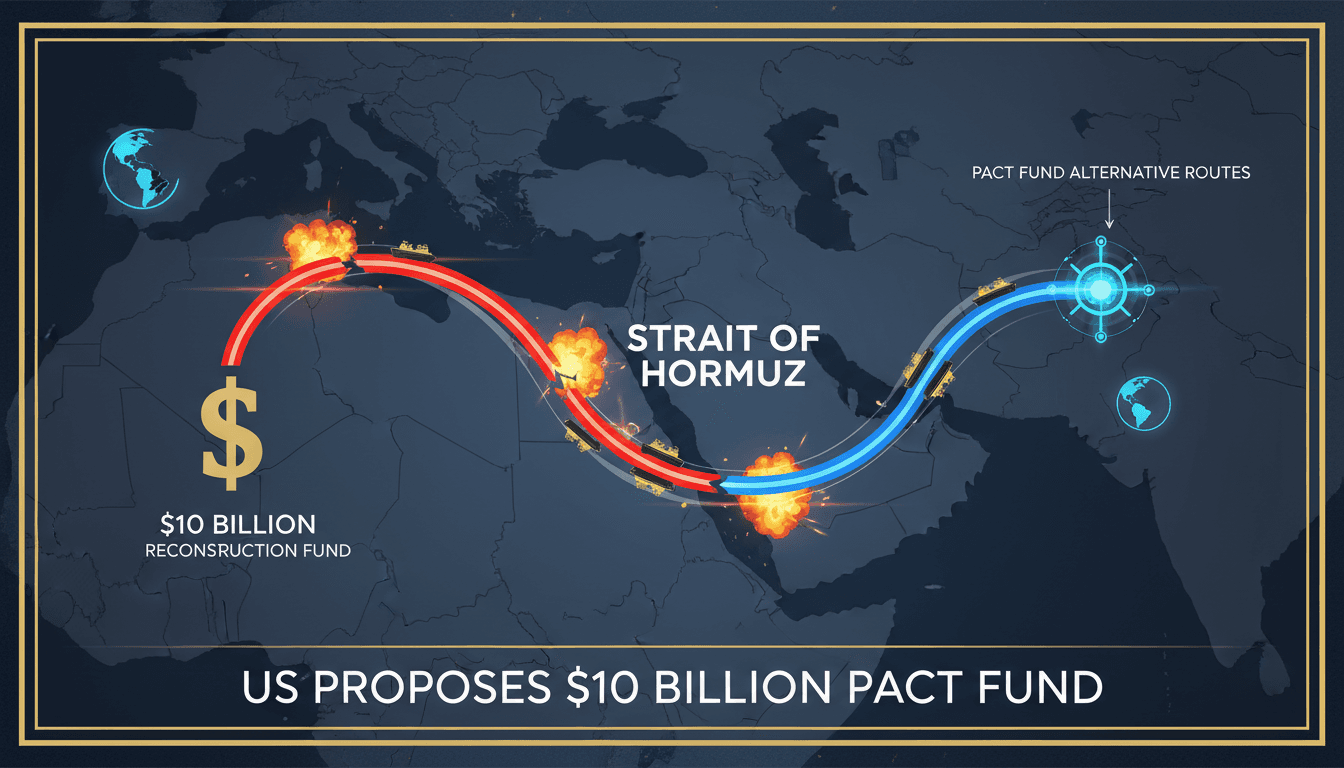
Why it matters
This initiative aims to stabilize energy supply chains in the Gulf, impacting global oil prices and shipping logistics.
What happened (in 30 seconds)
- The Trump administration proposed a $10 billion reconstruction fund to repair energy infrastructure damaged during the Iran war.
- The U.S. will contribute $5 billion, seeking matching funds from eight regional partners, including Saudi Arabia and the UAE.
- Discussions are ongoing with terms subject to change, and participation remains uncertain amid regional conflict risks.
The context you actually need
- The Iran war, lasting seven months, severely damaged energy infrastructure in Gulf states, raising repair costs to tens of billions.
- The Strait of Hormuz is a critical chokepoint for global oil transit, with one-fifth of the world's oil previously passing through it.
- Regional officials express skepticism about reconstruction efforts without a peace agreement with Iran, fearing renewed attacks.
What's really happening
On September 21, 2026, the Trump administration unveiled the Partnership for Allied Trust and Construction (PACT) fund, a strategic initiative aimed at rebuilding energy infrastructure in the Gulf states ravaged by the Iran war. The proposal, reported by the Wall Street Journal, outlines a $10 billion fund, with the U.S. contributing $5 billion and seeking matching contributions from eight regional partners, including Saudi Arabia, the UAE, and Qatar. This fund is not merely about reconstruction; it aims to develop alternative export routes that bypass the vulnerable Strait of Hormuz, which has been a focal point of geopolitical tension.
The Iran war, which began in late February 2026, involved extensive missile and drone strikes targeting energy facilities across the Gulf. These attacks disrupted critical pipelines, refineries, and export terminals, leading to skyrocketing tanker rates and repair costs that could exceed $50 billion. The PACT fund is positioned as a response to these vulnerabilities, with the U.S. Development Finance Corporation set to manage it. However, the discussions remain preliminary, and the terms are subject to change, raising questions about the commitment of regional partners.
Some Middle Eastern officials view the PACT initiative as a strategic move to diminish the Strait of Hormuz's significance and showcase unity against Iran. However, they caution that without a peace agreement, reconstruction efforts could be futile, as renewed strikes remain a risk. Qatar's energy minister has publicly rejected the notion that the Strait would soon become obsolete, highlighting the complexities of regional geopolitics.
The proposal also hints at a larger vision, with discussions of a potential $50 billion platform that could attract sovereign wealth funds and private investors. This broader initiative could reshape energy logistics and investment in the region, but skepticism remains high among Gulf officials, who question the feasibility of reconstruction without a stable political environment.
Who feels it first (and how)
- Energy companies: Increased operational costs due to ongoing instability and potential new infrastructure investments.
- Logistics firms: Elevated shipping rates and altered trade routes impacting supply chain efficiency.
- Investors: Uncertainty around the fund's viability may affect investment decisions in Gulf energy projects.
What to watch next
- Technical negotiations: Set to begin in October 2026, these discussions will clarify the fund's structure and potential participation.
- Regional stability: Monitor developments in U.S.-Iran relations, as peace agreements will significantly influence reconstruction efforts.
- Market reactions: Watch for fluctuations in oil prices and shipping costs as the fund's implications unfold.
The U.S. has proposed a $10 billion fund to rebuild Gulf energy infrastructure.
Regional partners will engage in discussions, but participation may vary.
The long-term effectiveness of the fund without a peace agreement with Iran.
Frequently Asked Questions
- Why it matters?
- This initiative aims to stabilize energy supply chains in the Gulf, impacting global oil prices and shipping logistics.
- What happened (in 30 seconds)?
- The Trump administration proposed a $10 billion reconstruction fund to repair energy infrastructure damaged during the Iran war. The U.S. will contribute $5 billion, seeking matching funds from eight regional partners, including Saudi Arabia and the UAE. Discussions are ongoing with terms subject to change, and participation remains uncertain amid regional conflict risks.
- What's really happening?
- On September 21, 2026, the Trump administration unveiled the Partnership for Allied Trust and Construction (PACT) fund, a strategic initiative aimed at rebuilding energy infrastructure in the Gulf states ravaged by the Iran war. The proposal, reported by the Wall Street Journal, outlines a $10 billion fund, with the U.S. contributing $5 billion and seeking matching contributions from eight regional partners, including Saudi Arabia, the UAE, and Qatar. This fund is not merely about reconstruction
- Who feels it first (and how)?
- Energy companies: Increased operational costs due to ongoing instability and potential new infrastructure investments. Logistics firms: Elevated shipping rates and altered trade routes impacting supply chain efficiency. Investors: Uncertainty around the fund's viability may affect investment decisions in Gulf energy projects.
- What to watch next?
- Technical negotiations: Set to begin in October 2026, these discussions will clarify the fund's structure and potential participation. Regional stability: Monitor developments in U.S.-Iran relations, as peace agreements will significantly influence reconstruction efforts. Market reactions: Watch for fluctuations in oil prices and shipping costs as the fund's implications unfold.
English-language news from Qatar covering domestic and regional affairs.
"Gulf Times reflects Qatari perspectives on regional developments."
— A47 Editor
Damaged Gulf sites: US eyes $10bn fund
The Trump administration has proposed a $10 billion fund aimed at assisting Middle Eastern countries in rebuilding energy infrastructure that has been damaged due to the ongoing conflict with Iran, while also seeking to reduce reliance on the strateg...
Macro commentary, policy analysis, growth/inflation themes, and global outlooks.
"Contextual macro coverage that complements day-to-day market headlines."
— A47 Editor
Trump proposes $5 billion fund for Mideast energy infrastructure - WSJ
Former President Donald Trump has proposed a $5 billion fund aimed at enhancing energy infrastructure in the Middle East, as reported by the Wall Street Journal. This initiative is part of Trump's broader strategy to address energy supply challenges ...
Global political, business, and cultural coverage from WSJ international desks.
"The Wall Street Journal offers extensive international reporting with a reputation for financial insight and a center-right editorial stance."
— A47 Editor
U.S. Proposes $5 Billion to Kickstart Fund to Rebuild Gulf Energy Sites
The U.S. has proposed a $5 billion initiative aimed at establishing a fund to rebuild energy sites in the Gulf region, engaging in discussions with several Middle Eastern nations, including Saudi Arabia and the U.A.E. This proposal reflects a strateg...