
Trump Defends Military Actions Against Iran and Venezuela at UN General Assembly
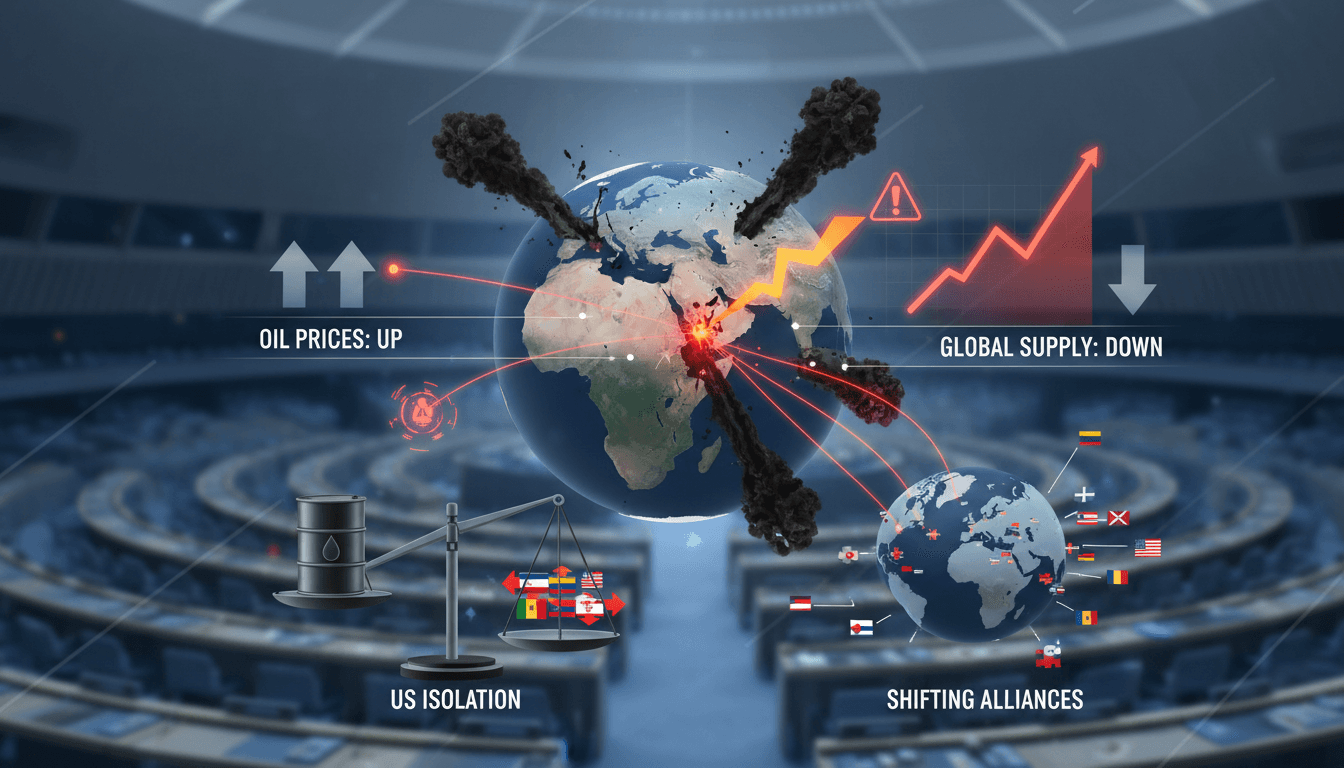
Why it matters
The US's military actions and rhetoric can significantly influence global energy markets and international trade relations.
What happened (in 30 seconds)
- Trump defended military operations against Iran and Venezuela during his UN address, emphasizing a choice between annihilation or negotiation for Iran.
- He announced a major oil agreement with Venezuela, valued at 65 billion barrels, following the arrest of Nicolás Maduro.
- International reactions were mixed, with allies warning against unilateral actions and Iranian delegates walking out during the speech.
The context you actually need
- US military operations against Iran began earlier in 2026, coinciding with rising tensions in the Middle East and Latin America.
- The geopolitical landscape is complicated by the ongoing Russia-Ukraine conflict and cartel activities in the Americas, affecting energy resources and regime stability.
- Trump's address reflects a broader strategy of asserting US dominance while navigating strained relationships with traditional allies.
What's really happening
Trump's address at the UN General Assembly on September 22, 2026, was a pivotal moment in US foreign policy, particularly regarding military interventions in Iran and Venezuela. By framing Iran as the "primary sponsor of terrorism," Trump sought to justify aggressive military actions that have been ongoing since earlier in the year. This rhetoric is not merely about military might; it is a strategic maneuver aimed at reshaping the narrative around US interventions. The ultimatum presented to Iran—either negotiate for rebuilding or face annihilation—highlights a stark choice that could escalate tensions further.
In Venezuela, the arrest of Nicolás Maduro and the subsequent announcement of a $65 billion oil agreement signal a shift in US policy towards Latin America. The phrase "to the victor belong the spoils" encapsulates the US's approach to leveraging military success for economic gain. This agreement could potentially flood the market with Venezuelan oil, impacting global energy prices and altering the dynamics of oil supply, particularly for Gulf states like Dubai.
The address also touched on broader geopolitical issues, including peace efforts in Ukraine and a security agreement concerning Greenland, indicating a multifaceted approach to international relations. However, the unilateral nature of these actions has drawn criticism from allies, with French President Macron warning against a "law of the jungle" approach. This reflects a growing concern among international leaders about the implications of US unilateralism on global stability.
The walkout of Iranian and Cuban delegates during Trump's speech underscores the contentious nature of these discussions. It signals a potential breakdown in diplomatic relations and raises questions about the future of negotiations with Iran, especially as the US seeks to enforce its policies in Latin America.
Overall, the implications of Trump's address extend beyond immediate military actions; they signal a recalibration of US foreign policy that could have lasting effects on global energy markets, international alliances, and regional stability.
Who feels it first (and how)
- Energy sector professionals: Changes in oil supply from Venezuela could impact pricing and market strategies.
- International businesses: Companies operating in or trading with Latin America may face new risks and opportunities.
- Geopolitical analysts: Shifts in US foreign policy will require reevaluation of risk assessments and strategic planning.
What to watch next
- Energy price fluctuations: Monitor how the influx of Venezuelan oil affects global oil prices and the Gulf markets.
- Diplomatic negotiations: Watch for developments in US-Iran negotiations and how they may impact regional stability.
- Allied responses: Pay attention to how US allies react to Trump's unilateral military strategies and their implications for international relations.
Trump’s military actions against Iran and Venezuela are ongoing and have been publicly defended.
Increased tensions in the Middle East and Latin America as a result of US interventions.
The long-term effects on global energy markets and international alliances remain to be seen.
Frequently Asked Questions
- Why it matters?
- The US's military actions and rhetoric can significantly influence global energy markets and international trade relations.
- What happened (in 30 seconds)?
- Trump defended military operations against Iran and Venezuela during his UN address, emphasizing a choice between annihilation or negotiation for Iran. He announced a major oil agreement with Venezuela, valued at 65 billion barrels, following the arrest of Nicolás Maduro. International reactions were mixed, with allies warning against unilateral actions and Iranian delegates walking out during the speech.
- What's really happening?
- Trump's address at the UN General Assembly on September 22, 2026, was a pivotal moment in US foreign policy, particularly regarding military interventions in Iran and Venezuela. By framing Iran as the "primary sponsor of terrorism," Trump sought to justify aggressive military actions that have been ongoing since earlier in the year. This rhetoric is not merely about military might; it is a strategic maneuver aimed at reshaping the narrative around US interventions. The ultimatum presented to Ira
- Who feels it first (and how)?
- Energy sector professionals: Changes in oil supply from Venezuela could impact pricing and market strategies. International businesses: Companies operating in or trading with Latin America may face new risks and opportunities. Geopolitical analysts: Shifts in US foreign policy will require reevaluation of risk assessments and strategic planning.
- What to watch next?
- Energy price fluctuations: Monitor how the influx of Venezuelan oil affects global oil prices and the Gulf markets. Diplomatic negotiations: Watch for developments in US-Iran negotiations and how they may impact regional stability. Allied responses: Pay attention to how US allies react to Trump's unilateral military strategies and their implications for international relations.
International coverage from The Guardian's global desks.
"The Guardian is known for its progressive editorial stance and in-depth analysis."
— A47 Editor
Trump defends actions in Iran and Venezuela in UN General Assembly address amid rising tensions with allies – live
President Trump delivered a defiant address at the UN General Assembly, threatening to 'annihilate' Iran and 'drive them into Hell' if a deal is not reached, while also addressing U.S. policies on Venezuela, Cuba, and Greenland. This speech comes ami...
News from the United States including domestic politics, society, and culture.
"The Guardian is known for its progressive editorial stance and in-depth analysis, often advocating for social justice, environmental issues, and liberal values."
— A47 Editor
Trump defends actions in Iran and Venezuela in UN General Assembly address amid rising tensions with allies – live
President Trump delivered a defiant address at the UN General Assembly, threatening to 'annihilate' Iran and 'drive them into Hell' if a deal is not reached, while also addressing U.S. policies on Venezuela, Cuba, and Greenland. This speech comes ami...
Global political, business, and cultural coverage from WSJ international desks.
"The Wall Street Journal offers extensive international reporting with a reputation for financial insight and a center-right editorial stance."
— A47 Editor
Trump Threatens to Annihilate Iran as He Lays Out Foreign-Policy Vision at U.N.
During a recent address at the United Nations General Assembly, President Donald Trump threatened to 'annihilate' Iran if a peace deal is not reached, positioning himself as a man of peace despite his aggressive rhetoric. This statement reflects the ...
24/7 international news from a French perspective in multiple languages.
"France 24 is viewed as a globally focused outlet with balanced coverage and a European perspective."
— A47 Editor
Iran, AI and the ICC: Trump makes threats, touts policies at UN General Assembly
During the UN General Assembly, President Donald Trump defended the US-Israeli stance against Iran, asserting that a deal with Tehran could be reached post-midterm elections while threatening to 'annihilate' Iran if negotiations fail. He also dismiss...