
Norway Initiates Inquiry into Epstein Connections Among Senior Officials
Why it matters
This inquiry could reshape public trust in political institutions and influence international diplomatic practices.
What happened (in 30 seconds)
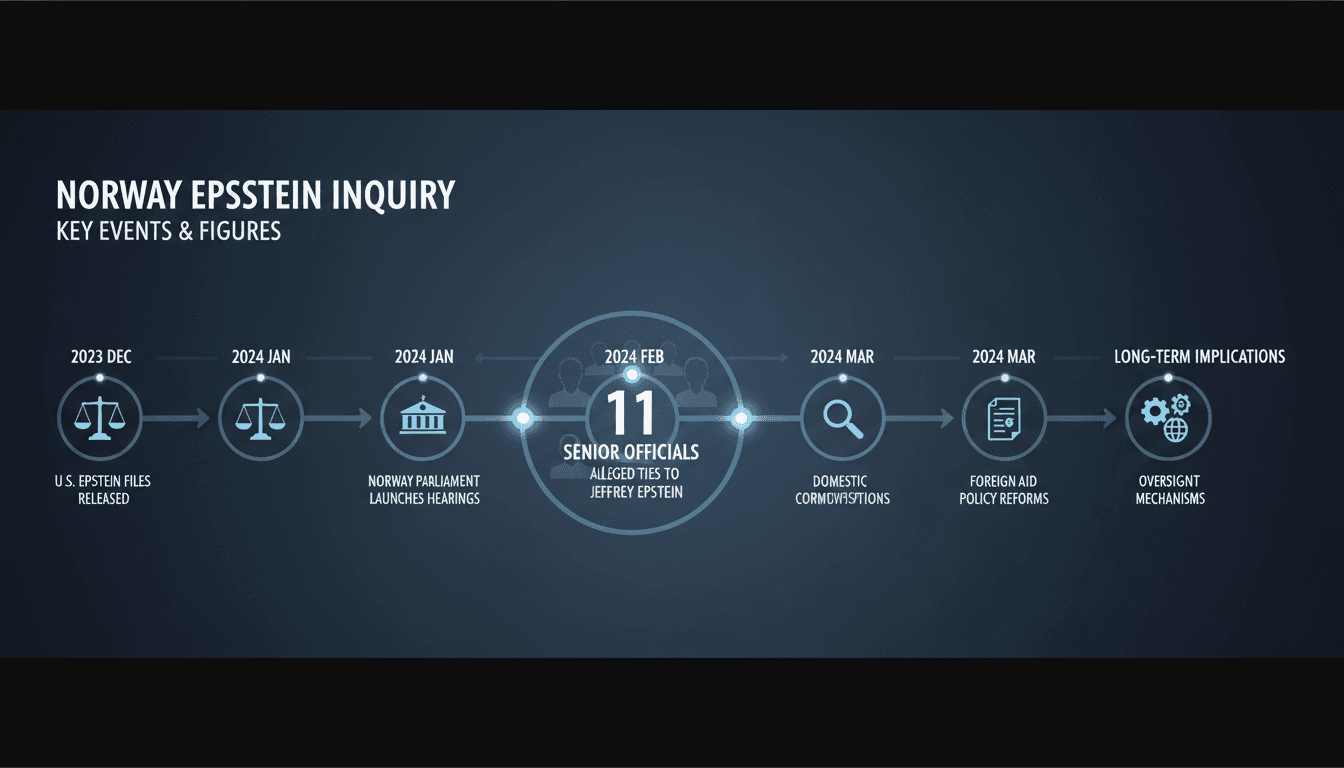
- Norway's parliament launched public hearings on September 30, 2026, to investigate ties between eleven senior officials and Jeffrey Epstein.
- Key figures under scrutiny include Prime Minister Jonas Gahr Støre and former Prime Minister Thorbjørn Jagland, amid allegations of influence on foreign aid decisions.
- Ongoing investigations by Økokrim are examining potential corruption linked to Norway's funding of the International Peace Institute.
The context you actually need
- Epstein's connections to Norwegian diplomats and politicians were revealed in newly released U.S. Department of Justice files, prompting domestic investigations.
- Norway's role in international diplomacy, particularly in the Middle East, has been significant, raising concerns about conflicts of interest in foreign aid.
- The inquiry's scope includes a review of three decades of diplomatic practices, with findings expected by early 2028.
What's really happening
The inquiry into Norway's political elite stems from the release of Epstein-related files by the U.S. Department of Justice in early 2026. These documents unveiled connections between Epstein and several Norwegian diplomats and politicians, particularly those involved in international peace efforts. This revelation triggered a wave of scrutiny, leading to the establishment of a parliamentary inquiry and police investigations by Økokrim, Norway's national authority for investigating economic and environmental crime.
The Standing Committee on Scrutiny and Constitutional Affairs is conducting public hearings, focusing on eleven current and former officials, including Prime Minister Jonas Gahr Støre. The inquiry aims to assess whether personal relationships with Epstein influenced foreign aid decisions and government grants. Notably, Norway's Foreign Ministry has allocated approximately 130 million kroner ($13.5 million) to the International Peace Institute (IPI) from 1997 to 2018, raising questions about potential conflicts of interest.
As the hearings progress, Støre has publicly denied any personal ties to Epstein, while Terje Rød-Larsen, the former IPI leader, resigned in 2020 amid scrutiny. The inquiry is not just about individual misconduct; it reflects broader concerns regarding the integrity of Norway's diplomatic practices. The independent commission appointed to review these practices will provide a comprehensive report by January 31, 2028, which could lead to significant changes in how foreign aid is managed and overseen.
The inquiry has sparked mixed reactions. While Prime Minister Støre attributes the issues to individual actions rather than systemic problems within the Foreign Ministry, former Development Minister Erik Solheim has criticized the probe as an overreaction that could jeopardize Norway's diplomatic efforts. Meanwhile, Crown Princess Mette-Marit has previously apologized for her associations with Epstein, indicating the inquiry's personal and public ramifications.
As investigations continue without any charges filed as of October 2026, the implications for Norway's political landscape and its international relations remain significant. The inquiry could lead to stricter regulations governing political relationships and foreign aid, impacting how Norway engages with global partners.
Who feels it first (and how)
- Politicians and diplomats: Increased scrutiny and potential reputational damage.
- International NGOs: Possible shifts in funding and partnerships due to public trust issues.
- Norwegian citizens: Heightened awareness and concern regarding government transparency and accountability.
What to watch next
- Outcomes of the inquiry: The findings from the independent commission could lead to policy changes affecting foreign aid practices.
- Public sentiment: Monitor shifts in public trust towards political institutions as the inquiry unfolds.
- International reactions: Watch how other nations respond to Norway's handling of the inquiry, which may influence global diplomatic norms.
The inquiry is ongoing, with public hearings already commenced.
The independent commission will recommend changes to foreign aid oversight by early 2028.
The long-term impact on Norway's diplomatic relationships and public trust remains uncertain.
Frequently Asked Questions
- Why it matters?
- This inquiry could reshape public trust in political institutions and influence international diplomatic practices.
- What happened (in 30 seconds)?
- Norway's parliament launched public hearings on September 30, 2026, to investigate ties between eleven senior officials and Jeffrey Epstein. Key figures under scrutiny include Prime Minister Jonas Gahr Støre and former Prime Minister Thorbjørn Jagland, amid allegations of influence on foreign aid decisions. Ongoing investigations by Økokrim are examining potential corruption linked to Norway's funding of the International Peace Institute.
- What's really happening?
- The inquiry into Norway's political elite stems from the release of Epstein-related files by the U.S. Department of Justice in early 2026. These documents unveiled connections between Epstein and several Norwegian diplomats and politicians, particularly those involved in international peace efforts. This revelation triggered a wave of scrutiny, leading to the establishment of a parliamentary inquiry and police investigations by Økokrim, Norway's national authority for investigating economic and
- Who feels it first (and how)?
- Politicians and diplomats: Increased scrutiny and potential reputational damage. International NGOs: Possible shifts in funding and partnerships due to public trust issues. Norwegian citizens: Heightened awareness and concern regarding government transparency and accountability.
- What to watch next?
- Outcomes of the inquiry: The findings from the independent commission could lead to policy changes affecting foreign aid practices. Public sentiment: Monitor shifts in public trust towards political institutions as the inquiry unfolds. International reactions: Watch how other nations respond to Norway's handling of the inquiry, which may influence global diplomatic norms.
RT is a Russian state-funded network covering global events from a Russian perspective.
"RT is widely criticized for promoting pro-Kremlin narratives and is considered by many to be a state propaganda outlet."
— A47 Editor
Norway probes senior state officials’ Epstein links
Norway has initiated a parliamentary investigation into eleven current and former ministers over their connections to Jeffrey Epstein, focusing on over $13 million in state grants potentially linked to the late financier's controversial dealings. Thi...
Comprehensive coverage of Middle Eastern and global issues.
"Al Jazeera is a prominent voice from the Global South, especially the Middle East, with an emphasis on underreported stories."
— A47 Editor
Norway launches probe into 11 senior officials over US Epstein files links
Norway has initiated an investigation into 11 senior officials concerning over $13 million in state grants linked to Jeffrey Epstein, the late financier embroiled in numerous scandals. This probe aims to uncover any potential misconduct or misuse of ...
Coverage of national news and events from across the United States.
"HuffPost is known for its progressive editorial stance, offering opinionated yet comprehensive coverage on social, political, and cultural topics."
— A47 Editor
Norway Opens Extraordinary Public Hearings Into Elite’s Jeffrey Epstein Ties
Norway's parliament has initiated extraordinary public hearings to investigate the connections between its elite and Jeffrey Epstein, a convicted sex offender, amid growing concerns over the implications of these ties for the nation's political integ...