
Criminal investigation reopened into Cornell fraternity gang rape allegations following civil lawsuit
Why it matters
This case highlights ongoing challenges in addressing sexual violence in educational institutions and the legal complexities involved.
What happened (in 30 seconds)
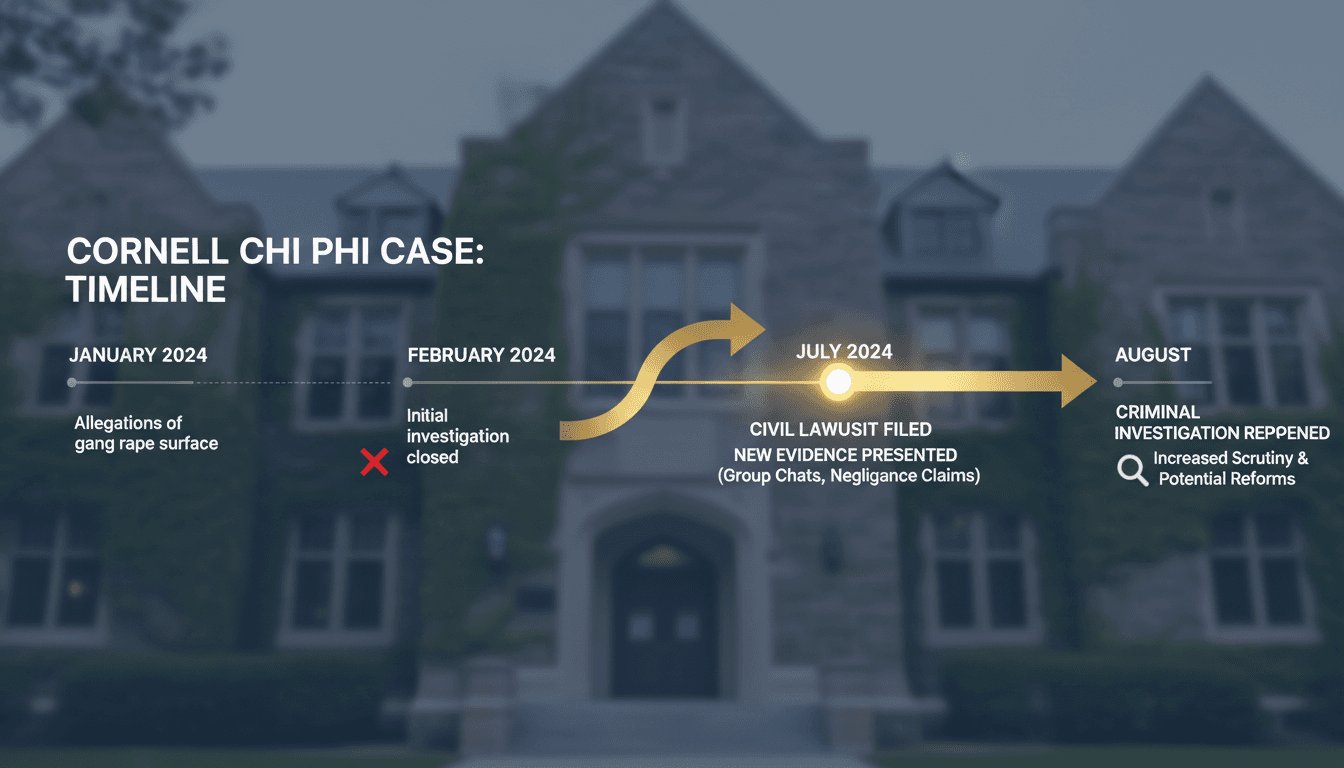
- Allegations resurfaced: In September 2026, a civil lawsuit prompted the reopening of a criminal investigation into 2024 gang rape allegations against seven members of the Cornell Chi Phi fraternity.
- Initial inaction: The original report in November 2024 led to university disciplinary actions but no criminal charges due to perceived evidence gaps.
- Public pressure mounts: Following media coverage, New York officials initiated independent reviews, intensifying scrutiny on the university's handling of the case.
The context you actually need
- Incident details: The allegations stem from an October 2024 incident where Jane Doe claimed she was drugged and assaulted by fraternity members, leading to a lack of consent.
- Legal complexities: Initial investigations did not yield criminal charges, raising questions about the adequacy of evidence and the investigative process.
- Institutional response: The reopening of the investigation reflects broader societal pressures on universities to address sexual assault claims more rigorously.
What's really happening
The reopening of the criminal investigation into the 2024 Cornell Chi Phi fraternity gang rape allegations is a significant development in a case that has drawn attention to the complexities of sexual assault reporting and institutional accountability. Initially reported in November 2024, the allegations involved a 20-year-old student, Jane Doe, who claimed she was drugged and assaulted by seven fraternity members. Despite her report leading to some disciplinary actions within the university, the Tompkins County District Attorney's office did not pursue criminal charges, citing insufficient evidence and inconsistencies in witness statements.
The situation changed dramatically in September 2026 when Doe filed a civil lawsuit against the university, the fraternity, and the accused individuals. This lawsuit included new evidence, such as group chat messages that allegedly demonstrated a culture of misogyny and disregard for consent among the fraternity members. The lawsuit's filing prompted public outcry and renewed scrutiny of the university's handling of the case, leading to the reopening of the criminal investigation by the DA's office.
Governor Kathy Hochul's directive for an independent review by the Attorney General's office further underscores the seriousness of the allegations and the public's demand for accountability. The reopening of the investigation is not just a legal maneuver; it reflects a growing societal expectation that institutions must take allegations of sexual violence seriously and act decisively. The case has also highlighted the challenges victims face, including online harassment and trauma, which can deter individuals from coming forward.
The implications of this case extend beyond Cornell University. It raises critical questions about how universities handle sexual assault allegations, the effectiveness of their internal processes, and the role of law enforcement in such cases. As public pressure mounts, institutions may be compelled to reevaluate their policies and practices regarding sexual violence, potentially leading to more stringent regulations and support systems for victims.
Who feels it first (and how)
- Students: Increased awareness and potential changes in campus safety policies may affect student life and support services.
- University administrators: They may face pressure to improve handling of sexual assault cases and implement more robust reporting mechanisms.
- Legal professionals: Attorneys involved in sexual assault cases may see shifts in legal precedents and practices as public scrutiny increases.
What to watch next
- Criminal investigation outcomes: The results of the reopened investigation will determine if charges are filed and how the legal landscape evolves around sexual assault cases.
- Policy changes at Cornell: Watch for potential reforms in university policies regarding sexual misconduct and how they align with state and federal guidelines.
- Public discourse: Increased media coverage and public discussions on sexual violence in educational settings may influence broader societal attitudes and legislative actions.
The civil lawsuit has been filed, and the criminal investigation has been reopened.
There will be increased scrutiny on Cornell University’s handling of sexual assault cases and potential policy reforms.
The long-term impact on campus culture and legal frameworks surrounding sexual assault remains uncertain.
Frequently Asked Questions
- Why it matters?
- This case highlights ongoing challenges in addressing sexual violence in educational institutions and the legal complexities involved.
- What happened (in 30 seconds)?
- Allegations resurfaced: In September 2026, a civil lawsuit prompted the reopening of a criminal investigation into 2024 gang rape allegations against seven members of the Cornell Chi Phi fraternity. Initial inaction: The original report in November 2024 led to university disciplinary actions but no criminal charges due to perceived evidence gaps. Public pressure mounts: Following media coverage, New York officials initiated independent reviews, intensifying scrutiny on the university's handl
- What's really happening?
- The reopening of the criminal investigation into the 2024 Cornell Chi Phi fraternity gang rape allegations is a significant development in a case that has drawn attention to the complexities of sexual assault reporting and institutional accountability. Initially reported in November 2024, the allegations involved a 20-year-old student, Jane Doe, who claimed she was drugged and assaulted by seven fraternity members. Despite her report leading to some disciplinary actions within the university, th
- Who feels it first (and how)?
- Students: Increased awareness and potential changes in campus safety policies may affect student life and support services. University administrators: They may face pressure to improve handling of sexual assault cases and implement more robust reporting mechanisms. Legal professionals: Attorneys involved in sexual assault cases may see shifts in legal precedents and practices as public scrutiny increases.
- What to watch next?
- Criminal investigation outcomes: The results of the reopened investigation will determine if charges are filed and how the legal landscape evolves around sexual assault cases. Policy changes at Cornell: Watch for potential reforms in university policies regarding sexual misconduct and how they align with state and federal guidelines. Public discourse: Increased media coverage and public discussions on sexual violence in educational settings may influence broader societal attitudes and legisl
International coverage of politics, culture, and current affairs.
"BBC News is widely regarded as a reputable international news organization, known for its impartial tone and public service mandate."
— A47 Editor
Cornell frat house rape accuser 'under siege' online, says lawyer
Jane Doe, the accuser in a rape case involving a Cornell University fraternity, is reportedly struggling amid online harassment aimed at revealing her identity, according to her lawyer. This situation highlights the intense scrutiny and pressure face...
Top international stories selected by The Guardian editors.
"The Guardian is known for its progressive editorial stance and in-depth analysis."
— A47 Editor
Cornell case raises questions about rise of ketamine in sexual assaults: ‘You might not realize you’re being touched’
A former Cornell University student, referred to as Jane Doe, has filed a lawsuit alleging that she was gang-raped by several fraternity members after being encouraged to take ketamine at a party. This incident has raised significant concerns regardi...
24/7 international news from a French perspective in multiple languages.
"France 24 is viewed as a globally focused outlet with balanced coverage and a European perspective."
— A47 Editor
What the media got right and wrong about Cornell gang rape case
The alleged gang rape case at Cornell University has garnered significant attention, following the reopening of an investigation into the incident involving seven members of the Chi Phi fraternity. This decision comes after public outrage over the in...