
California Executive Arrested for Smuggling $300 Million in AI Servers to China
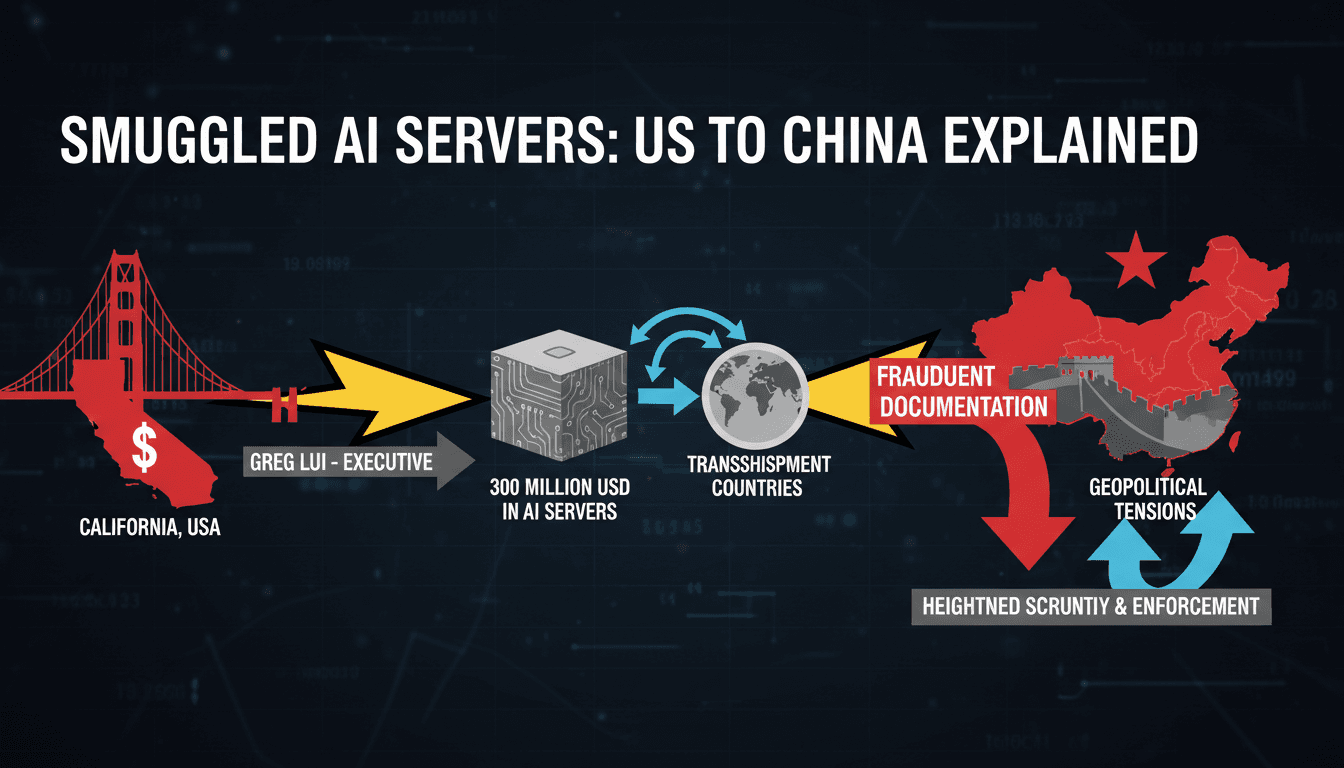
Why it matters
This incident highlights the increasing enforcement of export controls on sensitive technologies amid rising geopolitical tensions.
What happened (in 30 seconds)
- On October 1, 2026, Greg Lui, owner of Earthmade Computer Inc., was arrested for allegedly smuggling over $300 million in export-controlled AI servers to China.
- Lui used fraudulent documentation to route shipments through Malaysia and Singapore, evading U.S. Commerce Department licensing requirements.
- The indictment cites evidence including bank records and emails linking the hardware to Chinese government-linked buyers.
The context you actually need
- U.S. export controls on advanced AI chips were implemented in 2022 to protect national security and prevent military applications.
- High-performance GPUs, such as Nvidia's A100 and H100 models, are specifically targeted due to their potential military uses.
- Geopolitical tensions have led to increased enforcement actions against diversion schemes, particularly those using third countries to bypass regulations.
What's really happening
The arrest of Greg Lui is a significant event in the ongoing battle over technology export controls, particularly concerning advanced AI hardware. Since 2022, the U.S. has tightened regulations on the export of high-performance GPUs to China, driven by concerns over national security and the potential military applications of such technology. The U.S. Department of Commerce has implemented strict licensing requirements for these exports, aiming to prevent sensitive technology from bolstering China's military capabilities.
Lui's alleged smuggling operation, which reportedly spanned from October 2023 to August 2026, involved purchasing servers from U.S. manufacturers under false pretenses. By claiming that the end-users were located in Malaysia and Singapore, he circumvented the necessary export licenses. This method of using third countries as transshipment points is a known tactic among those attempting to evade export controls. The indictment details how Lui's company, Earthmade, received over $176 million from Malaysian entities, indicating a well-organized operation that likely involved multiple co-conspirators.
The implications of this case extend beyond Lui and his company. It underscores the heightened vigilance of U.S. authorities in monitoring and prosecuting export violations. The U.S. Attorney's Office has emphasized its commitment to aggressively pursue such cases to safeguard national security. As a result, companies involved in technology exports may face increased scrutiny and compliance requirements, particularly those dealing with advanced AI and computing technologies.
Moreover, this case could set a precedent for future enforcement actions. As the geopolitical landscape continues to evolve, particularly with respect to U.S.-China relations, companies must be aware of the risks associated with exporting sensitive technologies. The potential for severe penalties, including criminal charges and significant fines, may deter some businesses from engaging in high-risk export activities.
In summary, the arrest of Greg Lui serves as a stark reminder of the complexities and risks involved in international trade, particularly in the technology sector. As enforcement actions become more aggressive, companies must navigate a landscape fraught with regulatory challenges and potential legal repercussions.
Who feels it first (and how)
- Tech companies: Increased compliance costs and scrutiny on export practices.
- Freight forwarders: Potential changes in shipping protocols and documentation requirements.
- Investors in AI technology: Heightened risk perception may affect funding and valuation of companies in the sector.
What to watch next
- Increased enforcement actions: Monitor for more arrests or prosecutions related to export violations, which could indicate a broader crackdown.
- Changes in export regulations: Watch for updates from the U.S. Department of Commerce regarding licensing requirements for AI technologies.
- Market reactions: Observe how tech companies adjust their export strategies in response to this case and any resulting regulatory changes.
Greg Lui has been arrested and charged with multiple offenses related to smuggling.
Other companies may face increased scrutiny and compliance checks as a result of this case.
The long-term impact on U.S.-China technology trade relations remains to be seen.
Frequently Asked Questions
- Why it matters?
- This incident highlights the increasing enforcement of export controls on sensitive technologies amid rising geopolitical tensions.
- What happened (in 30 seconds)?
- On October 1, 2026, Greg Lui, owner of Earthmade Computer Inc., was arrested for allegedly smuggling over $300 million in export-controlled AI servers to China. Lui used fraudulent documentation to route shipments through Malaysia and Singapore, evading U.S. Commerce Department licensing requirements. The indictment cites evidence including bank records and emails linking the hardware to Chinese government-linked buyers.
- What's really happening?
- The arrest of Greg Lui is a significant event in the ongoing battle over technology export controls, particularly concerning advanced AI hardware. Since 2022, the U.S. has tightened regulations on the export of high-performance GPUs to China, driven by concerns over national security and the potential military applications of such technology. The U.S. Department of Commerce has implemented strict licensing requirements for these exports, aiming to prevent sensitive technology from bolstering Chi
- Who feels it first (and how)?
- Tech companies: Increased compliance costs and scrutiny on export practices. Freight forwarders: Potential changes in shipping protocols and documentation requirements. Investors in AI technology: Heightened risk perception may affect funding and valuation of companies in the sector.
- What to watch next?
- Increased enforcement actions: Monitor for more arrests or prosecutions related to export violations, which could indicate a broader crackdown. Changes in export regulations: Watch for updates from the U.S. Department of Commerce regarding licensing requirements for AI technologies. Market reactions: Observe how tech companies adjust their export strategies in response to this case and any resulting regulatory changes.
California news and regional developments.
"The Los Angeles Times is a major West Coast newspaper offering in-depth reporting with a liberal editorial tone and strong regional focus."
— A47 Editor
California man's smuggling scheme sent $300 million in AI hardware to China, feds say
A San Gabriel Valley technology company owner was arrested after federal prosecutors charged him with smuggling over $300 million worth of restricted AI hardware to China. This operation highlights significant concerns regarding national security and...
News and features on AI from The Guardian.
"Progressive-leaning international outlet with critical AI coverage."
— A47 Editor
US arrests California man for allegedly smuggling $300m worth of computer servers to China
Greg Lui, a 38-year-old man from California, has been arrested for allegedly smuggling over $300 million worth of computer servers to China using false documentation and shipments through third countries, according to the U.S. Department of Justice. ...
Tech culture, product news, and critical takes on the tech industry's social impact.
"The Guardian's tech coverage blends mainstream news, critical analysis, and cultural commentary on emerging technologies and digital trends."
— A47 Editor
US arrests California man for allegedly smuggling $300m worth of computer servers to China
Greg Lui, a 38-year-old man from California, has been arrested for allegedly smuggling over $300 million worth of computer servers to China using false documentation and shipments through third countries, according to the U.S. Department of Justice. ...
Top international stories selected by The Guardian editors.
"The Guardian is known for its progressive editorial stance and in-depth analysis."
— A47 Editor
US arrests California man for allegedly smuggling $300m worth of computer servers to China
Greg Lui, a 38-year-old man from California, has been arrested for allegedly smuggling over $300 million worth of computer servers to China using false documentation and shipments through third countries, according to the U.S. Department of Justice. ...
Technology business and AI-related headlines.
"Data-driven tech newsroom with global scope."
— A47 Editor
Man Charged With Illegally Shipping Nvidia Chips to China
A California man has been arrested and charged with smuggling computer servers containing Nvidia Corp.'s artificial intelligence chips valued at $300 million to China, violating U.S. export controls. This incident highlights ongoing concerns regardin...
Technology business news, market impacts, and innovation trends.
"Bloomberg is a premier financial and tech news provider, respected for its in-depth reporting and analytical rigor."
— A47 Editor
Man Charged With Illegally Shipping Nvidia Chips to China
A California man has been arrested and charged with smuggling computer servers containing Nvidia Corp.'s artificial intelligence chips valued at $300 million to China, violating U.S. export controls. This incident highlights ongoing concerns regardin...