
US Eases Defense Trade Restrictions on Syria Effective October 2026
Why it matters
This shift reflects a significant change in U.S. foreign policy that could reshape regional dynamics and trade relationships.
What happened (in 30 seconds)
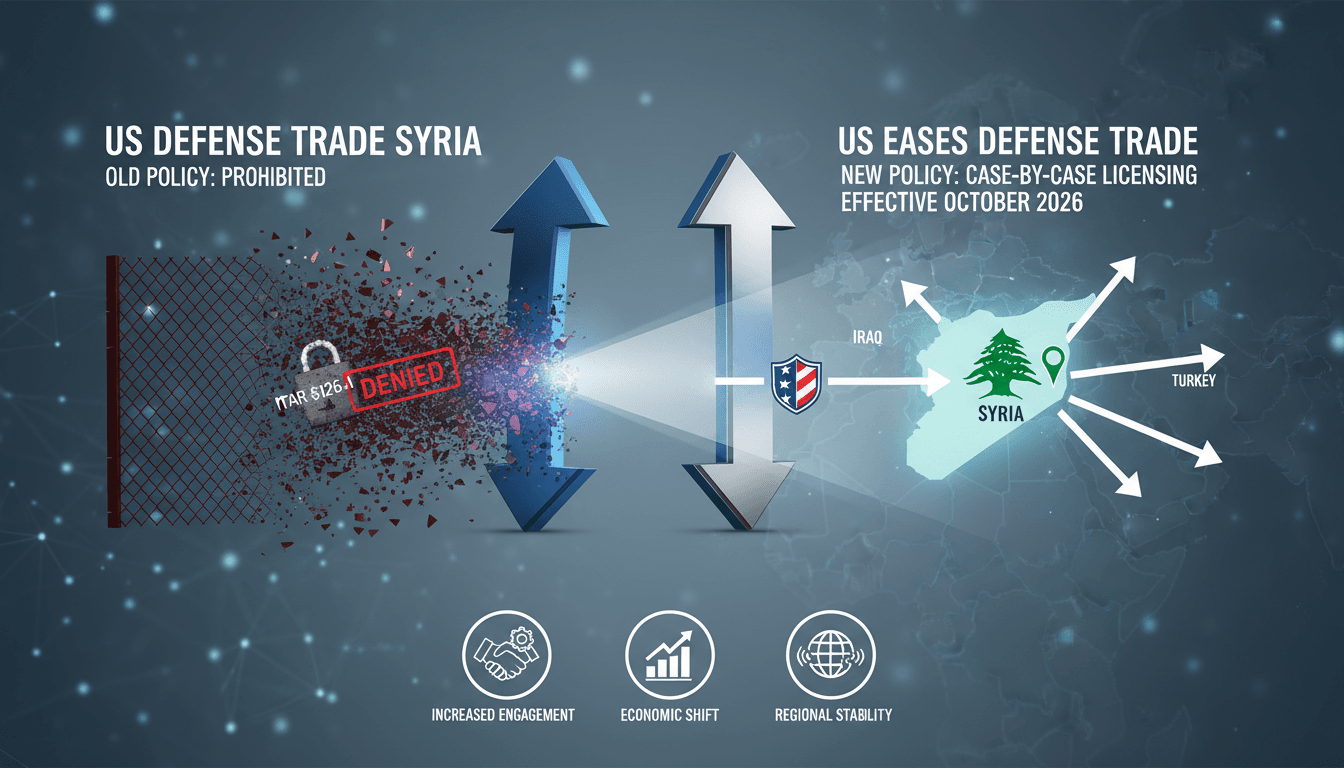
- On October 1, 2026, the U.S. removed Syria from the ITAR §126.1 defense trade denial list.
- Licensing for defense articles and services involving Syria will now be reviewed on a case-by-case basis.
- This change follows the rescission of Syria's State Sponsor of Terrorism designation and other statutory waivers.
The context you actually need
- The U.S. has gradually eased sanctions on Syria since the ousting of Bashar al-Assad in December 2024.
- The amendment to ITAR allows for exports, imports, and brokering of defense articles but does not eliminate all sanctions.
- Syria is now one of seven countries remaining on the ITAR §126.1 comprehensive denial list, which includes nations like China and Iran.
What's really happening
The U.S. Department of State's decision to amend the International Traffic in Arms Regulations (ITAR) regarding Syria marks a pivotal shift in defense trade policy. This change allows for a case-by-case review of defense trade licenses, moving away from the previous blanket denial approach. The decision, approved by the Secretary of State on August 19, 2026, is rooted in a broader strategy to normalize relations with the new Syrian government following the ousting of Bashar al-Assad.
The regulatory amendment is significant because it reflects the U.S. government's willingness to engage with Syria in a more constructive manner. The rescission of Syria's designation as a State Sponsor of Terrorism was a critical prerequisite for this policy shift. This designation had long restricted U.S. defense trade with Syria, and its removal indicates a thawing of relations that could lead to increased military and defense cooperation.
However, the new policy does not equate to a free-for-all in defense exports. Each request for a defense trade license will undergo rigorous scrutiny, ensuring that the U.S. maintains control over what military equipment and services are provided to Syria. This careful approach aims to balance the desire for engagement with the need for security and oversight.
The implications of this policy change extend beyond immediate defense trade. It signals a potential shift in the geopolitical landscape of the Middle East, where U.S. interests are closely tied to stability and security. By easing restrictions, the U.S. may be attempting to foster a more stable environment in Syria, which could have ripple effects throughout the region, including in neighboring countries and among U.S. allies.
Moreover, this regulatory change aligns with broader sanctions relief efforts, which may encourage Gulf states and other regional players to reconsider their positions on Syria. As trade routes stabilize and investment opportunities arise, businesses in the defense sector and beyond may find new avenues for growth and collaboration.
Who feels it first (and how)
- Defense contractors: Companies involved in military exports may see new opportunities for contracts and partnerships.
- International traders: Businesses engaged in cross-border trade may benefit from increased commerce with Syria.
- Regional investors: Investors in the Gulf may explore new ventures in Syria, particularly in reconstruction and infrastructure projects.
What to watch next
- Licensing requests: Monitor the volume and nature of defense trade license requests involving Syria to gauge market interest.
- U.S.-Syria diplomatic relations: Watch for developments in diplomatic engagements, including the potential reopening of the U.S. Embassy in Damascus.
- Regional stability indicators: Keep an eye on security developments in Syria and neighboring countries, as these will impact trade dynamics.
The U.S. has removed Syria from the ITAR §126.1 denial list.
Increased defense trade activity between the U.S. and Syria as businesses adapt to the new regulations.
The long-term impact on regional stability and how other countries will respond to this policy shift.
Frequently Asked Questions
- Why it matters?
- This shift reflects a significant change in U.S. foreign policy that could reshape regional dynamics and trade relationships.
- What happened (in 30 seconds)?
- On October 1, 2026, the U.S. removed Syria from the ITAR §126.1 defense trade denial list. Licensing for defense articles and services involving Syria will now be reviewed on a case-by-case basis. This change follows the rescission of Syria's State Sponsor of Terrorism designation and other statutory waivers.
- What's really happening?
- The U.S. Department of State's decision to amend the International Traffic in Arms Regulations (ITAR) regarding Syria marks a pivotal shift in defense trade policy. This change allows for a case-by-case review of defense trade licenses, moving away from the previous blanket denial approach. The decision, approved by the Secretary of State on August 19, 2026, is rooted in a broader strategy to normalize relations with the new Syrian government following the ousting of Bashar al-Assad. The regula
- Who feels it first (and how)?
- Defense contractors: Companies involved in military exports may see new opportunities for contracts and partnerships. International traders: Businesses engaged in cross-border trade may benefit from increased commerce with Syria. Regional investors: Investors in the Gulf may explore new ventures in Syria, particularly in reconstruction and infrastructure projects.
- What to watch next?
- Licensing requests: Monitor the volume and nature of defense trade license requests involving Syria to gauge market interest. U.S.-Syria diplomatic relations: Watch for developments in diplomatic engagements, including the potential reopening of the U.S. Embassy in Damascus. Regional stability indicators: Keep an eye on security developments in Syria and neighboring countries, as these will impact trade dynamics.
Arabic-language coverage of international news and geopolitics.
"RT Arabic is a Russian state-funded outlet often criticized for promoting Kremlin-aligned narratives."
— A47 Editor
سوريا خارج "'قائمة الحظر" الدفاعية الأمريكية.. ماذا يعني الترخيص "حالة بحالة" بدءاً من أكتوبر 2026"؟
Washington has amended its international arms trade regulations, removing Syria from the list of countries subject to a blanket denial of defense trade licenses, effective October 1, 2026. This change signifies a shift in U.S. policy towards Syria, a...
Jordanian news and regional updates.
"Roya News is a Jordanian outlet focused on breaking news and local affairs."
— A47 Editor
واشنطن تفتح الباب أمام صفقات دفاعية مع دمشق وفق شروط جديدة
The U.S. Department of State has announced the removal of Syria from the list of state sponsors of terrorism, opening the door for potential defense deals with Damascus under new conditions. This decision marks a significant shift in U.S. policy towa...
Arabic-language coverage of political affairs and current events.
"Okaz political coverage typically follows mainstream Saudi framing on national and regional affairs."
— A47 Editor
أمريكا ترفع الحظر العسكري عن سورية وتفتح الباب أمام صفقات السلاح
The United States announced on Wednesday the lifting of restrictions that previously prohibited the granting of licenses for the export of military equipment and defense services to Syria. This decision, effective from October 1, allows U.S. authorit...