
IRGC Claims Strikes on Supertankers in Strait of Hormuz Amid Rising Tensions
Why it matters
The Strait of Hormuz is a critical chokepoint for global oil supplies, and disruptions here can lead to significant fluctuations in oil prices and shipping costs.
What happened (in 30 seconds)
- On October 13, 2026, Iran's IRGC Navy announced it targeted a supertanker in the Strait of Hormuz, causing a fire onboard.
- Multiple maritime incidents were reported by UKMTO, including projectile attacks on oil tankers and a drone strike near Oman.
- Tensions are escalating between Iran and Western naval forces, with Iran enforcing strict navigation rules in the region.
The context you actually need
- The Strait of Hormuz is a vital passage for approximately 20% of the world's oil supply, making it a focal point for geopolitical tensions.
- Iran's actions are framed as responses to vessels allegedly cooperating with U.S. forces, which Iran views as hostile.
- Shipping disruptions have already been reported, with potential impacts on global oil prices and shipping routes.
What's really happening
The recent strikes by the IRGC on supertankers in the Strait of Hormuz are part of a broader strategy by Iran to assert control over this crucial maritime corridor. Since February 2026, tensions have escalated significantly due to ongoing conflicts involving Iran, the United States, and Israel. The IRGC has accused vessels of using unauthorized routes and disabling navigation systems, which they interpret as acts of aggression.
In the past few days, the IRGC has claimed responsibility for targeting at least three supertankers, with reports indicating that these vessels ignored warnings and directives. The IRGC's narrative emphasizes the enforcement of maritime regulations, framing their actions as necessary for national security. However, these claims lack independent verification, leading to skepticism from Western sources.
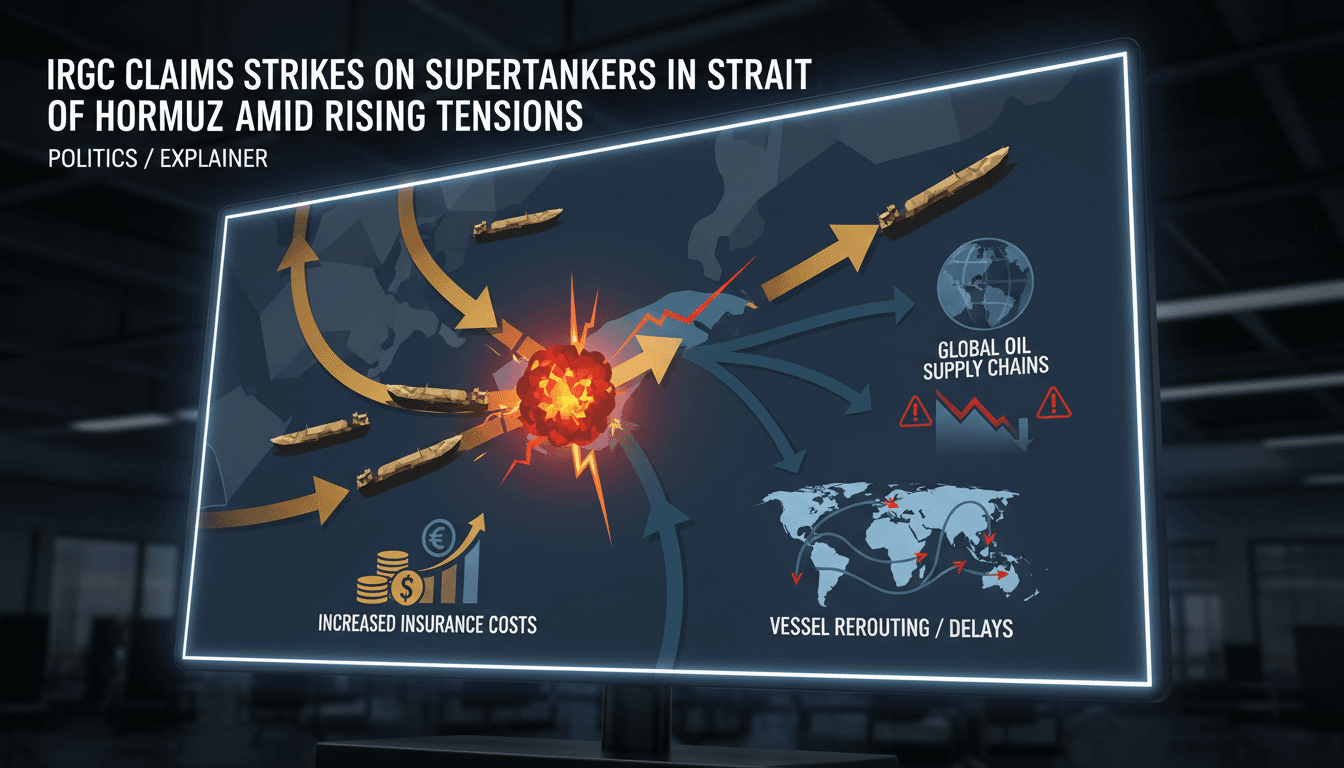
The implications of these incidents extend beyond immediate maritime safety. The Strait of Hormuz is a critical chokepoint for global oil supplies, and any disruption can lead to fluctuations in oil prices. As shipping companies assess the risks of operating in this region, they may face increased insurance premiums and rerouting costs. This could have a cascading effect on global supply chains, particularly for industries reliant on oil and gas.
Moreover, the geopolitical landscape is shifting, with Western naval forces closely monitoring the situation. The U.S. Central Command has previously dismissed Iranian claims as unverified, indicating a potential for further military engagement if tensions escalate. The ongoing maritime incidents could lead to a more pronounced military presence in the region, further complicating the already volatile situation.
As the IRGC continues to assert its dominance in the Strait of Hormuz, the potential for miscalculation or unintended escalation remains high. The international community is watching closely, as any significant incident could trigger broader geopolitical ramifications.
Who feels it first (and how)
- Shipping companies: Increased insurance costs and potential rerouting will affect operational budgets.
- Oil and gas industries: Fluctuating oil prices can impact profitability and supply chain stability.
- Consumers: Rising costs in transportation may lead to higher prices for goods and services.
What to watch next
- Insurance premiums: Monitor changes in maritime insurance rates, as increased risks could lead to higher costs for shipping companies.
- Oil prices: Keep an eye on fluctuations in global oil prices, which may respond to ongoing tensions and supply chain disruptions.
- Military presence: Watch for changes in naval deployments in the region, as increased military activity could signal further escalation.
The IRGC has claimed responsibility for multiple strikes on supertankers.
Shipping costs and insurance premiums will rise due to increased risks in the Strait of Hormuz.
The long-term impact on global oil supply and prices remains uncertain as tensions evolve.
Frequently Asked Questions
- Why it matters?
- The Strait of Hormuz is a critical chokepoint for global oil supplies, and disruptions here can lead to significant fluctuations in oil prices and shipping costs.
- What happened (in 30 seconds)?
- On October 13, 2026, Iran's IRGC Navy announced it targeted a supertanker in the Strait of Hormuz, causing a fire onboard. Multiple maritime incidents were reported by UKMTO, including projectile attacks on oil tankers and a drone strike near Oman. Tensions are escalating between Iran and Western naval forces, with Iran enforcing strict navigation rules in the region.
- What's really happening?
- The recent strikes by the IRGC on supertankers in the Strait of Hormuz are part of a broader strategy by Iran to assert control over this crucial maritime corridor. Since February 2026, tensions have escalated significantly due to ongoing conflicts involving Iran, the United States, and Israel. The IRGC has accused vessels of using unauthorized routes and disabling navigation systems, which they interpret as acts of aggression. In the past few days, the IRGC has claimed responsibility for targ
- Who feels it first (and how)?
- Shipping companies: Increased insurance costs and potential rerouting will affect operational budgets. Oil and gas industries: Fluctuating oil prices can impact profitability and supply chain stability. Consumers: Rising costs in transportation may lead to higher prices for goods and services.
- What to watch next?
- Insurance premiums: Monitor changes in maritime insurance rates, as increased risks could lead to higher costs for shipping companies. Oil prices: Keep an eye on fluctuations in global oil prices, which may respond to ongoing tensions and supply chain disruptions. Military presence: Watch for changes in naval deployments in the region, as increased military activity could signal further escalation.
Jordanian news and regional updates.
"Roya News is a Jordanian outlet focused on breaking news and local affairs."
— A47 Editor
الحرس الثوري الإيراني يعلن إشعال النار في ناقلة نفط بمضيق هرمز وبريطانيا ترصد هجمات متعددة
The Iranian Revolutionary Guard has announced that it set fire to an oil tanker in the Strait of Hormuz, a critical maritime route for global oil shipments. This incident has raised alarms as the British authorities reported multiple attacks in the r...
Arabic-language coverage of international news and geopolitics.
"RT Arabic is a Russian state-funded outlet often criticized for promoting Kremlin-aligned narratives."
— A47 Editor
انفجار جديد بناقلة نفط بعد اصطدامها بلغم بحري في مضيق هرمز
The Iranian Revolutionary Guard announced that another oil tanker, which was operating on a route not coordinated with Iranian authorities, collided with a naval mine, resulting in an explosion and fire on board.
Arabic-language coverage of international news and geopolitics.
"RT Arabic is a Russian state-funded outlet often criticized for promoting Kremlin-aligned narratives."
— A47 Editor
الحرس الثوري الإيراني يحذر السفن من تعطيل أنظمة الملاحة والتعريف في مضيق هرمز
The Iranian Revolutionary Guard Corps issued a warning on Sunday to vessels transiting the Strait of Hormuz, cautioning them against turning off their navigation and identification systems. The Corps stated that such actions would be interpreted as h...