
Cornell University Bans Fraternity Parties Following Gang Rape Allegations
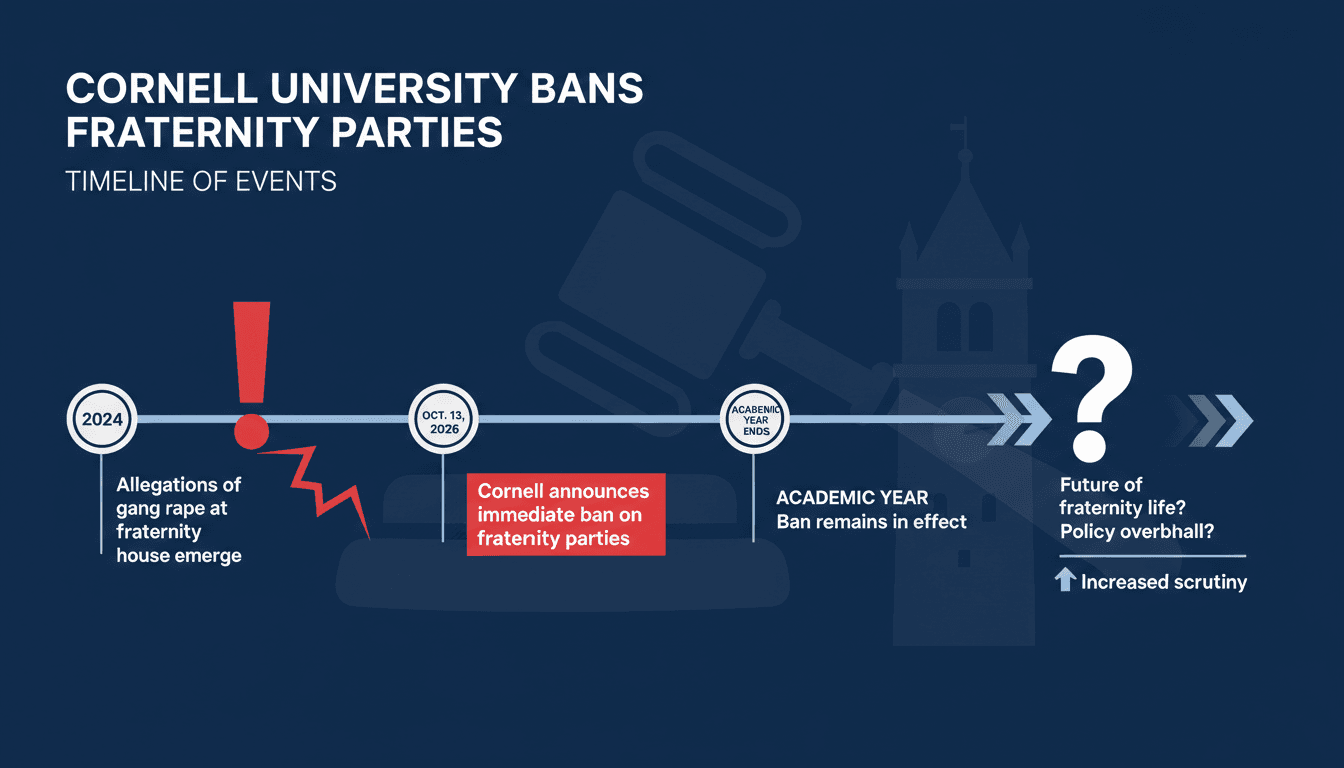
Why it matters
This ban reflects a growing trend in higher education to prioritize student safety over traditional social structures.
What happened (in 30 seconds)
- Cornell University suspended all fraternity parties and social events for the 2026-2027 academic year following backlash over a gang rape allegation.
- President Michael Kotlikoff announced enhanced survivor support and the involvement of New York State Police in ongoing investigations.
- A civil lawsuit filed in September 2026 renewed scrutiny of the university's handling of sexual assault allegations, prompting this decisive action.
The context you actually need
- Fraternities have long been associated with social events, often leading to concerns about alcohol consumption and hazing practices on campuses.
- The Chi Phi fraternity incident in October 2024 involved allegations of drugging and sexual assault, which were initially investigated but did not lead to criminal charges.
- Public scrutiny intensified after the lawsuit, highlighting deficiencies in Cornell's Title IX processes and the need for systemic change in how universities address sexual violence.
What's really happening
Cornell University's decision to suspend fraternity parties is a significant response to a complex web of social, legal, and institutional pressures. The allegations against the Chi Phi fraternity, where a female student reported being drugged and assaulted, have raised serious questions about the effectiveness of the university's Title IX processes. Initially, Cornell conducted an internal investigation that resulted in some expulsions, but the lack of criminal charges from local prosecutors indicated a troubling gap in accountability.
The civil lawsuit filed in September 2026 acted as a catalyst for change, drawing public attention to the university's handling of sexual assault cases. This scrutiny was compounded by the involvement of state officials, including Governor Kathy Hochul, who appointed the Attorney General to investigate the university's practices. The decision to ban fraternity parties is not merely punitive; it reflects a broader institutional acknowledgment of the need for reform in how sexual violence is addressed on campus.
By implementing a zero-tolerance policy and enhancing survivor support, Cornell aims to create a safer environment for students. The involvement of New York State Police in investigations signifies a shift towards more rigorous oversight and accountability. This move may also set a precedent for other universities grappling with similar issues, as they may feel pressured to adopt stricter measures in response to allegations of sexual misconduct.
The implications of this ban extend beyond Cornell. It highlights a growing trend in higher education where institutions are increasingly held accountable for the safety and well-being of their students. As public awareness of sexual violence on campuses rises, universities may face greater scrutiny regarding their policies and practices. This could lead to a reevaluation of fraternity life and social events across the country, as institutions seek to balance tradition with the imperative of student safety.
Who feels it first (and how)
- Current students at Cornell, who will experience a significant shift in campus social life.
- Fraternity members, who face immediate restrictions and potential long-term changes to their organizations.
- University administrators, who must navigate the fallout and implement new policies effectively.
- Survivors of sexual assault, who may feel more supported by enhanced resources and institutional commitment to safety.
What to watch next
- Future lawsuits: The outcomes of ongoing legal actions could influence how universities approach sexual assault cases.
- Policy changes: Look for other universities to adopt similar measures in response to public pressure and scrutiny.
- Public sentiment: Monitor how student and community reactions evolve, as they may impact future institutional decisions.
Cornell has suspended all fraternity parties for the academic year.
Other universities may follow suit in response to similar allegations.
The long-term impact on fraternity culture and student social life remains to be seen.
Frequently Asked Questions
- Why it matters?
- This ban reflects a growing trend in higher education to prioritize student safety over traditional social structures.
- What happened (in 30 seconds)?
- Cornell University suspended all fraternity parties and social events for the 2026-2027 academic year following backlash over a gang rape allegation. President Michael Kotlikoff announced enhanced survivor support and the involvement of New York State Police in ongoing investigations. A civil lawsuit filed in September 2026 renewed scrutiny of the university's handling of sexual assault allegations, prompting this decisive action.
- What's really happening?
- Cornell University's decision to suspend fraternity parties is a significant response to a complex web of social, legal, and institutional pressures. The allegations against the Chi Phi fraternity, where a female student reported being drugged and assaulted, have raised serious questions about the effectiveness of the university's Title IX processes. Initially, Cornell conducted an internal investigation that resulted in some expulsions, but the lack of criminal charges from local prosecutors in
- Who feels it first (and how)?
- Current students at Cornell, who will experience a significant shift in campus social life. Fraternity members, who face immediate restrictions and potential long-term changes to their organizations. University administrators, who must navigate the fallout and implement new policies effectively. Survivors of sexual assault, who may feel more supported by enhanced resources and institutional commitment to safety.
- What to watch next?
- Future lawsuits: The outcomes of ongoing legal actions could influence how universities approach sexual assault cases. Policy changes: Look for other universities to adopt similar measures in response to public pressure and scrutiny. Public sentiment: Monitor how student and community reactions evolve, as they may impact future institutional decisions.
International coverage of politics, culture, and current affairs.
"BBC News is widely regarded as a reputable international news organization, known for its impartial tone and public service mandate."
— A47 Editor
Cornell bans all fraternity parties over gang sex assault allegations
Cornell University has banned all fraternity parties following serious allegations of gang sexual assault involving a student known as Jane Doe. The allegations have sparked significant public outrage regarding the university's handling of the case, ...
Top international stories selected by The Guardian editors.
"The Guardian is known for its progressive editorial stance and in-depth analysis."
— A47 Editor
Cornell suspends fraternity parties amid backlash over alleged sexual assault
Cornell University has suspended all fraternity parties and social gatherings for the remainder of the academic year in response to backlash over its handling of an alleged sexual assault involving a female student at a fraternity house in 2024. The ...
Global news coverage with extensive reporting on Middle Eastern conflicts and geopolitics.
"Al Jazeera is a Qatar-based broadcaster known for wide regional coverage and alternative perspectives."
— A47 Editor
Why the Cornell gang rape case has raised concerns about fraternity culture
Recent allegations of gang rape at Cornell University have sparked significant concern regarding fraternity culture, with experts noting that while fraternities can foster community, they often employ hazing and coercive tactics to enforce loyalty am...
Comprehensive coverage of Middle Eastern and global issues.
"Al Jazeera is a prominent voice from the Global South, especially the Middle East, with an emphasis on underreported stories."
— A47 Editor
Why the Cornell gang rape case has raised concerns about fraternity culture
Recent allegations of gang rape at Cornell University have sparked significant concern regarding fraternity culture, with experts noting that while fraternities can foster community, they often employ hazing and coercive tactics to enforce loyalty am...
Top international stories selected by The Guardian editors.
"The Guardian is known for its progressive editorial stance and in-depth analysis."
— A47 Editor
Fraternities are the most likely place for unwanted sexual contact. Should they be shut down?
An alleged gang-rape incident involving seven members of the Chi Phi fraternity at Cornell University in 2024 has prompted renewed scrutiny and a reopened investigation by New York prosecutors, following public outrage over perceived leniency towards...