
Burnham Opens Door to Debate on EU Free Movement as Rayner Rules Out Return to Pre-Brexit Arrangements
Why it matters
Reopening discussions around labor mobility signals a potential realignment of Britain’s post-Brexit economic architecture ahead of broader negotiations on trade, energy, and defense.
What happened (in 30 seconds)
- Burnham floated mobility talks: UK Prime Minister Andy Burnham signaled openness to discussing the reintroduction of EU free movement rules as part of a comprehensive reset with Brussels, while excluding entry into the euro or Schengen.
- Rayner clarified the timeline: Housing Secretary Angela Rayner stated that the administration will stick to its 2024 manifesto commitments during the current parliament, noting that any eventual policy shift would require a future electoral mandate.
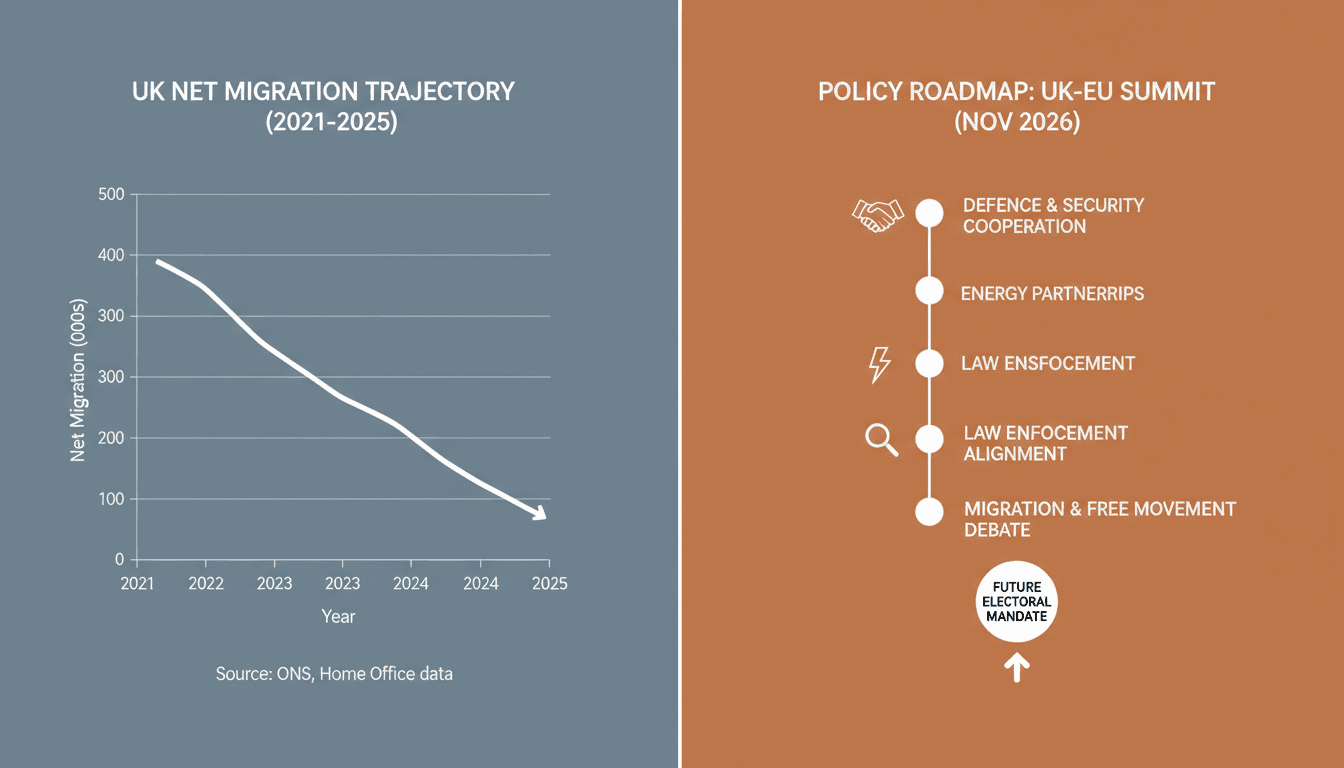
- A major summit approaches: The debate surfaces directly ahead of a scheduled November 20, 2026 UK-EU summit in Brussels covering security, energy, law enforcement, and migration.
The context you actually need
- Post-Brexit red lines stood firm for six years: Since formal departure in 2020, successive UK governments maintained strict bans on re-entering the EU single market, customs union, or restoring reciprocal free movement arrangements.
- A new administration shifted the tone: Burnham, who took office as Prime Minister in mid-2026, previously signaled an interest in exploring closer institutional ties with European partners.
- Migration numbers normalized: Official data revealed that by 2025, net migration inflows returned to levels comparable to those recorded prior to the rollout of the points-based immigration regime in 2021.
What's really happening
The floating of free movement discussions by Downing Street represents a calculated test of domestic political tolerance against international economic incentives. Following the 2016 referendum and formal exit terms finalized in 2020, the United Kingdom operated under strict labor restrictions. The points-based immigration system introduced in 2021 altered the demographic and geographic distribution of incoming talent, shifting labor flows away from continental Europe. However, official data showing 2025 net migration falling back to pre-2021 baselines has altered the empirical foundation of the debate.
By framing labor mobility as an evidence-based negotiation rather than an ideological concession, Burnham is testing whether the British electorate is prepared to exchange certain regulatory barriers for tangible market integration. The mechanism here relies on asymmetric bargaining chips ahead of the November 20 summit in Brussels. The European Union has historically treated the four freedoms—goods, capital, services, and people—as indivisible components of single-market access. By signaling flexibility on labor mobility without committing to the euro currency or the passport-free Schengen zone, Downing Street is positioning mobility as a lever to secure broader concessions across non-tariff trade barriers, energy security grids, and cross-border security cooperation.
Simultaneously, the administration's dual messaging reflects an internal risk-mitigation strategy. Housing Secretary Angela Rayner's intervention established clear boundaries: the 2024 manifesto pledges apply fully to the sitting parliament, and any statutory return to free movement demands a fresh electoral mandate. This sequence allows leadership to measure resistance from opposition factions—including immediate pushback from Reform UK and Conservative figures—while offering EU negotiators a clear direction of travel.
For international enterprises operating between European hubs and third-country commercial centers, the structural takeaway is that cross-border services and professional mobility rules are no longer considered entirely settled policy. While immediate statutory changes are off the table for this parliamentary cycle, the political calculus governing UK-EU regulatory separation is actively evolving into a transactional framework.
Who feels it first (and how)
- Cross-border enterprise leadership: Executive teams managing staffing allocations across the UK and the European continent gain early visibility into long-term shifts in cross-Channel labor compliance.
- UK-based services firms: Professional services, legal, and financial consultancies that rely on bilateral personnel deployment face the prospect of lower operational friction if future negotiations advance.
- Global mobility professionals: Expatriates, international consultants, and regional headquarters coordinating talent transit across Europe, the UK, and global hubs like Dubai see potential downstream adjustments in bilateral visa frameworks.
- Political and trade policy strategists: Regulatory compliance officers must prepare for diverging positions between the UK's current manifesto limitations and medium-term bilateral summit deliverables.
What to watch next
- The November 20 Brussels Summit: The joint communique issued from the defense, energy, and migration discussions will confirm whether labor mobility formally enters the bilateral negotiating text.
- Parliamentary backbench discipline: Tracking statements from internal party caucuses will signal how much political leverage the administration possesses to pursue further regulatory convergence.
- Foreign direct investment indicators: Any forward guidance on cross-border mobility could influence service-sector capital expenditure decisions across British and European financial centers.
Prime Minister Andy Burnham advocated for an evidence-based debate on EU free movement, while Angela Rayner affirmed existing manifesto boundaries for the current parliament.
The UK government will attempt to use exploratory discussions on mobility to unlock reciprocal advantages in defense, energy, and commercial cooperation at the Brussels summit.
Whether the European Commission will accept a bespoke, selective arrangement on labor mobility without demanding broader regulatory alignment under single-market rules.
Frequently Asked Questions
- Why it matters?
- Reopening discussions around labor mobility signals a potential realignment of Britain’s post-Brexit economic architecture ahead of broader negotiations on trade, energy, and defense.
- What happened (in 30 seconds)?
- Burnham floated mobility talks: UK Prime Minister Andy Burnham signaled openness to discussing the reintroduction of EU free movement rules as part of a comprehensive reset with Brussels, while excluding entry into the euro or Schengen. Rayner clarified the timeline: Housing Secretary Angela Rayner stated that the administration will stick to its 2024 manifesto commitments during the current parliament, noting that any eventual policy shift would require a future electoral mandate. A major summi
- What's really happening?
- The floating of free movement discussions by Downing Street represents a calculated test of domestic political tolerance against international economic incentives. Following the 2016 referendum and formal exit terms finalized in 2020, the United Kingdom operated under strict labor restrictions. The points-based immigration system introduced in 2021 altered the demographic and geographic distribution of incoming talent, shifting labor flows away from continental Europe. However, official data sho
- Who feels it first (and how)?
- Cross-border enterprise leadership: Executive teams managing staffing allocations across the UK and the European continent gain early visibility into long-term shifts in cross-Channel labor compliance. UK-based services firms: Professional services, legal, and financial consultancies that rely on bilateral personnel deployment face the prospect of lower operational friction if future negotiations advance. Global mobility professionals: Expatriates, international consultants, and regional headqua
- What to watch next?
- The November 20 Brussels Summit: The joint communique issued from the defense, energy, and migration discussions will confirm whether labor mobility formally enters the bilateral negotiating text. Parliamentary backbench discipline: Tracking statements from internal party caucuses will signal how much political leverage the administration possesses to pursue further regulatory convergence. Foreign direct investment indicators: Any forward guidance on cross-border mobility could influence service
Macro commentary, policy analysis, growth/inflation themes, and global outlooks.
"Contextual macro coverage that complements day-to-day market headlines."
— A47 Editor
UK’s Rayner says no Brexit reopening as Burnham floats EU free movement
UK Cabinet minister Lucy Rayner has said there will be no reopening of Brexit, even as Prime Minister Andy Burnham floats the possibility of EU free movement, according to the base report from Investing.com. The exchange highlights internal governmen...
Global news coverage with extensive reporting on Middle Eastern conflicts and geopolitics.
"Al Jazeera is a Qatar-based broadcaster known for wide regional coverage and alternative perspectives."
— A47 Editor
UK PM Burnham says he wants to discuss a return to EU freedom of movement
UK Prime Minister Andy Burnham has said Britain should have an 'honest discussion' about how immigration has changed since Brexit, including a possible return to EU freedom of movement, as the government prepares for a UK-EU summit in November.
Comprehensive coverage of Middle Eastern and global issues.
"Al Jazeera is a prominent voice from the Global South, especially the Middle East, with an emphasis on underreported stories."
— A47 Editor
UK PM Burnham says he wants to discuss a return to EU freedom of movement
UK Prime Minister Andy Burnham has said Britain should have an 'honest discussion' about how immigration has changed since Brexit, including a possible return to EU freedom of movement, as the government prepares for a UK-EU summit in November.
United Kingdom-focused news including local politics, business, and social issues.
"BBC News is widely regarded as a reputable international news organization, known for its impartial tone and public service mandate."
— A47 Editor
Burnham open to 'honest discussion' on EU free movement
Prime Minister Andy Burnham has said he wants a factual, evidence-based and honest discussion with the public about returning to free movement between Britain and the EU, according to BBC News. The stance comes as the government prepares for a UK-EU ...
Sports reporting with a focus on Saudi and regional competitions.
"Okaz sports coverage is broad and audience-friendly, with strong attention to Saudi teams and leagues."
— A47 Editor
بريطانيا تفتح الباب أمام العودة إلى حرية التنقل مع الاتحاد الأوروبي
UK Prime Minister Andy Burnham has opened the door to Britain returning to European Union freedom of movement rules, saying that continuing to rule the option out would not be a red line in future negotiations. Speaking to the Sunday Times, he said t...
Political developments, elections, and policy issues in the UK.
"Sky News is a UK-based 24-hour channel known for fast-breaking news and political coverage."
— A47 Editor
PM open to 'honest discussion' about return to EU free movement
Prime Minister Andy Burnham has said an "honest discussion" is needed with the public about readopting the EU's free movement rules, according to Sky News, as the government prepares for a UK-EU summit. The stance marks a shift in tone on Brexit-era ...