
Iran Declares Strait of Hormuz Pre-War Arrangements Void After US-Israeli Conflict
Why it matters
The formal dissolution of pre-war operating rules in the world's most critical energy chokepoint shifts maritime passage from an open-access international norm to a fragmented, contested regime governed by bilateral leverage and transit fees.
What happened (in 30 seconds)
- A formal break from legacy rules: Iranian Foreign Minister Abbas Araghchi stated on October 25, 2026, that the Strait of Hormuz will no longer operate under its pre-war management frameworks following the armed conflict that began in February 2026.
- Push for regional control: Tehran announced it will only support maritime security frameworks designed within the region, rejecting any reversion to historical navigation structures or externally driven security guarantees.
- Stalled diplomatic pathways: The move follows the breakdown of implementation talks stemming from a June 2026 interim Memorandum of Understanding (MOU), as disputes over navigation authority, security corridors, and transit fees persist.
The context you actually need
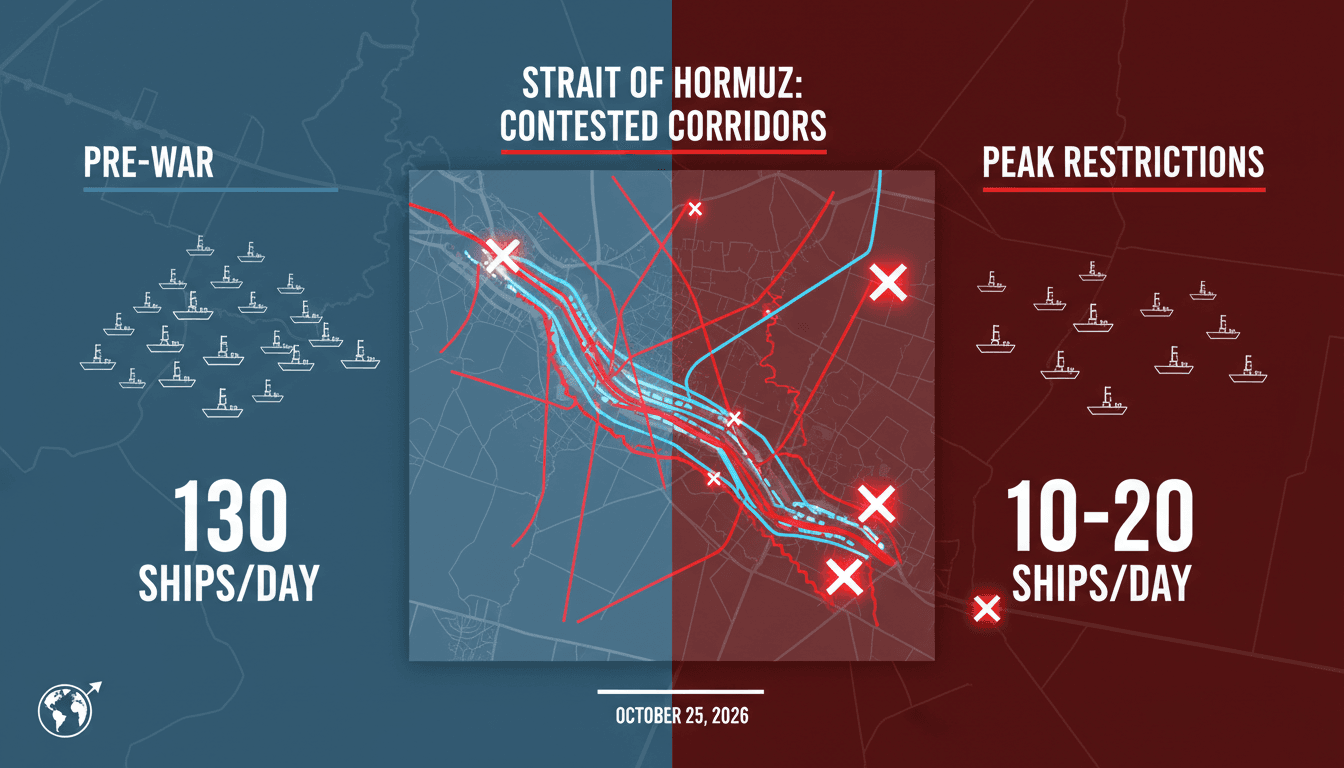
- Traffic collapsed during peak conflict: Pre-war commercial traffic through the waterway averaged approximately 130 ships per day, but plunged to a handful of vessels during peak restrictions and naval engagements in early 2026.
- An incomplete truce: The June 2026 MOU established an emergency framework for commercial safe passage, yet left long-term maritime governance unresolved, leading directly into the current impasse.
- Direct commercial spillovers: Eight months of regional instability have kept global crude oil prices sustained above $100 per barrel, driven by vessel rerouting, ongoing tanker attacks, and elevated maritime insurance premiums.
What's really happening
The formal rejection of pre-war navigation rules marks a structural shift from temporary tactical denial to long-term institutional governance over the Strait of Hormuz. When armed conflict commenced in late February 2026, initial military operations focused on Iranian nuclear installations, which quickly broadened into naval confrontations throughout the Persian Gulf. In response, Iran demonstrated its ability to disrupt commercial transit, reducing a passage that normally accommodated approximately 130 vessels per day down to isolated transits.
Rather than maintaining a perpetual kinetic blockade, Iranian authorities have moved into a phase focused on the administrative control of regional shipping lanes. By establishing the Persian Gulf Strait Authority and proposing a joint bilateral administration with Oman, Tehran is attempting to replace international freedom-of-navigation conventions with a proprietary regulatory framework. Under this mechanism, transit rights cease to be an assumed international standard; instead, safe passage becomes contingent upon compliance with designated security corridors and the payment of administrative fees.
The incentives governing this move are economic and geopolitical. For Iran, institutionalizing strait oversight creates recurring leverage against United States sanctions and ongoing naval countermeasures. Formalizing entry rules, route verifications, and fees provides a revenue stream while forcing international maritime operators to recognize Iranian administrative legitimacy over the waterway. This approach bypasses the unresolved disputes of the June 2026 interim MOU, which unraveled precisely because neither side agreed on who held legal authority over commercial transit corridors.
For the wider Gulf, this policy shifts the risk profile of commercial shipping from acute war risk to chronic operational friction. The United States maintains active naval escort operations, sanctions enforcement, and counter-blockade measures, while regional partners face collateral hazards, including missile debris and Houthi-linked infrastructure attacks. Meanwhile, tanker operators are evaluating the trade-off between the high costs of round-Africa rerouting and the compounding expenses of localized transit fees, mine-related incident risks, and soaring maritime insurance premiums. The pre-war assumption of frictionless passage has effectively ceased, replaced by an institutionalized tollgate dynamic.
Who feels it first (and how)
- Supply chain executives and freight forwarders: Face persistent surcharges and longer booking lead times as regional maritime corridors incorporate security escorts and regulatory clearance delays.
- Dubai-based commercial enterprises and residents: Absorb higher baseline expenses across imported goods, domestic logistics, electricity, and retail supply chains driven by regional sea freight disruptions.
- Global commodity traders and energy utilities: Must price in structurally elevated crude oil sustained above $100 per barrel alongside constrained liquefied natural gas (LNG) delivery schedules.
- Maritime insurers and commercial shipowners: Navigate rising capital risks, mandatory secondary risk assessments, and heightened underwriting premiums for hulls entering the Gulf.
What to watch next
- Oman's diplomatic response: Monitor whether Muscat accepts, delays, or formally rejects Iran’s proposal for a joint Strait management authority, which will signal regional willingness to institutionalize the new framework.
- Fee implementation mechanisms: Watch for formal announcements regarding mandatory transit fees or designated vessel corridors enforced by the Persian Gulf Strait Authority, which will dictate future shipping costs.
- Naval escort deployment volume: Track changes in the scale and posture of United States naval escorts, as increased deployments could heighten direct confrontation risks or reinforce alternative protected corridors.
Iran has officially declared an end to pre-war Strait of Hormuz navigation arrangements, global oil prices have remained above $100 per barrel, and shipping volumes experienced sharp declines from their historical baseline of approximately 130 ships per day.
Maritime insurance premiums for Persian Gulf transit will remain elevated through the end of 2026, preventing a recovery to pre-February logistics costs.
Whether international shipping registries and regional coastal states will formally submit to the Persian Gulf Strait Authority's fees and tracking corridors, or whether US-led escort mechanisms will enforce alternative passage lanes.
Frequently Asked Questions
- Why it matters?
- The formal dissolution of pre-war operating rules in the world's most critical energy chokepoint shifts maritime passage from an open-access international norm to a fragmented, contested regime governed by bilateral leverage and transit fees.
- What happened (in 30 seconds)?
- A formal break from legacy rules: Iranian Foreign Minister Abbas Araghchi stated on October 25, 2026, that the Strait of Hormuz will no longer operate under its pre-war management frameworks following the armed conflict that began in February 2026. Push for regional control: Tehran announced it will only support maritime security frameworks designed within the region, rejecting any reversion to historical navigation structures or externally driven security guarantees. Stalled diplomatic pathways
- What's really happening?
- The formal rejection of pre-war navigation rules marks a structural shift from temporary tactical denial to long-term institutional governance over the Strait of Hormuz. When armed conflict commenced in late February 2026, initial military operations focused on Iranian nuclear installations, which quickly broadened into naval confrontations throughout the Persian Gulf. In response, Iran demonstrated its ability to disrupt commercial transit, reducing a passage that normally accommodated approxim
- Who feels it first (and how)?
- Supply chain executives and freight forwarders: Face persistent surcharges and longer booking lead times as regional maritime corridors incorporate security escorts and regulatory clearance delays. Dubai-based commercial enterprises and residents: Absorb higher baseline expenses across imported goods, domestic logistics, electricity, and retail supply chains driven by regional sea freight disruptions. Global commodity traders and energy utilities: Must price in structurally elevated crude oil su
- What to watch next?
- Oman's diplomatic response: Monitor whether Muscat accepts, delays, or formally rejects Iran’s proposal for a joint Strait management authority, which will signal regional willingness to institutionalize the new framework. Fee implementation mechanisms: Watch for formal announcements regarding mandatory transit fees or designated vessel corridors enforced by the Persian Gulf Strait Authority, which will dictate future shipping costs. Naval escort deployment volume: Track changes in the scale and
English-language reporting on Saudi politics, policy, and society.
"Saudi Gazette reflects mainstream Saudi institutional perspectives."
— A47 Editor
Iran warns Strait of Hormuz will never return to previous arrangements
Iranian Foreign Minister Abbas Araghchi said the Strait of Hormuz will no longer operate under its previous arrangements following the war with the United States and Israel, stating that the conflict has changed the region's security landscape. He sa...
Pan-Arab political news and analysis.
"Al-Quds Al-Arabi is a London-based Arabic newspaper known for political coverage."
— A47 Editor
عراقجي: إدارة مضيق هرمز لن تعود إلى ما كانت عليه سابقا
Iranian Foreign Minister Abbas Araghchi said that the wars the region has witnessed have changed security conditions, and asserted that the management of the Strait of Hormuz will not return to what it was previously. He made the remarks in a speech ...
Arabic-language coverage of international news and geopolitics.
"RT Arabic is a Russian state-funded outlet often criticized for promoting Kremlin-aligned narratives."
— A47 Editor
عراقجي: مضيق هرمز تغيّر إلى الأبد ومسارات جديدة تفرض نفسها
Iranian Foreign Minister Abbas Araghchi stated that the situation in the Strait of Hormuz will not return to what it was before the war, noting that the strait had previously remained open with no obstacles to navigation. The remarks, reported by RT ...