
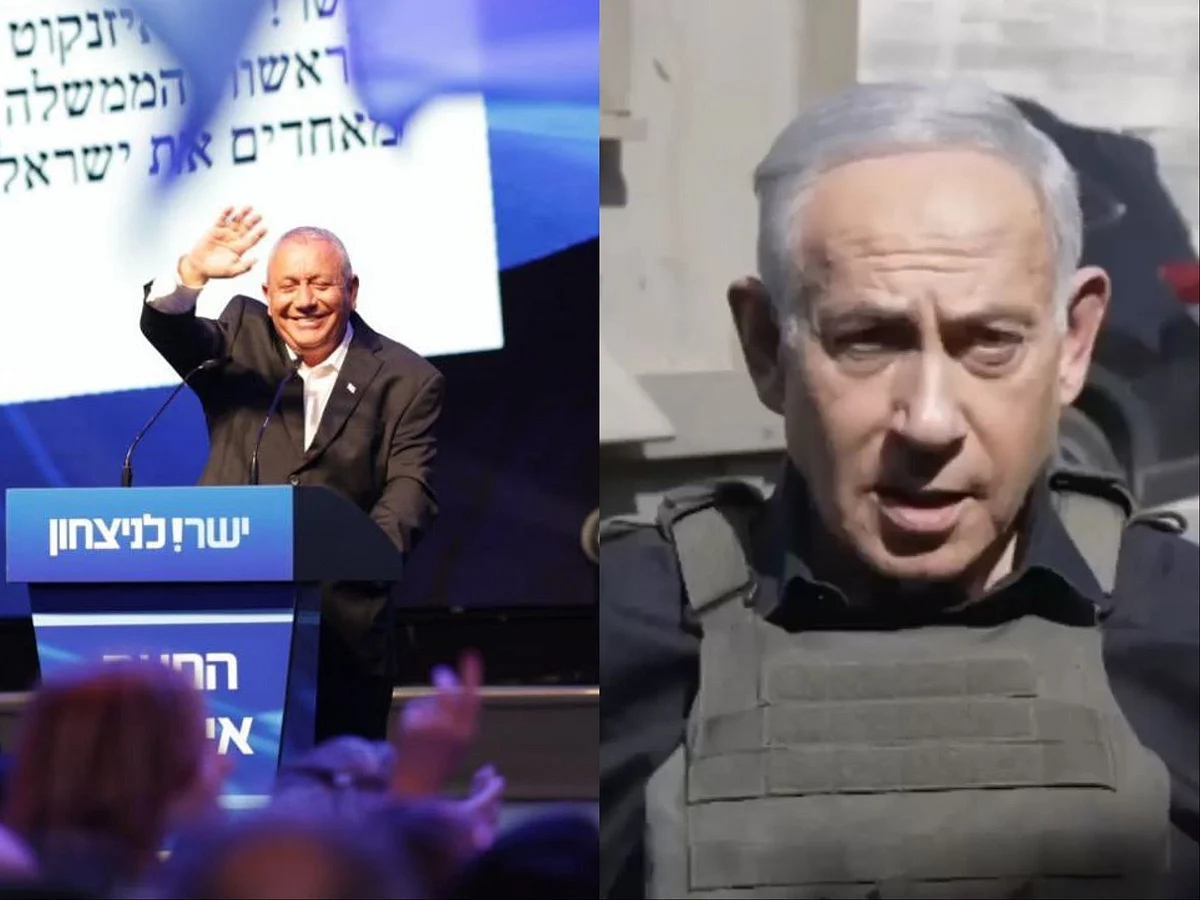
Israeli Election Produces Deadlock as Netanyahu and Eisenkot Blocs Fall Short of 61-Seat Majority
Why it matters
A divided 120-seat parliament stalls decisive defense and foreign policy alignments, introducing structural friction into regional economic connectivity and market forecasting.
What happened (in 30 seconds)
- A split result: The October 27, 2026, legislative election ended without a parliamentary majority, leaving Benjamin Netanyahu’s right-wing bloc at 53 seats and Gadi Eisenkot’s opposition bloc at 48 seats.
- Historic participation: Voter turnout reached 77.7 percent, marking the highest public participation rate recorded in more than two decades.
- A new balance of power: Arab-Israeli parties captured 19 seats, establishing a pivotal negotiating position while both lead contenders claimed competing mandates to form a government.
The context you actually need
- Security-driven polarization: The election arrived in the wake of the October 7, 2023 attacks, sustained military engagements in Gaza, confrontations involving Iran, and escalating tensions in the West Bank.
- Institutional pressure: Prime Minister Benjamin Netanyahu contested the vote while managing domestic corruption proceedings and an outstanding International Criminal Court arrest warrant.
- Alternative security credentials: Former military chief Gadi Eisenkot campaigned on an agenda of institutional continuity combined with broader governance, challenging the incumbent coalition's traditional defense monopoly.
What's really happening
The election outcome highlights a structural equilibrium within Israel's electorate that precludes an immediate, stable governing coalition. Neither primary faction reached the 61-seat threshold required to command the 120-seat Knesset independently. This balance reflects rigid ideological boundaries, where coalition arithmetic overrides standard platform consensus.
Netanyahu's path to power depends on preserving unity across his traditional right-wing partners, including factions led by figures such as Itamar Ben Gvir. These partners oppose broad unity arrangements, locking the bloc into an inflexible bargaining position. Conversely, Netanyahu has emphasized readiness for external defense measures, particularly regarding Iran, to reinforce security incentives among wavering allies. Yet, with only 53 seats confirmed in preliminary tallies, the bloc cannot govern without breaking ranks or attracting external support.
Eisenkot’s bloc faces a mirror dilemma. At 48 seats, the opposition cannot achieve a parliamentary majority through centrist and center-left parties alone. It must either recruit defectors from the right or build an operating agreement with the Arab-Israeli parties, which secured 19 seats. While leaders such as Mansour Abbas have signaled an openness to back opposition measures from outside the cabinet, formal participation remains politically fraught due to disagreements over regional security protocols.
This dynamic alters the role of the presidency. President Isaac Herzog has pushed for cross-bloc flexibility to prevent administrative collapse, but structural incentives push party leaders away from concessions. Any bloc that concedes on core platform points risks alienating its base. The resulting impasse shifts political leverage away from the primary party leaders and toward smaller faction heads, whose marginal seats determine the viability of any legislative agenda.
For cross-border commerce, this extended negotiation phase removes policy predictability. Regulatory reviews, foreign trade agreements, and energy transit frameworks pause until a confirmed cabinet receives parliamentary approval. Until the coalition process concludes, administrative continuity rests with transitional bodies, limiting the scope of new strategic initiatives.
Who feels it first (and how)
- Regional corporate strategists: Infrastructure, logistics, and tech firms reviewing Middle Eastern expansion face delayed bilateral regulatory approvals and extended project timelines.
- Energy and commodities desks: Oil and gas traders must manage persistent pricing risk driven by potential shifts in defense policy toward regional producers.
- Gulf-based trade and finance hubs: Investment desks managing cross-border capital flows between Israel and regional partners must navigate indefinite policy pauses during coalition formation.
What to watch next
- Presidential mandate assignment: President Isaac Herzog's selection of the initial candidate tasked with forming a government will indicate which coalition configuration carries greater institutional traction.
- Arab party negotiation terms: Any conditional backing or confidence-and-supply agreements offered by Mansour Abbas and allied factions will determine whether Eisenkot can construct a viable governing framework.
- Cabinet boundary signaling: Public positioning by hard-right figures regarding potential unity governments will reveal whether Netanyahu can negotiate beyond his established perimeter without fracturing his base.
Neither major political bloc secured the 61 seats required for an absolute legislative majority; voter turnout reached 77.7 percent; Arab-Israeli parties hold 19 seats.
Weeks of negotiations will lead to elevated short-term volatility on regional risk-pricing platforms and secondary asset markets.
Whether an eventual coalition yields a narrow right-wing cabinet, an expansive emergency unity agreement, or a failure that requires an additional general election.
Frequently Asked Questions
- Why it matters?
- A divided 120-seat parliament stalls decisive defense and foreign policy alignments, introducing structural friction into regional economic connectivity and market forecasting.
- What happened (in 30 seconds)?
- A split result: The October 27, 2026, legislative election ended without a parliamentary majority, leaving Benjamin Netanyahu’s right-wing bloc at 53 seats and Gadi Eisenkot’s opposition bloc at 48 seats. Historic participation: Voter turnout reached 77.7 percent, marking the highest public participation rate recorded in more than two decades. A new balance of power: Arab-Israeli parties captured 19 seats, establishing a pivotal negotiating position while both lead contenders claimed competing m
- What's really happening?
- The election outcome highlights a structural equilibrium within Israel's electorate that precludes an immediate, stable governing coalition. Neither primary faction reached the 61-seat threshold required to command the 120-seat Knesset independently. This balance reflects rigid ideological boundaries, where coalition arithmetic overrides standard platform consensus. Netanyahu's path to power depends on preserving unity across his traditional right-wing partners, including factions led by figure
- Who feels it first (and how)?
- Regional corporate strategists: Infrastructure, logistics, and tech firms reviewing Middle Eastern expansion face delayed bilateral regulatory approvals and extended project timelines. Energy and commodities desks: Oil and gas traders must manage persistent pricing risk driven by potential shifts in defense policy toward regional producers. Gulf-based trade and finance hubs: Investment desks managing cross-border capital flows between Israel and regional partners must navigate indefinite policy
- What to watch next?
- Presidential mandate assignment: President Isaac Herzog's selection of the initial candidate tasked with forming a government will indicate which coalition configuration carries greater institutional traction. Arab party negotiation terms: Any conditional backing or confidence-and-supply agreements offered by Mansour Abbas and allied factions will determine whether Eisenkot can construct a viable governing framework. Cabinet boundary signaling: Public positioning by hard-right figures regarding
Capitol Hill news, legislation, and policy insight.
"The Hill specializes in U.S. politics and policy, with a focus on Capitol Hill developments and a reputation for insider reporting."
— A47 Editor
Democrats weigh Israel election results amid lingering uncertainty
Israel held its first national election since the Oct. 7, 2023 attacks on October 27, 2026, and early and partial results produced no clear winner, with neither Prime Minister Benjamin Netanyahu's bloc nor the opposition led by retired Gen. Gadi Eise...
European coverage of Middle East politics and security issues.
"France 24 offers international reporting with a European editorial perspective."
— A47 Editor
Israel's election ends in deadlock as final results show no clear winner
Israel's wartime national election, the first since the October 7, 2023 Hamas attacks, ended in deadlock as final results showed neither Prime Minister Benjamin Netanyahu's bloc nor Gadi Eisenkot's opposition bloc securing a clear path to a parliamen...
24/7 international news from a French perspective in multiple languages.
"France 24 is viewed as a globally focused outlet with balanced coverage and a European perspective."
— A47 Editor
Israel's election ends in deadlock as final results show no clear winner
Israel's wartime national election, the first since the October 7, 2023 Hamas attacks, ended in deadlock as final results showed neither Prime Minister Benjamin Netanyahu's bloc nor Gadi Eisenkot's opposition bloc securing a clear path to a parliamen...
International coverage from The Guardian's global desks.
"The Guardian is known for its progressive editorial stance and in-depth analysis."
— A47 Editor
Friday briefing: Israel has a dilemma - can its opposition govern with Palestinian parties?
Israel's October 27, 2026 general election, the first national vote since the October 7, 2023 Hamas attacks, left Prime Minister Benjamin Netanyahu's coalition without a majority. His bloc won the most seats, but official results show it fell eight s...
Global coverage of politics, crises, and international affairs.
"HuffPost provides progressive-oriented reporting on international developments, often focusing on humanitarian and social justice issues."
— A47 Editor
Netanyahu’s Party Claims Election 'Stolen' As Results Show Him Losing Majority
Israeli Prime Minister Benjamin Netanyahu's party claimed the October 27, 2026 national election was 'stolen' after results showed his bloc falling short of a parliamentary majority, with rival Gadi Eisenkot also failing to secure one, leaving the co...
International coverage from The Guardian's global desks.
"The Guardian is known for its progressive editorial stance and in-depth analysis."
— A47 Editor
Israel election results: Qatar says accusations of election interference in Israel ‘ridiculous and dangerous’ – as it happened
Israel's October 27, 2026 election, the first national vote since the October 7, 2023 Hamas attacks, ended without a clear winner, with Prime Minister Benjamin Netanyahu's bloc short of a majority. Netanyahu alleged foreign interference in the vote, ...
Focused political reporting and governmental affairs.
"NBC News is a mainstream media outlet known for comprehensive national and international news coverage with a centrist to slightly left-leaning editorial tone."
— A47 Editor
Neither Israeli party is expected to win an outright majority in the elections
Israel held its first national election since the Oct. 7, 2023 attacks on October 27, 2026, and early counts show neither Prime Minister Benjamin Netanyahu nor former IDF chief Gadi Eisenkot is projected to win an outright majority, with vote countin...
UAE-based newspaper covering Gulf politics, society, and international developments.
"Gulf News is one of the UAE’s most prominent English-language publications."
— A47 Editor
Netanyahu, rival Eisenkot each claim mandate after tight Israel election
Israelis went to the polls on October 27, 2026, in the first national general election since Hamas's October 7, 2023 attacks, and the vote ended without a clear winner. Prime Minister Benjamin Netanyahu and rival Gadi Eisenkot each claimed a mandate ...
A curated Gulf News feed featuring major stories across news, business, opinion, and lifestyle.
"Gulf News is a major UAE newspaper whose featured stories feed reflects a broad editorial mix shaped for a Gulf audience."
— A47 Editor
Netanyahu, rival Eisenkot each claim mandate after tight Israel election
Israelis went to the polls on October 27, 2026, in the first national general election since Hamas's October 7, 2023 attacks, and the vote ended without a clear winner. Prime Minister Benjamin Netanyahu and rival Gadi Eisenkot each claimed a mandate ...
Business, investment, entrepreneurship, leadership, and innovation.
"Forbes is known for its coverage of business leaders, market trends, and entrepreneurial ventures with a pro-business editorial stance."
— A47 Editor
Israeli Election Remains Deadlocked—What Happens Next?
Israel's national election has ended without a clear majority for either Prime Minister Benjamin Netanyahu's bloc or the opposition coalition led by Gadi Eisenkot, leaving the country's political future uncertain as vote counting continues. Partial r...
Coverage of national news and events from across the United States.
"HuffPost is known for its progressive editorial stance, offering opinionated yet comprehensive coverage on social, political, and cultural topics."
— A47 Editor
Netanyahu Or No, Miami House Candidates Are Standing Strong On Israel
Voters in Miami's House districts are holding firm on their positions regarding Israel, even as the possibility of a more centrist Israeli government emerges following this week's national elections, according to HuffPost. The base article notes that...
Global news coverage with extensive reporting on Middle Eastern conflicts and geopolitics.
"Al Jazeera is a Qatar-based broadcaster known for wide regional coverage and alternative perspectives."
— A47 Editor
Jerusalem Daily: What’s next after Israel’s elections?
Israel's first national election since the October 7, 2023 Hamas attacks, held on October 27, 2026, ended without a clear winner, with exit polls and partial results showing Prime Minister Benjamin Netanyahu's coalition and opposition leader Gadi Eis...
Comprehensive coverage of Middle Eastern and global issues.
"Al Jazeera is a prominent voice from the Global South, especially the Middle East, with an emphasis on underreported stories."
— A47 Editor
Jerusalem Daily: What’s next after Israel’s elections?
Israel's first national election since the October 7, 2023 Hamas attacks, held on October 27, 2026, ended without a clear winner, with exit polls and partial results showing Prime Minister Benjamin Netanyahu's coalition and opposition leader Gadi Eis...
Regional coverage and analysis focused on politics, diplomacy, and business across the Middle East.
"Al-Monitor is known for analytical reporting on Middle East politics and policy developments."
— A47 Editor
Explainer-What's at stake for Trump in Israel's deadlocked election?
Israel's first national election since Hamas's October 7, 2023 attacks, held on October 27, 2026, produced no clear winner, with exit polls and partial results showing Prime Minister Benjamin Netanyahu's right-wing bloc holding the most seats but los...
Regional coverage and analysis focused on politics, diplomacy, and business across the Middle East.
"Al-Monitor is known for analytical reporting on Middle East politics and policy developments."
— A47 Editor
Analysis-Israel's election gives survivor Netanyahu a path to keep power
Israeli Prime Minister Benjamin Netanyahu pulled ahead as votes were counted in the October 27, 2026 general election, the first national vote since the October 7, 2023 Hamas attacks, with turnout at a record high and nearly 86% of ballots tallied. B...
Breaking entertainment industry news, casting, and box office.
"Deadline delivers fast, authoritative entertainment industry coverage."
— A47 Editor
Israel Election: No Clear Winner But Opposition Parties Pull Ahead
Israel's election ballots were still being counted with results increasingly pointing to deadlock, as opposition parties opposed to Prime Minister Benjamin Netanyahu and his right-wing bloc pulled ahead; with about 85% of the vote counted, opposition...
International coverage from The Guardian's global desks.
"The Guardian is known for its progressive editorial stance and in-depth analysis."
— A47 Editor
Israel election: what we know so far
Israel's first national election since the October 7, 2023 Hamas attacks, held on October 27, 2026, ended without a clear winner. Exit polls and partial results showed Prime Minister Benjamin Netanyahu's coalition has lost its majority, while the mai...
Conservative-leaning political and national coverage.
"The Washington Times is a conservative-leaning newspaper known for its political coverage and advocacy of right-of-center viewpoints."
— A47 Editor
Netanyahu, Eisenkot not within reach of Israel's governing majority
Israel's first national election since the Oct. 7, 2023 attacks, held on October 27, 2026, produced no clear winner: with at least 80% of the vote tallied, neither Prime Minister Benjamin Netanyahu nor former IDF chief of staff Gadi Eisenkot is withi...
Global business headlines with AI angles.
"General business outlet that frequently covers AI."
— A47 Editor
No Israeli Bloc Has a Clear Path Toward a Majority. Its Bonds and Currency Are Falling.
No Israeli political bloc currently has a clear path to a parliamentary majority, according to reporting that notes Likud, led by Benjamin Netanyahu, won the most seats but remains well short of the threshold needed to form a ruling coalition. Opposi...
International coverage from The Guardian's global desks.
"The Guardian is known for its progressive editorial stance and in-depth analysis."
— A47 Editor
Both blocs claim upper hand in crucial Israeli election | First Thing
Israel's first national election since the Oct. 7, 2023 attacks produced no clear winner, with exit polls and partial results showing neither Benjamin Netanyahu's coalition nor the opposition Change bloc led by Gadi Eisenkot reaching the 61 seats nee...
News from the United States including domestic politics, society, and culture.
"The Guardian is known for its progressive editorial stance and in-depth analysis, often advocating for social justice, environmental issues, and liberal values."
— A47 Editor
Both blocs claim upper hand in crucial Israeli election | First Thing
Israel's first national election since the Oct. 7, 2023 attacks produced no clear winner, with exit polls and partial results showing neither Benjamin Netanyahu's coalition nor the opposition Change bloc led by Gadi Eisenkot reaching the 61 seats nee...
Coverage of current events and conflicts in the Middle East.
"France 24 is viewed as a globally focused outlet with balanced coverage and a European perspective."
— A47 Editor
Israeli election: As votes are counted, no clear winner emerges
Israelis went to the polls on October 27, 2026, in the first national election since the October 7, 2023 Hamas attacks, with turnout reaching the highest level in over a quarter-century. As votes were counted, no clear winner emerged, and weeks of ne...
European coverage of Middle East politics and security issues.
"France 24 offers international reporting with a European editorial perspective."
— A47 Editor
Israeli election: As votes are counted, no clear winner emerges
Israelis went to the polls on October 27, 2026, in the first national election since the October 7, 2023 Hamas attacks, with turnout reaching the highest level in over a quarter-century. As votes were counted, no clear winner emerged, and weeks of ne...
National headlines across the United States including breaking stories and societal issues.
"NBC News is a mainstream media outlet known for comprehensive national and international news coverage with a centrist to slightly left-leaning editorial tone."
— A47 Editor
No Clear Winner Yet in Israeli Election
Israelis went to the polls on Tuesday, October 27, in their first national election since the Oct. 7, 2023 attacks, and vote counting is underway with no clear winner yet. NBC News reports that it could take days, if not longer, to determine whether ...
Top international stories selected by The Guardian editors.
"The Guardian is known for its progressive editorial stance and in-depth analysis."
— A47 Editor
A bitter night in Israel for all who craved a fresh start. Netanyahu survives for now – and we are more divided than ever | Dahlia Scheindlin
Israel's first national election since the October 7, 2023 Hamas attacks, held on October 27, 2026, ended without a clear winner, as exit polls and partial results showed neither Prime Minister Benjamin Netanyahu's bloc nor the opposition bloc led by...
Editor-curated FT homepage stories spanning markets, business, world, and opinion.
"The Financial Times is a globally respected business publication with a centrist/center-left tone and strong markets focus."
— A47 Editor
Netanyahu ahead but no clear winner in Israeli election
Netanyahu's bloc is ahead in Israel's latest national election, but neither the governing coalition nor the opposition has secured a clear majority. The prime minister has urged rival parties to join a Jewish coalition and to shun Arab parties as vot...
European coverage of Middle East politics and security issues.
"France 24 offers international reporting with a European editorial perspective."
— A47 Editor
Israel: Netanyahu and Eisenkot both pledge to form government
Israel held its first national election since the October 7, 2023 Hamas attacks on October 27, 2026, and early exit polls showed Prime Minister Benjamin Netanyahu and opposition challenger Gadi Eisenkot deadlocked, with neither bloc reaching a parlia...
Coverage of current events and conflicts in the Middle East.
"France 24 is viewed as a globally focused outlet with balanced coverage and a European perspective."
— A47 Editor
Israel: Netanyahu and Eisenkot both pledge to form government
Israel held its first national election since the October 7, 2023 Hamas attacks on October 27, 2026, and early exit polls showed Prime Minister Benjamin Netanyahu and opposition challenger Gadi Eisenkot deadlocked, with neither bloc reaching a parlia...
English-language reporting on Saudi politics, policy, and society.
"Saudi Gazette reflects mainstream Saudi institutional perspectives."
— A47 Editor
Exit polls suggest election deadlock as Netanyahu and Eisenkot neck and neck
Israeli exit polls from the October 27 general election showed no clear winner, with Prime Minister Benjamin Netanyahu's Likud bloc and opposition leader Gadi Eisenkot's Change Bloc each projected around 51 seats, short of the 61-seat majority needed...
Regional coverage and analysis focused on politics, diplomacy, and business across the Middle East.
"Al-Monitor is known for analytical reporting on Middle East politics and policy developments."
— A47 Editor
Netanyahu, Eisenkot stake rival claims to lead Israel after deadlocked vote
Israeli Prime Minister Benjamin Netanyahu and rival Gadi Eisenkot both claimed the right to lead Israel after a deadlocked general election on October 27, 2026, the first national vote since the October 7, 2023 Hamas attacks. Netanyahu called for a r...