
Pakistan Military Signals Cautious Optimism on Iran-US Mediation Amid Eight-Month Conflict
Why it matters
Coordinated de-escalation by regional powers directly targets the volatility in maritime logistics and crude benchmarks that have weighed on cross-border Gulf commerce throughout an eight-month conflict.
What happened (in 30 seconds)
- Pakistan signaled cautious optimism regarding its ongoing diplomatic mediation between Iran and the United States, according to an October 31, 2026, briefing from military spokesperson Lieutenant General Ahmed Sharif Chaudhry.
- High-level visits intensified, marked by Pakistan Army Chief Field Marshal Asim Munir concluding his second visit to Tehran within a single month on October 26, alongside Saudi Defence Minister Prince Khalid bin Salman and Turkish intelligence chief Ibrahim Kalin.
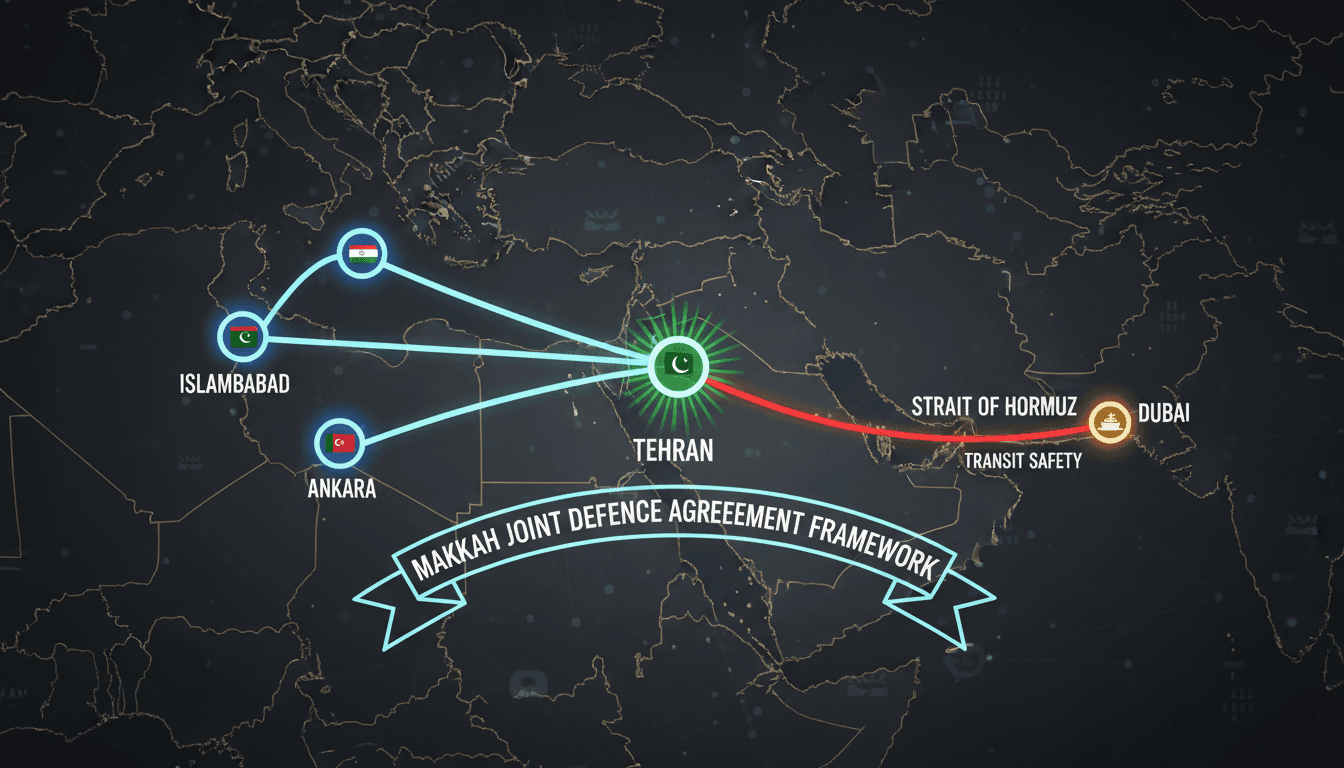
- Trilateral framework integration surfaced, with discussions exploring whether the August 7 Makkah Joint Defence Agreement between Pakistan, Saudi Arabia, and Turkey could eventually incorporate Tehran to balance regional deterrence.
The context you actually need
- An eight-month confrontation between Iran and the United States has constrained regional trade routes, prompting regional capitals to construct backchannel diplomatic off-ramps following initial ceasefire attempts in April 2026.
- The Makkah Joint Defence Agreement, established on August 7, 2026, institutionalized collective defense protocols among Riyadh, Ankara, and Islamabad amid broader Middle East security strains and renewed Saudi-Houthi tensions.
- Domestic security pressures in Islamabad parallel these diplomatic maneuvers, highlighted by the October 11, 2026, suspension of the Khyber Pakhtunkhwa provincial government to prioritize counter-militancy operations while managing external neutral mediation.
What's really happening
The mechanics behind Pakistan’s diplomatic positioning reflect structural alignment among non-combatant regional hubs seeking to insulate critical economic corridors. Operating alongside Saudi Arabia and Turkey, Islamabad is deploying the architecture of the August 7 Makkah Joint Defence Agreement not as an exclusive defensive bloc, but as an operational platform to bring Tehran into direct dialogue without inviting external friction.
For Pakistan, the incentives are rooted in strategic risk containment. Maintaining strict neutrality while serving as an active intermediary allows Islamabad to safeguard its bilateral security pacts with Riyadh while preventing an unmanageable spillover across its western border with Iran. By bringing Turkish intelligence chief Ibrahim Kalin and Saudi Defence Minister Prince Khalid bin Salman into the Tehran talks, the initiative broadens the diplomatic footprint from a bilateral facilitation effort into a coordinated regional security framework.
Iranian officials, including Mohsen Rezaei, have framed these negotiations around the principle of collective regional security devoid of foreign intervention. The outreach explores whether security guarantees could eventually align with Tehran’s strategic requirements, dampening the cycle of confrontation with Washington. However, the mediation operates without public endorsement from the United States, meaning its primary near-term value lies in direct deconfliction between Gulf neighbors rather than a finalized, comprehensive peace treaty.
From a commercial perspective, this coordinated engagement represents a calculated push to lower the regional risk ceiling. Eight months of sustained confrontation have directly elevated insurance rates across Gulf waters and injected severe unpredictability into cross-border operations. When regional stakeholders establish verified communication channels, the direct consequence is a dampening of catastrophic escalation scenarios. For international operators relying on Dubai and regional transit hubs, the mechanism reduces the immediate threat of shipping lane interruptions and stabilizes the broader trade architecture supporting regional infrastructure investments.
Who feels it first (and how)
- Maritime logistics operators and cargo insurers: Experience an immediate shift in risk sentiment across Gulf waterways, potentially stabilizing war-risk premiums for commercial freight.
- Energy trading desks: Face downward pressure on the geopolitical risk premium priced into regional crude benchmarks as diplomatic channels remain active.
- Corporate treasurers in Gulf trade hubs: Gain clearer visibility into medium-term operational budgets as catastrophic supply-chain disruption timelines stretch outward.
- Pakistani regional security administrators: Face the dual task of sustaining external diplomatic bandwidth in Tehran while managing localized counter-terrorism imperatives following the Khyber Pakhtunkhwa administrative suspension.
What to watch next
- Signals of United States acknowledgment: Any public or backchannel response from Washington will determine whether this regional channel converts into durable, multilateral agreements.
- Trilateral framework expansion talks: Formal indicators that the Makkah Joint Defence pact is developing mutual non-aggression protocols with Iranian counterparts.
- Red Sea and Gulf transit stability: Realized incident rates along regional maritime trade routes following the late-October high-level visits.
Field Marshal Asim Munir completed two visits to Tehran in October 2026, coordinating directly with Iranian leaders, Saudi Defence Minister Prince Khalid bin Salman, and Turkish intelligence chief Ibrahim Kalin.
Pakistan, Saudi Arabia, and Turkey will continue utilizing the Makkah Joint Defence framework to insulate energy corridors from regional escalations.
Whether the United States will accept the terms of this regional channel or if domestic administrative strains within Pakistan will curtail its diplomatic bandwidth.
Frequently Asked Questions
- Why it matters?
- Coordinated de-escalation by regional powers directly targets the volatility in maritime logistics and crude benchmarks that have weighed on cross-border Gulf commerce throughout an eight-month conflict.
- What happened (in 30 seconds)?
- Pakistan signaled cautious optimism regarding its ongoing diplomatic mediation between Iran and the United States, according to an October 31, 2026, briefing from military spokesperson Lieutenant General Ahmed Sharif Chaudhry. High-level visits intensified, marked by Pakistan Army Chief Field Marshal Asim Munir concluding his second visit to Tehran within a single month on October 26, alongside Saudi Defence Minister Prince Khalid bin Salman and Turkish intelligence chief Ibrahim Kalin. Trilater
- What's really happening?
- The mechanics behind Pakistan’s diplomatic positioning reflect structural alignment among non-combatant regional hubs seeking to insulate critical economic corridors. Operating alongside Saudi Arabia and Turkey, Islamabad is deploying the architecture of the August 7 Makkah Joint Defence Agreement not as an exclusive defensive bloc, but as an operational platform to bring Tehran into direct dialogue without inviting external friction. For Pakistan, the incentives are rooted in strategic risk co
- Who feels it first (and how)?
- Maritime logistics operators and cargo insurers: Experience an immediate shift in risk sentiment across Gulf waterways, potentially stabilizing war-risk premiums for commercial freight. Energy trading desks: Face downward pressure on the geopolitical risk premium priced into regional crude benchmarks as diplomatic channels remain active. Corporate treasurers in Gulf trade hubs: Gain clearer visibility into medium-term operational budgets as catastrophic supply-chain disruption timelines stretch
- What to watch next?
- Signals of United States acknowledgment: Any public or backchannel response from Washington will determine whether this regional channel converts into durable, multilateral agreements. Trilateral framework expansion talks: Formal indicators that the Makkah Joint Defence pact is developing mutual non-aggression protocols with Iranian counterparts. Red Sea and Gulf transit stability: Realized incident rates along regional maritime trade routes following the late-October high-level visits.
English-language news from Qatar covering domestic and regional affairs.
"Gulf Times reflects Qatari perspectives on regional developments."
— A47 Editor
Pakistan military ‘cautiously optimistic’ on Iran-US mediation
Pakistan's military spokesman said Friday, in his first interview since a high-level Pakistani delegation visited Tehran this week, that the armed forces are "cautiously optimistic" about Pakistan's mediation between Iran and the United States, as ef...
Global news coverage with extensive reporting on Middle Eastern conflicts and geopolitics.
"Al Jazeera is a Qatar-based broadcaster known for wide regional coverage and alternative perspectives."
— A47 Editor
Pakistan army ‘cautiously optimistic’ about US-Iran mediation efforts
Pakistan's military spokesman said the army is 'cautiously optimistic' about mediation efforts between the United States and Iran, while warning of 'powerful spoilers and detractors' who still believe the conflict serves their interests.
Comprehensive coverage of Middle Eastern and global issues.
"Al Jazeera is a prominent voice from the Global South, especially the Middle East, with an emphasis on underreported stories."
— A47 Editor
Pakistan army ‘cautiously optimistic’ about US-Iran mediation efforts
Pakistan's military spokesman said the army is 'cautiously optimistic' about mediation efforts between the United States and Iran, while warning of 'powerful spoilers and detractors' who still believe the conflict serves their interests.
Regional coverage and analysis focused on politics, diplomacy, and business across the Middle East.
"Al-Monitor is known for analytical reporting on Middle East politics and policy developments."
— A47 Editor
Exclusive-Pakistan military 'cautiously optimistic' on Iran-US mediation
Pakistan's military spokesman said the army is "cautiously optimistic" about its mediation between Iran and the United States, in his first interview since a high-level delegation visited Tehran this week. Army chief Field Marshal Asim Munir, Pakista...