
Trump Administration Moves to Roll Back Federal Methane Emission Rules for Oil and Gas Operators
Why it matters
The regulatory revision recalibrates the economic balance between operating expenditures and environmental compliance for low-volume producers, unlocking a projected $45 billion in industry savings through 2050 while shifting atmospheric emission baselines.
What happened (in 30 seconds)
- Federal standards rescinded: On October 27, 2026, the Environmental Protection Agency (EPA) announced plans to dismantle elements of the 2023 and 2024 standards that mandated equipment upgrades, active leak detection, and strict repair schedules for oil and gas sites.
- Relief focused on marginal assets: The pending rulemaking specifically relaxes compliance mandates for low-output marginal wells producing 15 barrels of oil equivalent per day or fewer, which constitute hundreds of thousands of active sites across the United States.
- Third-party monitoring eliminated: The proposal ends the Super Emitter Program, removing pathways for independent third parties to report large-scale methane leaks directly into the federal enforcement framework, while simultaneously easing flaring limits.
The context you actually need
- The historical baseline: The Biden administration finalized comprehensive methane standards in 2023 and 2024 to curb a gas responsible for nearly one-third of net global warming since the pre-industrial baseline, aiming to formalize leak tracking across every tier of extraction.
- The economic asymmetry: Marginal wells generate roughly 7% of aggregate US crude and natural gas output, yet EPA and industry analyses demonstrate these low-yield facilities generate 50% of total oil and gas methane emissions due to aging infrastructure.
- Projected supply response: Federal estimates cite structural compliance relief as an operational catalyst, forecasting an output bump of 210 million barrels of crude oil and 1.41 trillion cubic feet of natural gas over the next quarter-century.
What's really happening
The mechanics behind this regulatory retreat come down to balance-sheet incentives for small-scale extraction. Low-yield marginal wells—defined as assets producing 15 barrels of oil equivalent or fewer per day—typically operate on slim cash margins. Under the 2023 and 2024 regulatory mandates, these facilities faced fixed capital costs for optical gas imaging, sensor arrays, and regular leak detection. For large producers operating high-yield shale benches in the Permian Basin, amortizing sensor instrumentation across thousands of barrels per day is routine overhead. For marginal operators running stripper wells in mature basins across Texas, Oklahoma, and Appalachia, those identical compliance line items often exceeded net operational cash flow, creating an economic incentive to plug and abandon viable wells prematurely.
By lifting mandatory leak mitigation and routine verification on these sites, the regulatory floor shifts downward. The EPA calculates aggregate cost reductions of $45 billion through 2050. The immediate incentive structure is clean: operators gain latitude to extend the life of mature assets without investing capital into pneumatic controller replacements or certified leak surveys. In operational aggregate, maintaining these stripper wells is estimated to yield an additional 210 million barrels of oil and 1.41 trillion cubic feet of natural gas that might otherwise have been shut in.
Simultaneously, the administration is dismantling the institutional architecture built to catch non-compliance. Dismantling the Super Emitter Program removes external accountability by barring third-party satellite, airborne, and remote sensor detection from serving as direct regulatory triggers. Operators will face fewer remote surveillance constraints, lowering the administrative risk of fines or forced downtime.
The structural trade-off is concentrated in atmospheric chemistry. Because marginal wells represent roughly 7% of domestic volume but generate 50% of the upstream sector's methane footprint, lowering standards on this specific asset class targets the cheapest barrels while freeing the largest relative source of uncombusted venting. For global operators monitoring the competitive posture of American hydrocarbons, the net effect lowers the production cost floor for mature domestic basins while shifting the carbon intensity metric of US-origin fossil energy upward.
Who feels it first (and how)
- Independent and marginal US well operators: Direct operational relief from capital expenditure mandates, allowing marginal assets to stay online without incurring monitoring and equipment replacement costs.
- Emissions monitoring and cleantech vendors: Immediate loss of addressable market as commercial demand for automated optical gas imaging, field sensors, and third-party verification contracts contracts under relaxed rules.
- Midstream pipeline and processing firms: Moderate operational shifts as flaring restrictions ease, providing flexibility around gas handling during regional transport bottlenecks.
- Global energy consumers and Gulf trade hubs: Operators in major logistics centers like Dubai experience no direct regulatory shift, though incremental additions to aggregate US output play into baseline global fossil fuel supply models over time.
What to watch next
- The Federal Register publication date: The publication of the formal notice of proposed rulemaking establishes the timeline for formal public comment and procedural execution.
- Litigation filings from sub-national actors: State attorneys general and environmental groups will challenge the administrative record, testing whether the cost-benefit reallocation satisfies federal statutory criteria.
- US production output figures from mature basins: Monthly wellhead statistics from stripper formations will indicate whether the lifting of compliance costs translates into extended run-times and altered abandonment schedules.
The EPA proposal terminates key components of the 2023–2024 rules, carves out exemptions for marginal wells producing 15 barrels of oil equivalent or fewer daily, cuts the Super Emitter Program, and forecasts $45 billion in regulatory savings alongside 210 million barrels of oil and 1.41 trillion cubic feet of gas produced through 2050.
The proposal will trigger protracted administrative challenges in federal courts, creating a period of regulatory ambiguity as operators assess whether to delay planned capital upgrades.
The extent to which export-oriented US operators voluntarily maintain higher emissions monitoring standards to meet structural procurement requirements in foreign import markets that track lifecycle methane intensity.
Frequently Asked Questions
- Why it matters?
- The regulatory revision recalibrates the economic balance between operating expenditures and environmental compliance for low-volume producers, unlocking a projected $45 billion in industry savings through 2050 while shifting atmospheric emission baselines.
- What happened (in 30 seconds)?
- Federal standards rescinded: On October 27, 2026, the Environmental Protection Agency (EPA) announced plans to dismantle elements of the 2023 and 2024 standards that mandated equipment upgrades, active leak detection, and strict repair schedules for oil and gas sites. Relief focused on marginal assets: The pending rulemaking specifically relaxes compliance mandates for low-output marginal wells producing 15 barrels of oil equivalent per day or fewer, which constitute hundreds of thousands of act
- What's really happening?
- The mechanics behind this regulatory retreat come down to balance-sheet incentives for small-scale extraction. Low-yield marginal wells—defined as assets producing 15 barrels of oil equivalent or fewer per day—typically operate on slim cash margins. Under the 2023 and 2024 regulatory mandates, these facilities faced fixed capital costs for optical gas imaging, sensor arrays, and regular leak detection. For large producers operating high-yield shale benches in the Permian Basin, amortizing sensor
- Who feels it first (and how)?
- Independent and marginal US well operators: Direct operational relief from capital expenditure mandates, allowing marginal assets to stay online without incurring monitoring and equipment replacement costs. Emissions monitoring and cleantech vendors: Immediate loss of addressable market as commercial demand for automated optical gas imaging, field sensors, and third-party verification contracts contracts under relaxed rules. Midstream pipeline and processing firms: Moderate operational shifts as
- What to watch next?
- The Federal Register publication date: The publication of the formal notice of proposed rulemaking establishes the timeline for formal public comment and procedural execution. Litigation filings from sub-national actors: State attorneys general and environmental groups will challenge the administrative record, testing whether the cost-benefit reallocation satisfies federal statutory criteria. US production output figures from mature basins: Monthly wellhead statistics from stripper formations wi
Scientific research, space, environment, and health coverage.
"The New York Times is a globally recognized newspaper offering authoritative reporting with a center-left editorial stance."
— A47 Editor
E.P.A. Loosens Methane Rules for Oil Firms
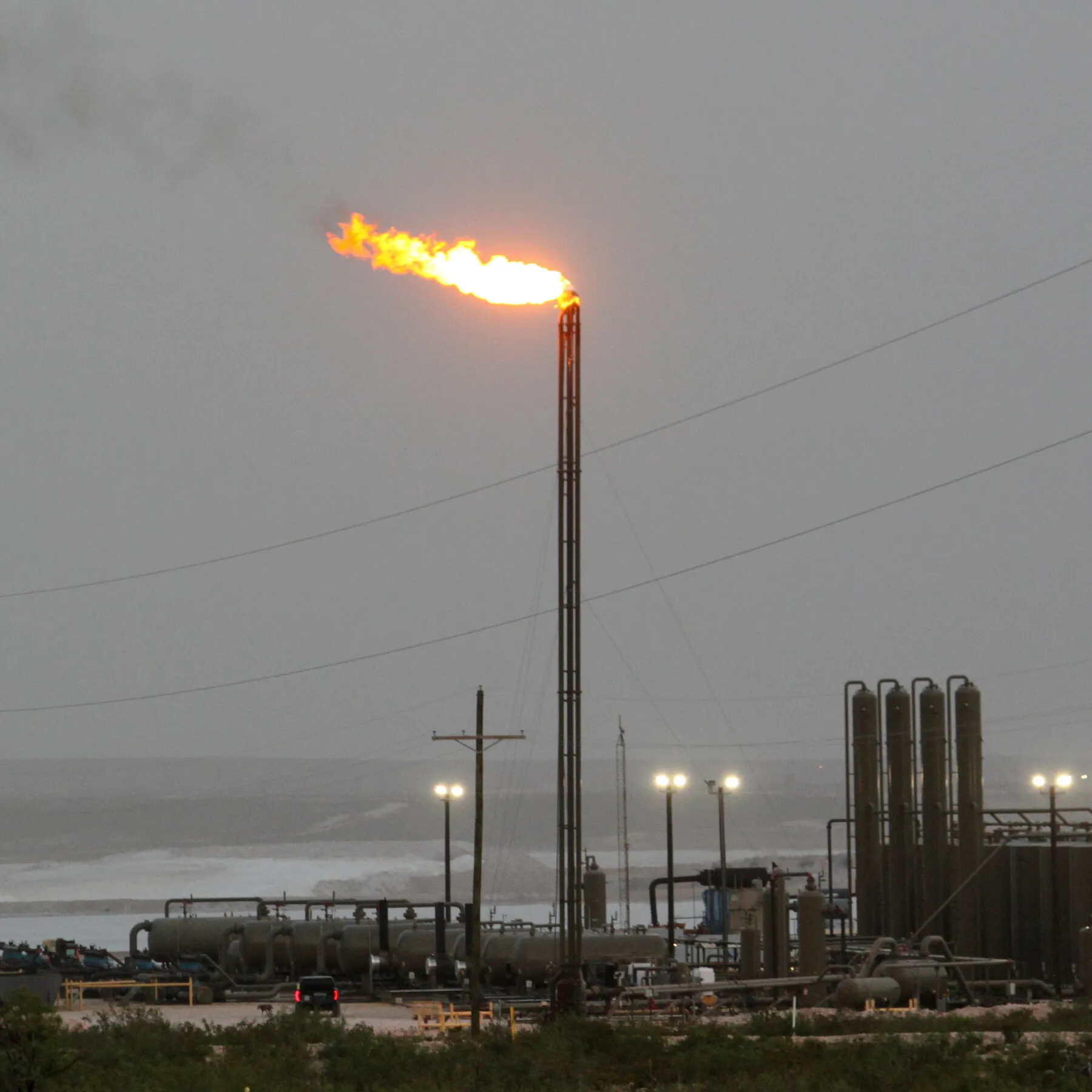
The Environmental Protection Agency has loosened methane rules for oil firms, scaling back crackdown measures the Biden administration had sought to impose on methane leaks, a major driver of climate change. The story highlights an oil drilling opera...
Markets desk coverage, trading insights, and investor updates.
"WSJ’s markets reporting provides in-depth analysis and context for investors."
— A47 Editor
Trump Moves to Weaken Methane Emissions Rules for Oil and Gas
The Trump administration has moved to weaken methane emissions rules for the oil and gas sector, according to reporting by The Wall Street Journal. Small fossil-fuel producers had opposed regulations aimed at curbing releases of methane, a potent gre...
Insights and news on social issues, policy, and political movements across the United States.
"The Wall Street Journal is known for its deep political coverage, especially at the intersection of policy, regulation, and social dynamics."
— A47 Editor
The Trump administration is moving to dismantle Biden-era rules that sought to limit emissions of methane, a potent greenhouse gas
The Trump administration is moving to dismantle Biden-era rules that sought to limit emissions of methane, a potent greenhouse gas, according to The Wall Street Journal. Small fossil-fuel producers had opposed the regulations aimed at curbing methane...
Capitol Hill news, legislation, and policy insight.
"The Hill specializes in U.S. politics and policy, with a focus on Capitol Hill developments and a reputation for insider reporting."
— A47 Editor
Trump easing methane rules for oil and gas
The Trump administration is planning to loosen regulations on methane emissions from the oil and gas sector, with a particular focus on low-producing, high-emitting wells, according to reporting by The Hill. The move is part of a broader policy shift...
Conservative-leaning political and national coverage.
"The Washington Times is a conservative-leaning newspaper known for its political coverage and advocacy of right-of-center viewpoints."
— A47 Editor
Trump plans to loosen restrictions on methane emissions from oil drilling
President Donald Trump is expected to announce plans on Tuesday to loosen a Biden-era rule aimed at reducing planet-warming methane emissions from oil and gas drilling, according to The Washington Times.
Consumer tech and culture with frequent AI coverage.
"Influential tech outlet covering AI products and policy."
— A47 Editor
Trump is making it easier for fossil fuel companies to leak methane
The Trump administration is expected to announce plans to weaken rules that guard against methane leaks from oil and gas operations, according to a report from The Verge. Methane is a smog-forming pollutant and a powerful greenhouse gas that is up to...
Tech news, reviews, and analysis of consumer electronics, science, art, and culture.
"The Verge is a technology-focused media outlet known for in-depth reporting, product reviews, and coverage of the intersection between technology and culture."
— A47 Editor
Trump is making it easier for fossil fuel companies to leak methane
The Trump administration is expected to announce plans to weaken rules that guard against methane leaks from oil and gas operations, according to a report from The Verge. Methane is a smog-forming pollutant and a powerful greenhouse gas that is up to...