
Australia Advances Digital Duty of Care Bill Imposing Fines Up to 5% of Global Revenue on Online Platforms
Why it matters
By tying systemic digital safety liabilities directly to total global turnover, Australia establishes a precedent that turns localized algorithmic product choices into balance-sheet risks worldwide.
What happened (in 30 seconds)
- A cross-bench legislative agreement was reached: On November 24, 2026, the Australian Labor government struck a deal with the Greens party to advance the Digital Duty of Care Bill through Parliament.
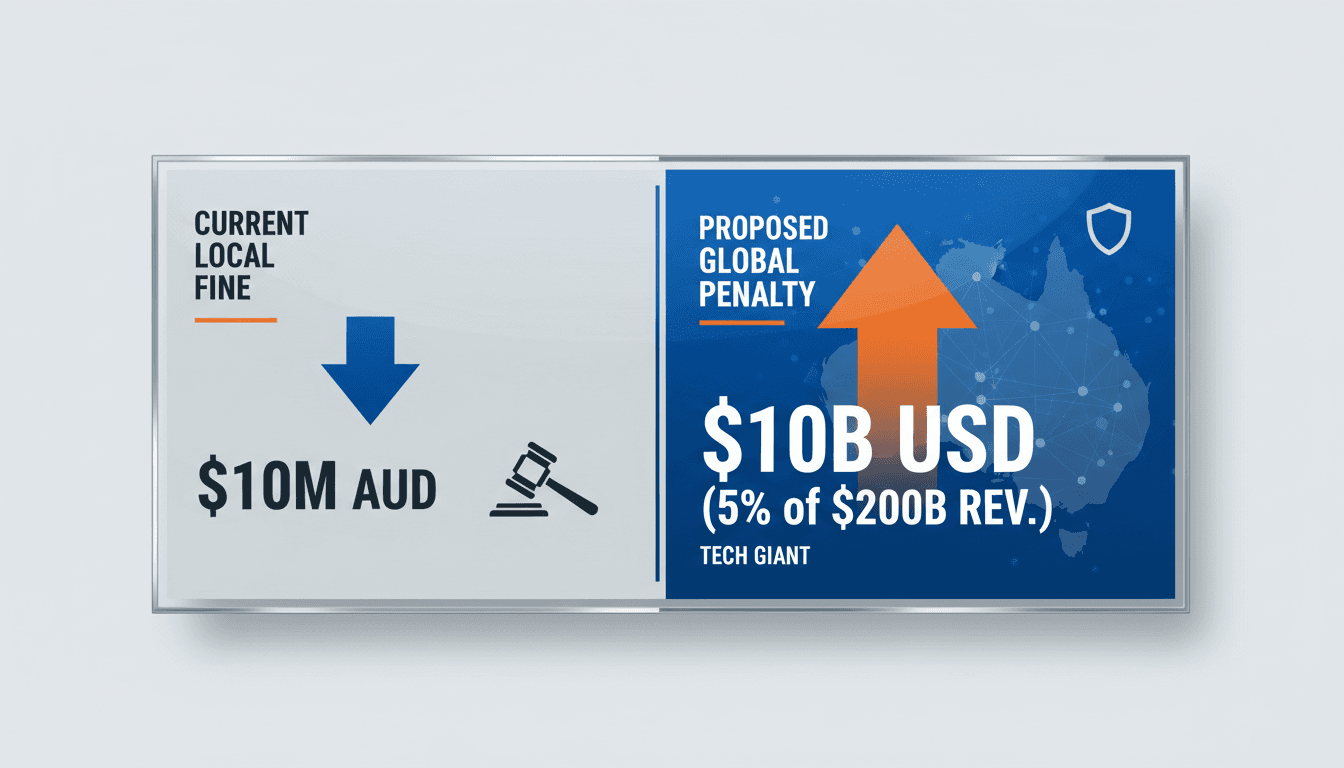
- Penalties shifted to global metrics: The negotiated amendments raised the ceiling for statutory non-compliance from a fixed A$109 million fine to a maximum of 5% of a company's annual worldwide revenue.
- Private rights of action were created: Beyond regulator enforcement, the bill grants individual users statutory standing to sue platforms directly for systemic failures around algorithmic amplification, synthetic media, and addictive interfaces.
The context you actually need
- Precedent builds on European models: The framework borrows structural elements from the European Union's Digital Services Act (2022) and the UK Online Safety Act, extending statutory "duty of care" concepts from industrial safety into computational networks.
- Domestic groundwork was set in 2024: This bill follows Australia's earlier statutory move prohibiting social media access for users under 16, escalating regulatory pressure from age restrictions to fundamental interface architecture.
- Enforcement authority expands significantly: The eSafety Commissioner receives statutory powers targeting generative tooling, non-consensual synthetic imagery ("nudify" apps), and algorithmic feed designs, requiring platforms to offer algorithmic opt-outs to users aged 16 and older.
What's really happening
The operational model for consumer internet platforms has historically relied on regulatory fragmentation. When a jurisdiction introduced strict content requirements, multinational operators calculated the financial risk as an isolated localized cost: an administrative penalty, an operational office fine, or occasional geoblocking. Australia’s Digital Duty of Care Bill alters that risk equation by pricing non-compliance not against localized revenue, but against 5% of worldwide turnover.
For a firm generating $200 billion annually, a non-compliance finding carries up to $10 billion in direct financial exposure. By raising maximum liabilities from a fixed A$109 million ceiling to top-line turnover, the legislative framework aligns platform safety incentives with macroeconomic balance-sheet preservation. A minor market by gross user count can now trigger corporate liabilities equivalent to an enterprise-level earnings write-down.
Under the surface, the core operational tension centers on product architecture rather than retroactive moderation. The bill amends the Online Safety Act 2021 to impose systemic duty-of-care requirements across social networks, mobile applications, interactive gaming ecosystems, and generative AI chatbots. Rather than simply penalizing the discovery of prohibited content—such as child sexual abuse material, terrorism materials, or self-harm promotion—the law requires platforms to document that their underlying discovery engines do not systematically promote harmful interactions.
This introduces mandatory algorithmic risk assessments and compels platforms to offer chronological, unamplified feeds to users aged 16 and over. At the same time, it codifies private litigation rights. Granting end-users the statutory power to initiate civil litigation against platform operators opens a secondary risk front beyond state regulatory action, exposing algorithmic optimization models to civil discovery procedures and recurring legal liabilities.
This dynamic creates an immediate friction point between sovereign regulatory compliance and export-driven software models. Because modern product backends are built on globally unified recommendation clusters, carving out jurisdiction-specific recommendation systems introduces high engineering overhead. US government representatives and international tech operators have raised concerns that subjective legal definitions around harm will force companies into over-filtering, content censorship, and complex compliance layers to insulate their parent corporations from total-turnover liabilities.
For platforms operating across international hubs, compliance shifts from an operational expense managed by regional trust teams to a core corporate-governance priority handled directly by general counsels and audit boards.
Who feels it first (and how)
- Enterprise platform operators and executive boards: Product teams face immediate mandates to re-architect recommendation systems, incorporate chronological feed opt-outs, and allocate significant capital reserves against potential multi-billion-dollar liabilities.
- Independent app developers and AI model deployers: Smaller software studios running generative chatbots, image generation tools, or social dynamics face enterprise-grade risk assessment and auditing requirements with limited compliance budgets.
- Trust, safety, and legal compliance officers: Corporate legal departments must shift from reactive notice-and-takedown procedures to ongoing systemic risk auditing, age verification integration, and internal monitoring for synthetic media tools.
- Global technology investors: Fund managers evaluating platform gross margins must price in higher baseline legal overhead, potential private civil litigation costs, and cross-border regulatory exposure when valuing digital media operations.
What to watch next
- Senate vote mechanics and timeline: Full statutory passage through the Australian Parliament, scheduled before the end of the legislative session, will establish the concrete transition timeline for platform compliance.
- Formal diplomatic pushback from foreign trade partners: Critical statements from officials like US Ambassador David Bratt will signal whether total-revenue statutory fines become a trade point between the Australian government and international trade partners.
- Platform interface updates: Look for major consumer platforms to deploy regional switchable chronological feeds and expanded age-verification checkpoints within their primary onboarding flows.
The Labor-Greens agreement establishes a maximum fine equal to 5% of global revenue, incorporates a private right of action for users, and brings AI chatbots and app platforms under the statutory duty of care.
Enterprise software platforms will increase compliance expenditures, expanding verification layers and content moderation pipelines to limit exposure to regulatory penalties.
Whether platforms will maintain single global codebase architectures with regional switches, or choose to geoblock specific generative features, algorithmic discovery modules, and software services within Australia to minimize enterprise-level financial exposure.
Frequently Asked Questions
- Why it matters?
- By tying systemic digital safety liabilities directly to total global turnover, Australia establishes a precedent that turns localized algorithmic product choices into balance-sheet risks worldwide.
- What happened (in 30 seconds)?
- A cross-bench legislative agreement was reached: On November 24, 2026, the Australian Labor government struck a deal with the Greens party to advance the Digital Duty of Care Bill through Parliament. Penalties shifted to global metrics: The negotiated amendments raised the ceiling for statutory non-compliance from a fixed A$109 million fine to a maximum of 5% of a company's annual worldwide revenue. Private rights of action were created: Beyond regulator enforcement, the bill grants individual u
- What's really happening?
- The operational model for consumer internet platforms has historically relied on regulatory fragmentation. When a jurisdiction introduced strict content requirements, multinational operators calculated the financial risk as an isolated localized cost: an administrative penalty, an operational office fine, or occasional geoblocking. Australia’s Digital Duty of Care Bill alters that risk equation by pricing non-compliance not against localized revenue, but against 5% of worldwide turnover. For a
- Who feels it first (and how)?
- Enterprise platform operators and executive boards: Product teams face immediate mandates to re-architect recommendation systems, incorporate chronological feed opt-outs, and allocate significant capital reserves against potential multi-billion-dollar liabilities. Independent app developers and AI model deployers: Smaller software studios running generative chatbots, image generation tools, or social dynamics face enterprise-grade risk assessment and auditing requirements with limited compliance
- What to watch next?
- Senate vote mechanics and timeline: Full statutory passage through the Australian Parliament, scheduled before the end of the legislative session, will establish the concrete transition timeline for platform compliance. Formal diplomatic pushback from foreign trade partners: Critical statements from officials like US Ambassador David Bratt will signal whether total-revenue statutory fines become a trade point between the Australian government and international trade partners. Platform interface
Consumer technology news with AI coverage.
"Gadget and tech site reporting on AI in products."
— A47 Editor
Australia to pass safety bill that could result in massive fines for tech platforms
Australian lawmakers are close to passing the Digital Duty of Care Bill, an amendment to the country's Online Safety Act 2021 that would impose new safety obligations on technology platforms and could expose them to massive fines.
Covers consumer technology, electronics, gadgets, and product reviews.
"Engadget is a trusted source for gadget reviews and consumer tech news, known for its hands-on analysis and industry coverage."
— A47 Editor
Australia to pass safety bill that could result in massive fines for tech platforms
Australian lawmakers are close to passing the Digital Duty of Care Bill, an amendment to the country's Online Safety Act 2021 that would impose new safety obligations on technology platforms and could expose them to massive fines.
Conservative-leaning political and national coverage.
"The Washington Times is a conservative-leaning newspaper known for its political coverage and advocacy of right-of-center viewpoints."
— A47 Editor
Australia poised to pass new online safety laws that could cost tech firms billions for violations
The Australian government on Tuesday cleared the way for passage of new online safety laws that could impose multibillion-dollar fines on technology companies that fail to prevent online harm, according to a report by The Washington Times.
Tech news, hardware, and AI tools coverage.
"PC/tech site increasingly covering AI hardware and apps."
— A47 Editor
Australia threatens US tech giants with fines of up to 5% of global revenue over online safety
Australia's Labor government reached a deal with the Greens that gives its Digital Duty of Care bill the support needed to pass the Senate, raising the maximum penalty for large technology providers to fines of up to 5% of global revenue. The origina...
Technology business news, market impacts, and innovation trends.
"Bloomberg is a premier financial and tech news provider, respected for its in-depth reporting and analytical rigor."
— A47 Editor
Australia Bolsters Online Safety Law With Tougher Big Tech Fine
Australia has toughened penalties on its new Digital Duty of Care law, allowing fines of up to 5% of global revenue for the world's largest technology providers, a change the government made to secure the law's passage.
Technology business and AI-related headlines.
"Data-driven tech newsroom with global scope."
— A47 Editor
Australia Bolsters Online Safety Law With Tougher Big Tech Fine
Australia has toughened penalties on its new Digital Duty of Care law, allowing fines of up to 5% of global revenue for the world's largest technology providers, a change the government made to secure the law's passage.
Comprehensive coverage of Middle Eastern and global issues.
"Al Jazeera is a prominent voice from the Global South, especially the Middle East, with an emphasis on underreported stories."
— A47 Editor
Australia warns tech giants of multibillion-dollar fines for online ‘harm’
Australia has warned major technology companies that they could face multibillion-dollar fines over online harm under a new internet safety bill expected to pass this week, with penalties of up to 5 percent of a firm's global revenue under considerat...
Global news coverage with extensive reporting on Middle Eastern conflicts and geopolitics.
"Al Jazeera is a Qatar-based broadcaster known for wide regional coverage and alternative perspectives."
— A47 Editor
Australia warns tech giants of multibillion-dollar fines for online ‘harm’
Australia has warned major technology companies that they could face multibillion-dollar fines over online harm under a new internet safety bill expected to pass this week, with penalties of up to 5 percent of a firm's global revenue under considerat...
Market-moving headlines impacting equities, bonds, and related risk assets.
"Real-time catalysts and volatility drivers across indices and sectors."
— A47 Editor
Tech giants to face billions of dollars in fines under Australian internet safety bill
Tech giants operating in Australia face the prospect of billions of dollars in fines under a newly proposed internet safety bill, according to a report published by Investing.com. The base article is categorized under markets and carries a negative s...