
Pentagon Withholds Approval for 60 Patriot Interceptors Allocated to Ukraine
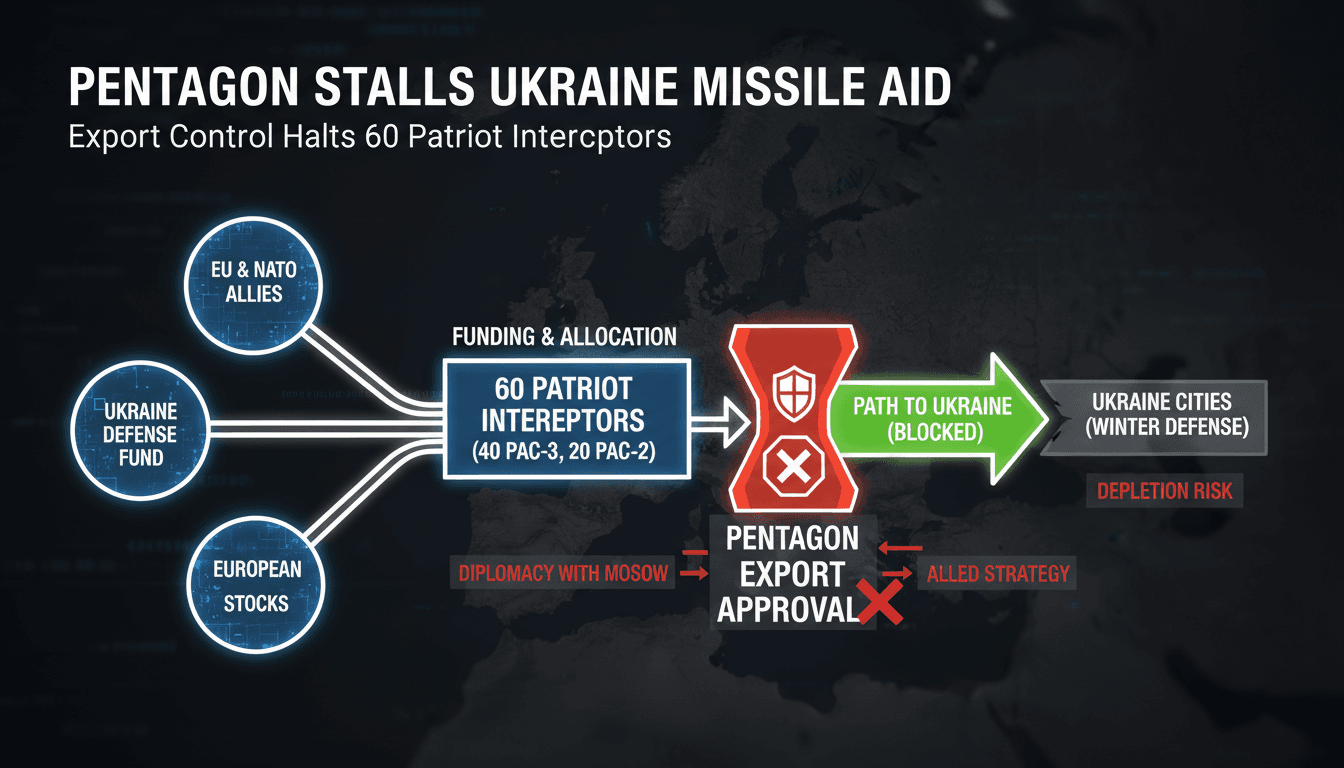
Why it matters
The regulatory pause on 60 pre-financed interceptors establishes that third-party capital cannot bypass primary manufacturing sovereignty, altering how allied procurement pools balance inventory risks during active conflicts.
What happened (in 30 seconds)
- Export approvals stalled: United States Defense Secretary Pete Hegseth has not authorized the export clearance for approximately 60 Patriot air defense interceptor missiles destined for Ukraine.
- Pre-funded batches affected: The hold covers 40 PAC-3 and roughly 20 PAC-2 interceptors financed by Western allies and allocated across scheduled autumn and winter tranches.
- Third-party transfers halted: Because Patriot technology contains proprietary US systems, Washington’s re-export regulations block partner nations from dispatching missiles held in European stockpiles without explicit Pentagon sign-off.
The context you actually need
- The fifth year of operations: The Russia-Ukraine conflict entered its fifth year in February 2026, leaving Ukrainian defense grids reliant on Western-supplied Patriot batteries to intercept ballistic and cruise missiles.
- The legal re-export mechanism: Even when allied nations purchase or fund equipment through frameworks like the Prioritized Ukraine Requirements List (PURL), US International Traffic in Arms regulations demand formal departmental clearance before origin hardware moves across borders.
- Selective defense releases: While approvals for NASAMS systems proceeded separately, Patriot transfers and a parallel Ukrainian domestic production license remain without executive authorization.
What's really happening
The bottleneck surrounding the 60 Patriot interceptors highlights the friction between multinational coalition financing and sovereign arms export control architectures. When Western partners coordinate defense support, capital allocation often outpaces regulatory release mechanisms. In this case, European allies fully funded and scheduled the transfer of 40 PAC-3 interceptors—broken down into tranches of 8 in September, 10 in October, 10 in November, and 12 in December—alongside roughly 20 PAC-2 systems. Yet, financial commitments do not alter statutory legal authority: any missile bearing US-origin components requires an end-user transfer certificate signed by the executive leadership of the Pentagon.
This institutional dynamic illustrates how export governance functions as an operational lever. The delay coincides with shifting diplomatic tracks, including European initiatives to structure talks with Moscow following preliminary US-mediated discussions in Abu Dhabi. While the Department of War maintains that its overarching support policy has not formally altered, withholding export licenses permits defense authorities to retain absolute jurisdiction over strategic inventories. Holding approval acts as an operational throttle, calibrated against broader diplomatic objectives and domestic stockpile preservation.
Furthermore, the structural split between approved NASAMS interceptors and stalled Patriot licenses clarifies Washington's hardware hierarchy. NASAMS platforms satisfy tactical, short-to-medium-range requirements, whereas PAC-2 and PAC-3 interceptors are uniquely capable of neutralizing advanced ballistic threats aimed at high-density administrative and utility infrastructure. Restricting high-tier ballistic defense units alters ground vulnerability calculations without requiring an explicit policy reversal.
Simultaneously, the stalled Ukrainian domestic production license underscores Washington's reluctance to decentralize advanced Patriot intellectual property. Retaining sole production rights ensures that production velocity, maintenance pipelines, and regional deployments remain anchored directly to Washington's regulatory timeline. For global supply chain strategists, the episode confirms that regardless of financial liquidity or third-party allied distribution, the primary state possessing technology rights holds unilateral veto power over the final deployment of essential assets.
Who feels it first (and how)
- Ukrainian grid and municipal operators: Municipal managers face depleted interceptor reserves as winter approaches, reducing their capacity to shield critical energy and transportation infrastructure against ballistic strikes.
- European procurement coordinators: Allied defense ministries that contributed capital to joint funds encounter delivery logjams, freezing balance-sheet commitments for assets they cannot legally dispatch.
- Defense aerospace supply chain planners: Program managers handling PAC-2 and PAC-3 logistics must adjust deployment timetables and warehousing schedules while origin-clearance licenses remain frozen.
What to watch next
- Pentagon signature release: Any formal authorization from Defense Secretary Pete Hegseth will directly determine if the 12-missile December PAC-3 allocation deploys on schedule.
- Diplomatic outputs from the Abu Dhabi track: Follow-up meetings between European and Russian negotiators will indicate whether technical licensing moves in tandem with broader negotiation frameworks.
- Domestic production licensing verdicts: A determination on Ukraine’s pending Patriot production license will signal whether Washington intends to decentralize manufacturing or maintain consolidated domestic assembly.
Approximately 60 Patriot missiles (40 PAC-3 and 20 PAC-2) allocated and funded by Western allies are stalled awaiting US Defense Department signature, with NASAMS moving forward independently.
The export delay will compress Ukraine's air defense margins during concentrated seasonal attacks on civic and energy assets.
Whether the approval freeze stems from deliberate strategic leverage aligned with ongoing diplomatic negotiations or internal inventory reviews over global US operational stockpiles.
Frequently Asked Questions
- Why it matters?
- The regulatory pause on 60 pre-financed interceptors establishes that third-party capital cannot bypass primary manufacturing sovereignty, altering how allied procurement pools balance inventory risks during active conflicts.
- What happened (in 30 seconds)?
- Export approvals stalled: United States Defense Secretary Pete Hegseth has not authorized the export clearance for approximately 60 Patriot air defense interceptor missiles destined for Ukraine. Pre-funded batches affected: The hold covers 40 PAC-3 and roughly 20 PAC-2 interceptors financed by Western allies and allocated across scheduled autumn and winter tranches. Third-party transfers halted: Because Patriot technology contains proprietary US systems, Washington’s re-export regulations block
- What's really happening?
- The bottleneck surrounding the 60 Patriot interceptors highlights the friction between multinational coalition financing and sovereign arms export control architectures. When Western partners coordinate defense support, capital allocation often outpaces regulatory release mechanisms. In this case, European allies fully funded and scheduled the transfer of 40 PAC-3 interceptors—broken down into tranches of 8 in September, 10 in October, 10 in November, and 12 in December—alongside roughly 20 PAC-
- Who feels it first (and how)?
- Ukrainian grid and municipal operators: Municipal managers face depleted interceptor reserves as winter approaches, reducing their capacity to shield critical energy and transportation infrastructure against ballistic strikes. European procurement coordinators: Allied defense ministries that contributed capital to joint funds encounter delivery logjams, freezing balance-sheet commitments for assets they cannot legally dispatch. Defense aerospace supply chain planners: Program managers handling P
- What to watch next?
- Pentagon signature release: Any formal authorization from Defense Secretary Pete Hegseth will directly determine if the 12-missile December PAC-3 allocation deploys on schedule. Diplomatic outputs from the Abu Dhabi track: Follow-up meetings between European and Russian negotiators will indicate whether technical licensing moves in tandem with broader negotiation frameworks. Domestic production licensing verdicts: A determination on Ukraine’s pending Patriot production license will signal whethe
RT is a Russian state-funded network covering global events from a Russian perspective.
"RT is widely criticized for promoting pro-Kremlin narratives and is considered by many to be a state propaganda outlet."
— A47 Editor
Pentagon holding up Patriot missiles for Ukraine – FT
The Pentagon is reportedly delaying delivery of around 60 Patriot interceptors to Ukraine as Kyiv struggles to repel Russian strikes, according to a Financial Times report carried by RT (Russia Today). The base article is brief and frames the move as...
Global business headlines with AI angles.
"General business outlet that frequently covers AI."
— A47 Editor
Pentagon Holds Up Approval For 60 Patriot Missiles For Ukraine. Kyiv Fears US Pressure Over Peace Deal: Report
The Pentagon has held up approval of 60 Patriot missile systems intended for Ukraine, according to a report by International Business Times, amid fears in Kyiv that Washington may be using the delay as leverage over a possible peace deal. The weapons...
Pan-Arab political news and analysis.
"Al-Quds Al-Arabi is a London-based Arabic newspaper known for political coverage."
— A47 Editor
فايننشال تايمز: واشنطن تؤخر تسليم 60 صاروخ “باتريوت” لأوكرانيا
The Financial Times reported on Tuesday that US Defense Secretary Pete Hegseth has not yet approved the shipment of about 60 Patriot air defense interceptor missiles to Ukraine, according to three sources familiar with the matter. The roughly 60 PAC-...
Arabic-language coverage of political affairs and current events.
"Okaz political coverage typically follows mainstream Saudi framing on national and regional affairs."
— A47 Editor
تتضمن 60 صاروخاً اعتراضياً ..لماذا جمد «البنتاغون» تسليم صفقة «باتريوت» لأوكرانيا؟
The Pentagon has reportedly postponed approval for the transfer of about 60 PAC-3 and PAC-2 Patriot interceptor missiles to Ukraine, despite earlier pledges and Western allies' agreement to fund the deal, according to Financial Times sources cited by...
Macro commentary, policy analysis, growth/inflation themes, and global outlooks.
"Contextual macro coverage that complements day-to-day market headlines."
— A47 Editor
Pentagon delays approval of Patriot interceptors for Ukraine - report
The Pentagon has reportedly delayed approval of Patriot interceptor missiles intended for Ukraine, according to a report published by Investing.com. The delay adds to concerns over a key air-defense supply as Kyiv continues to face Russian attacks.
Editor-curated FT homepage stories spanning markets, business, world, and opinion.
"The Financial Times is a globally respected business publication with a centrist/center-left tone and strong markets focus."
— A47 Editor
Pentagon delays Patriot missile shipments to Ukraine
The Pentagon has yet to sign off on 60 Patriot interceptors intended for Kyiv, including missiles sourced from European arsenals, according to the Financial Times. US defence secretary Pete Hegseth's pending approval has delayed shipments of the air-...