
Baghdad Moves to Centralize Kurdistan Oil and Border Control as Erbil Mobilizes Mass Protests
Why it matters
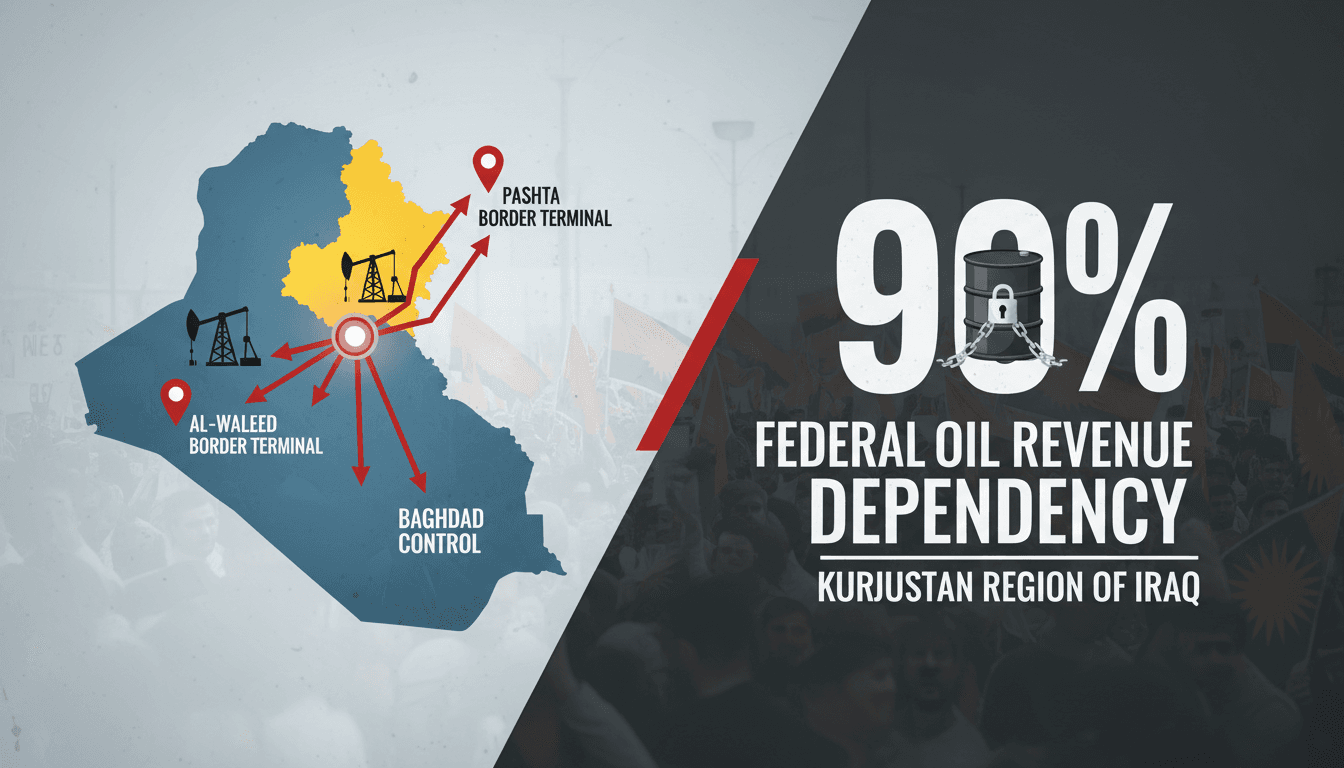
Because oil revenues fund approximately 90% of Iraq's federal budget, centralizing control over northern fields and border infrastructure directly impacts regional fiscal stability and hydrocarbon distribution channels.
What happened (in 30 seconds)
* Federal authorities issued directives on November 24–25, 2026, ordering central oversight over Kurdistan Region of Iraq (KRI) border crossings and disputed oil operations, citing anti-smuggling priorities. * The Federal Supreme Court backed the executive mandate, legally ratifying the measure and authorizing federal forces to secure borders and disputed production fields. * Thousands protested in Erbil on November 26, bringing together typically competing Kurdish factions as federal deployments led to immediate operational shutdowns at the Al-Waleed crossing with Syria and the Pashta crossing with Iran.
The context you actually need
* Constitutional arrangements dating to 2005 formalized the Kurdistan Region's federal status, though specific legal mechanisms governing energy sales, revenue-sharing quotas, and border management have remained contested between Erbil and Baghdad for over two decades. * The central treasury is overwhelmingly commodity-dependent, with roughly 90% of the national budget tied directly to crude revenues, making independent crude flows outside central monitoring a balance-sheet vulnerability for federal planning. * Regional commercial crossings serve as vital logistics links, where terminals like Al-Waleed and Pashta handle everyday merchandise and transit, meaning any administrative transfer directly affects cross-border transport velocity.
What's really happening
The standoff between Baghdad and Erbil is an operational contest over fiscal sovereignty and institutional control, governed by economic incentives rather than surface-level policy disputes.
At the center of this tension is the structural reality of Iraq’s balance sheet. When crude accounts for roughly 90% of federal revenues, the entity managing the physical valves and customs gates dictates sovereign solvency. From the perspective of federal policymakers, unmonitored border checkpoints and parallel energy operations in disputed areas represent revenue leakage and administrative fragmentation. Framing federal oversight around anti-smuggling enforcement creates the legal justification to reassert central administration over the state’s outer economic perimeter.
For the Kurdistan Regional Government (KRG), autonomous border posts and energy independence are foundational to its economic model. Independent marketing of resources and control over customs duties have historically funded regional public-sector payrolls, commercial operations, and political autonomy. Surrendering border administration and field oversight to central agencies would reduce the KRI's fiscal leverage, transforming regional institutions into administrative recipients of federal budget allocations rather than self-financed actors.
This dynamic explains why internal Kurdish political rivalries, such as those between the Kurdistan Democratic Party (KDP) and the Patriotic Union of Kurdistan (PUK), quickly subsided during the Erbil demonstrations. When federal security personnel shut the Al-Waleed terminal toward Syria and the Pashta transit point toward Iran, the dispute moved from judicial debates to immediate physical disruptions of regional trade arteries.
Moreover, the Federal Supreme Court’s deployment authorization establishes an enforcement mechanism that shifts the power balance. If central authorities successfully institutionalize federal oversight at these terminals, it dismantles decades of decentralized transit administration. For corporate operators across the Gulf and the Levant, the baseline takeaway is clear: federalization reduces parallel bureaucratic channels, but the transition phase introduces localized friction, delayed supply chains, and regulatory uncertainty over export agreements.
Who feels it first (and how)
* Cross-border freight operators: Logistics carriers moving dry goods and energy products through Al-Waleed (Syria) and Pashta (Iran) face route diversions and clearance delays under new federal security protocols. * KRI public-sector and enterprise payrolls: Regional administrative budgets reliant on local customs revenues face short-term liquidity constraints if border receipts are diverted to federal accounts. * Independent energy operators: Companies working in disputed hydrocarbon fields face dual-regulatory risks as Baghdad’s central oil ministry asserts supervisory jurisdiction over existing regional contracts. * Gulf regional energy desks: Energy traders tracking Middle East supply stability must monitor northern pipeline flows for volume disruptions that could introduce regional crude pricing adjustments.
What to watch next
* Customs revenue mechanics: Track whether customs revenues collected at reopened terminals are deposited into KRG regional banks or transferred directly to the central treasury in Baghdad, signaling who controls the balance sheet. * Field-level enforcement in disputed zones: Monitor physical deployment of federal personnel around Kirkuk-adjacent energy installations, which will show how strictly the court's mandate is enforced on production sites. * Reopening timetables for Al-Waleed and Pashta: Watch administrative updates regarding these crossings, as extended closures will force regional supply chains to seek costlier maritime or southern land routes.
Prime Minister Ali al-Zaidi ordered federal management of KRI border points and disputed fields; the Federal Supreme Court validated the move; thousands rallied in Erbil; and federal forces closed the Al-Waleed and Pashta borders.
Kurdish authorities and Baghdad will enter structured political negotiations regarding revenue-sharing splits, as prolonged border halts inflict mutual economic costs on cross-border commerce.
It remains uncertain whether federal deployments will expand deeper into disputed extraction assets, or if international trade contracts signed under KRG frameworks will be honored by central authorities without renegotiation.
Frequently Asked Questions
- Why it matters?
- Because oil revenues fund approximately 90% of Iraq's federal budget, centralizing control over northern fields and border infrastructure directly impacts regional fiscal stability and hydrocarbon distribution channels.
- What happened (in 30 seconds)?
- Federal authorities issued directives on November 24–25, 2026, ordering central oversight over Kurdistan Region of Iraq (KRI) border crossings and disputed oil operations, citing anti-smuggling priorities. The Federal Supreme Court backed the executive mandate, legally ratifying the measure and authorizing federal forces to secure borders and disputed production fields. Thousands protested in Erbil on November 26, bringing together typically competing Kurdish factions as federal deployments led
- What's really happening?
- The standoff between Baghdad and Erbil is an operational contest over fiscal sovereignty and institutional control, governed by economic incentives rather than surface-level policy disputes. At the center of this tension is the structural reality of Iraq’s balance sheet. When crude accounts for roughly 90% of federal revenues, the entity managing the physical valves and customs gates dictates sovereign solvency. From the perspective of federal policymakers, unmonitored border checkpoints and pa
- Who feels it first (and how)?
- Cross-border freight operators: Logistics carriers moving dry goods and energy products through Al-Waleed (Syria) and Pashta (Iran) face route diversions and clearance delays under new federal security protocols. KRI public-sector and enterprise payrolls: Regional administrative budgets reliant on local customs revenues face short-term liquidity constraints if border receipts are diverted to federal accounts. Independent energy operators: Companies working in disputed hydrocarbon fields face dua
- What to watch next?
- Customs revenue mechanics: Track whether customs revenues collected at reopened terminals are deposited into KRG regional banks or transferred directly to the central treasury in Baghdad, signaling who controls the balance sheet. Field-level enforcement in disputed zones: Monitor physical deployment of federal personnel around Kirkuk-adjacent energy installations, which will show how strictly the court's mandate is enforced on production sites. Reopening timetables for Al-Waleed and Pashta: Watc
European coverage of Middle East politics and security issues.
"France 24 offers international reporting with a European editorial perspective."
— A47 Editor
Syrian Kurds protest against Baghdad leader's moves to assert central control
Iraqi Prime Minister Ali al-Zaidi is taking bold steps to curb rampant oil smuggling, including orders for federal forces to take control of oilfields and border crossings in Kurdish-controlled areas, moves praised by the US but that risk putting Bag...
24/7 international news from a French perspective in multiple languages.
"France 24 is viewed as a globally focused outlet with balanced coverage and a European perspective."
— A47 Editor
Syrian Kurds protest against Baghdad leader's moves to assert central control
Iraqi Prime Minister Ali al-Zaidi is taking bold steps to curb rampant oil smuggling, including orders for federal forces to take control of oilfields and border crossings in Kurdish-controlled areas, moves praised by the US but that risk putting Bag...
English-language reporting on Saudi politics, policy, and society.
"Saudi Gazette reflects mainstream Saudi institutional perspectives."
— A47 Editor
Thousands protest in Kurdish region as Baghdad seizes control of oil and border crossings
Thousands of demonstrators took to the streets of Irbil on Thursday, waving flags of the semiautonomous Kurdistan Region of northern Iraq, to protest a federal government decision to take control of oil operations and border crossings previously run ...
Regional coverage and analysis focused on politics, diplomacy, and business across the Middle East.
"Al-Monitor is known for analytical reporting on Middle East politics and policy developments."
— A47 Editor
Iraqi Kurds protest against Baghdad leader's moves to assert central control
Iraqi Prime Minister Ali al-Zaidi's campaign to take over oilfields controlled by Kurdish security forces and deploy federal troops at the Kurdistan region's international borders prompted thousands of Kurds to protest in the semi-autonomous region i...