
Israeli Judges Urge Prosecutors to Drop Key Charges in Netanyahu Corruption Trial
Why it matters
Judicial recommendations to drop or reconsider foundational charges in high-profile executive trials redefine the baseline requirements for white-collar corruption cases involving corporate media and regulatory benefits.
What happened (in 30 seconds)
- Judges intervened directly: On November 25, 2026, the three-judge panel at the Jerusalem District Court summoned Attorney General Gali Baharav-Miara to recommend that prosecutors reconsider or drop critical charges in Benjamin Netanyahu's trial.
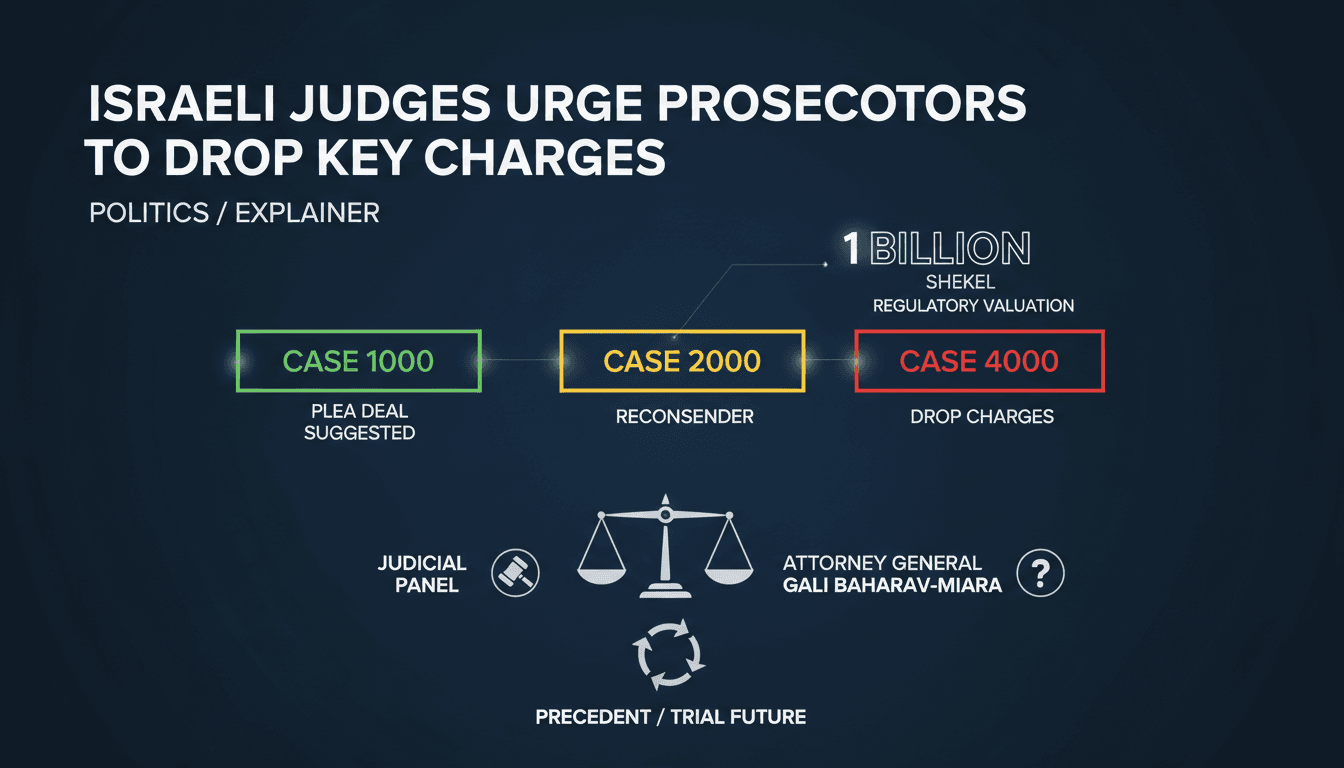
- Key charges faced skepticism: The panel expressed serious doubts regarding conviction prospects for bribery in Case 4000, questioned whether the alleged conduct in Case 2000 met the standard of criminality, and advised seeking a plea deal in Case 1000.
- Defendants sought termination: Netanyahu declared the proceedings effectively compromised and demanded an immediate end to the trial, while the Attorney General took the recommendations under formal review.
The context you actually need
- Seven years of legal exposure: Investigations launched between 2016 and 2017 culminated in formal charges of bribery, fraud, and breach of trust filed in late 2019 and early 2020.
- The regulatory stakes in Case 4000: Central to the trial is an alleged arrangement involving over 1 billion shekels in regulatory benefits traded for favorable press coverage, with business figures including Shaul Elovitch named as key participants.
- Continuity through proceedings: The trial has progressed since 2020 through multiple electoral cycles, with Netanyahu maintaining executive office as caretaker prime minister throughout the hearings.
What's really happening
The intervention by the Jerusalem District Court panel—led by Judge Rivka Friedman-Feldman—illustrates the structural frictions that emerge when complex regulatory transactions intersect with criminal bribery statutes. At the center of the judicial panel's advisory step is Case 4000, where prosecutors alleged that state regulatory decisions yielding an estimated value of more than 1 billion shekels to telecommunications interests were exchanged for favorable editorial coverage. Proving explicit quid pro quo arrangements in non-cash, media-influence transactions presents elevated evidentiary burdens compared to traditional financial bribery.
By summoning Attorney General Gali Baharav-Miara mid-trial to state that the evidentiary basis for Case 4000 carries low prospects of conviction, the court signaled an imbalance between prosecutorial theories of media-regulatory barter and statutory criminality. Similarly, the judges questioned whether the discussions documented in Case 2000—centered on mutual considerations regarding newspaper distribution and editorial posture—crossed the legal threshold into criminal breach of trust or fraud. This dual skepticism leaves Case 1000, which involves the receipt of gifts, as the primary remaining avenue where the bench deemed a negotiated plea arrangement feasible.
For global compliance officers, regulatory counsels, and risk analysts, the incentive structure governing state prosecutors now faces an acute calculus. A formal trial that commenced in 2020 has absorbed substantial institutional resources and created years of legal exposure around executive decision-making. If prosecutors persist with Case 4000 despite the bench's stated position, they risk an outright judicial dismissal that could establish strict evidentiary barriers for prosecuting corporate-political interactions. Conversely, acceding to the judges’ recommendations and withdrawing the primary bribery charge alters the perceived independence and leverage of prosecutorial authorities.
The development demonstrates that even where regulatory favors carry identified enterprise valuations exceeding 1 billion shekels, establishing criminal intent requires unambiguous proof that administrative power was subordinate to personal benefit rather than institutional routine. The outcome now rests on whether the Attorney General prioritizes a negotiated settlement on secondary breach-of-trust counts or pursues a final, formal judgment on the full indictment.
Who feels it first (and how)
- Legal and compliance strategists: Corporate counsels monitoring white-collar standards note the elevated evidentiary thresholds required to prove criminal bribery in transactions involving intangible media coverage.
- Executive institutional leadership: National leaders and ministerial offices experience immediate operational clarity as institutional attention shifts from continuous courtroom management toward administrative execution.
- Prosecutorial authorities: The office of the Attorney General faces direct pressure to evaluate internal litigation risks, weighing the durability of a complex indictment against public legal accountability.
What to watch next
- The Attorney General's formal response: Gali Baharav-Miara must decide whether to amend the indictment, withdraw Case 4000, or proceed with presenting arguments, which determines the operational timeline of the trial.
- Plea negotiations on Case 1000: The initiation of structured discussions regarding a plea deal on breach-of-trust charges will signal whether the defense and prosecution can agree on non-custodial or reduced penalties.
- Judicial rulings on remaining motions: If prosecutors decline to drop charges voluntarily, formal defense motions for dismissal based on the panel's stated skepticism will test the court's procedural authority.
The Jerusalem District Court panel formally advised prosecutors that Case 4000 lacks a strong evidentiary basis for bribery, questioned the criminality of Case 2000, and recommended a plea deal for Case 1000.
The Attorney General will review the evidentiary viability of the bribery charges to avoid a definitive court rejection that could constrain future prosecutorial standards.
Whether prosecutors and the defense will reach consensus on a plea structure in Case 1000, or if the trial will continue through a full verdict across all original charges.
Frequently Asked Questions
- Why it matters?
- Judicial recommendations to drop or reconsider foundational charges in high-profile executive trials redefine the baseline requirements for white-collar corruption cases involving corporate media and regulatory benefits.
- What happened (in 30 seconds)?
- Judges intervened directly: On November 25, 2026, the three-judge panel at the Jerusalem District Court summoned Attorney General Gali Baharav-Miara to recommend that prosecutors reconsider or drop critical charges in Benjamin Netanyahu's trial. Key charges faced skepticism: The panel expressed serious doubts regarding conviction prospects for bribery in Case 4000, questioned whether the alleged conduct in Case 2000 met the standard of criminality, and advised seeking a plea deal in Case 1000. D
- What's really happening?
- The intervention by the Jerusalem District Court panel—led by Judge Rivka Friedman-Feldman—illustrates the structural frictions that emerge when complex regulatory transactions intersect with criminal bribery statutes. At the center of the judicial panel's advisory step is Case 4000, where prosecutors alleged that state regulatory decisions yielding an estimated value of more than 1 billion shekels to telecommunications interests were exchanged for favorable editorial coverage. Proving explicit
- Who feels it first (and how)?
- Legal and compliance strategists: Corporate counsels monitoring white-collar standards note the elevated evidentiary thresholds required to prove criminal bribery in transactions involving intangible media coverage. Executive institutional leadership: National leaders and ministerial offices experience immediate operational clarity as institutional attention shifts from continuous courtroom management toward administrative execution. Prosecutorial authorities: The office of the Attorney General
- What to watch next?
- The Attorney General's formal response: Gali Baharav-Miara must decide whether to amend the indictment, withdraw Case 4000, or proceed with presenting arguments, which determines the operational timeline of the trial. Plea negotiations on Case 1000: The initiation of structured discussions regarding a plea deal on breach-of-trust charges will signal whether the defense and prosecution can agree on non-custodial or reduced penalties. Judicial rulings on remaining motions: If prosecutors decline t
Global news coverage with extensive reporting on Middle Eastern conflicts and geopolitics.
"Al Jazeera is a Qatar-based broadcaster known for wide regional coverage and alternative perspectives."
— A47 Editor
Why Benjamin Netanyahu’s corruption trial could be unravelling
Israeli judges overseeing Prime Minister Benjamin Netanyahu's long-running corruption trial have recommended that prosecutors drop one of the bribery cases against him, citing little prospect of conviction in that matter, a development that strengthe...
Comprehensive coverage of Middle Eastern and global issues.
"Al Jazeera is a prominent voice from the Global South, especially the Middle East, with an emphasis on underreported stories."
— A47 Editor
Netanyahu’s corruption trial: Is it really all over?
Israeli judges overseeing Prime Minister Benjamin Netanyahu's long-running corruption trial have recommended that prosecutors drop one of the bribery cases against him, citing little prospect of conviction in that matter. The recommendation gave his ...
Global news coverage with extensive reporting on Middle Eastern conflicts and geopolitics.
"Al Jazeera is a Qatar-based broadcaster known for wide regional coverage and alternative perspectives."
— A47 Editor
Netanyahu’s corruption trial: Is it really all over?
Israeli judges overseeing Prime Minister Benjamin Netanyahu's long-running corruption trial have recommended that prosecutors drop one of the bribery cases against him, citing little prospect of conviction in that matter. The recommendation gave his ...
Global coverage of politics, crises, and international affairs.
"HuffPost provides progressive-oriented reporting on international developments, often focusing on humanitarian and social justice issues."
— A47 Editor
In Blow To Prosecutors, Israeli Judges Recommend Dropping Key Charges Against Netanyahu
Israeli judges overseeing Prime Minister Benjamin Netanyahu's long-running corruption trial have recommended that prosecutors drop one of the bribery cases against him, citing little prospect of conviction. Netanyahu called the recommendation a "ray ...
English-language reporting on Saudi politics, policy, and society.
"Saudi Gazette reflects mainstream Saudi institutional perspectives."
— A47 Editor
Israeli judges recommend dropping serious corruption charges against Netanyahu
Israeli judges presiding over the Jerusalem District Court's trial of Prime Minister Benjamin Netanyahu have indicated there is little prospect of a conviction in Case 4000, which alleges he granted regulatory benefits worth more than 1 billion sheke...
Conservative-leaning coverage of current events.
"Fox News is a highly influential conservative news outlet known for right-leaning political commentary and coverage."
— A47 Editor
Netanyahu declares corruption trial has 'fallen apart' after judges question key charges
Israeli Prime Minister Benjamin Netanyahu said his ongoing corruption trial has "fallen apart" after judges questioned key bribery and fraud charges and urged prosecutors to reconsider them. The base report, published by Fox News, centers on the cour...