
Big Tech's Debt Surges to $350 Billion Amid AI Investment Spree
Here's what it means for you.
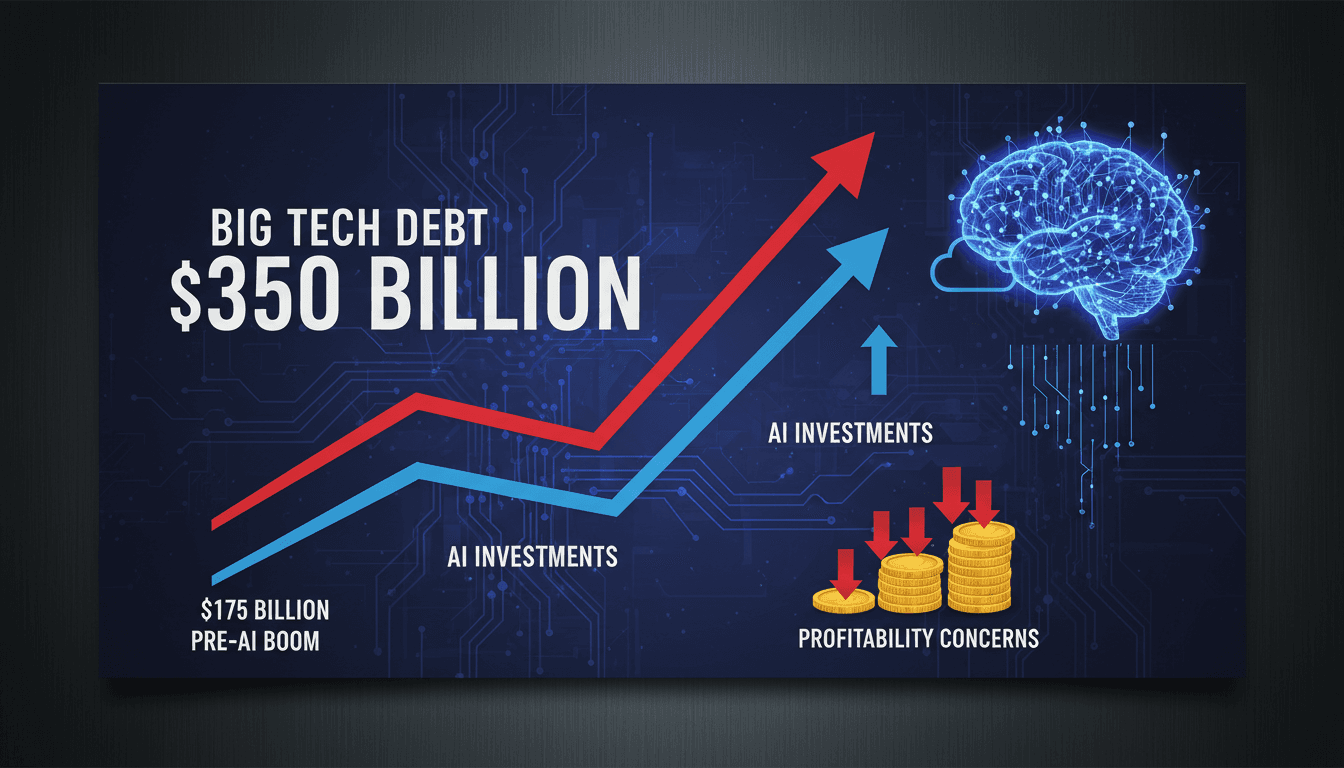
The surge in debt among major tech companies signals a pivotal moment in the AI investment landscape. As firms double their borrowing to $350 billion, investor confidence may wane, raising questions about the sustainability of these financial commitments. Stakeholders must now navigate a market increasingly skeptical of long-term returns on AI initiatives. This trend could reshape investment strategies and influence policy discussions surrounding technology funding. The implications for profitability and market stability are significant as scrutiny on these debts intensifies.
What happened
Tech giants have significantly increased their debt load, now totaling $350 billion, as they embark on a borrowing spree to finance artificial intelligence investments. This dramatic rise in borrowing reflects a broader trend where major tech firms are ramping up spending to establish AI data centers. The current financial climate has led to a decline in demand for longer-dated AI debt, which is impacting bond prices and investor sentiment.
As the debt levels rise, concerns about the long-term profitability of these AI ventures are becoming more pronounced. Investors are beginning to question whether the returns on these substantial investments will justify the increased financial risk.
The Context
Over the past five years, the total debt load of major tech firms has surged, raising alarms among investors about the viability of their AI investments. The current borrowing spree is primarily aimed at financing the infrastructure necessary for AI development, which is seen as critical for maintaining competitive advantage in the tech sector. However, the growing skepticism regarding the profitability of these investments is leading to a cautious approach among investors.
As the market reacts to these developments, the decline in demand for longer-dated AI debt indicates a shift in investor sentiment. This situation underscores the importance of evaluating the sustainability of such high levels of borrowing in the tech industry.
Takeaway
As borrowing continues to rise, investors will closely monitor the profitability and sustainability of AI investments in the tech sector. Future earnings reports from major tech companies will be crucial in assessing the impact of these financial commitments. Additionally, potential shifts in investor sentiment towards AI debt instruments could reshape the landscape for funding in this sector.
The ongoing scrutiny from analysts and investors may lead to a reevaluation of the risks associated with these substantial investments in AI technology. Stakeholders should prepare for a period of increased examination as the market seeks clarity on the returns from these ambitious initiatives.
Markets desk coverage, trading insights, and investor updates.
"WSJ’s markets reporting provides in-depth analysis and context for investors."
— A47 Editor
The Quarter-Trillion-Dollar Onslaught of AI Bonds Is Testing Investors’ Limits
Tech giants are engaging in a significant borrowing spree, accumulating over $250 billion in AI-related bonds, which is exerting downward pressure on bond prices and raising concerns among investors regarding market stability.
Editor-curated FT homepage stories spanning markets, business, world, and opinion.
"The Financial Times is a globally respected business publication with a centrist/center-left tone and strong markets focus."
— A47 Editor
Investors sell longer-dated AI debt amid Big Tech borrowing spree
Investors are increasingly selling longer-dated debt linked to artificial intelligence (AI) as Big Tech engages in a significant borrowing spree, raising concerns about the sector's long-term profitability. This trend reflects a growing skepticism am...
Technology business and AI-related headlines.
"Data-driven tech newsroom with global scope."
— A47 Editor
Big Tech Doubles Debt Load to $350 Billion in AI Spending Spree
Big Tech companies have doubled their debt load to $350 billion over the past five years, primarily to finance a massive spending spree on artificial intelligence (AI) infrastructure, which they claim is essential for economic transformation.
Technology business news, market impacts, and innovation trends.
"Bloomberg is a premier financial and tech news provider, respected for its in-depth reporting and analytical rigor."
— A47 Editor
Big Tech Doubles Debt Load to $350 Billion in AI Spending Spree
Big Tech companies have doubled their debt load to $350 billion over the past five years, primarily to finance a massive spending spree on artificial intelligence (AI) infrastructure, which they claim is essential for economic transformation.