
U.S. military conducts airstrikes on Iran following drone attack on cargo ship
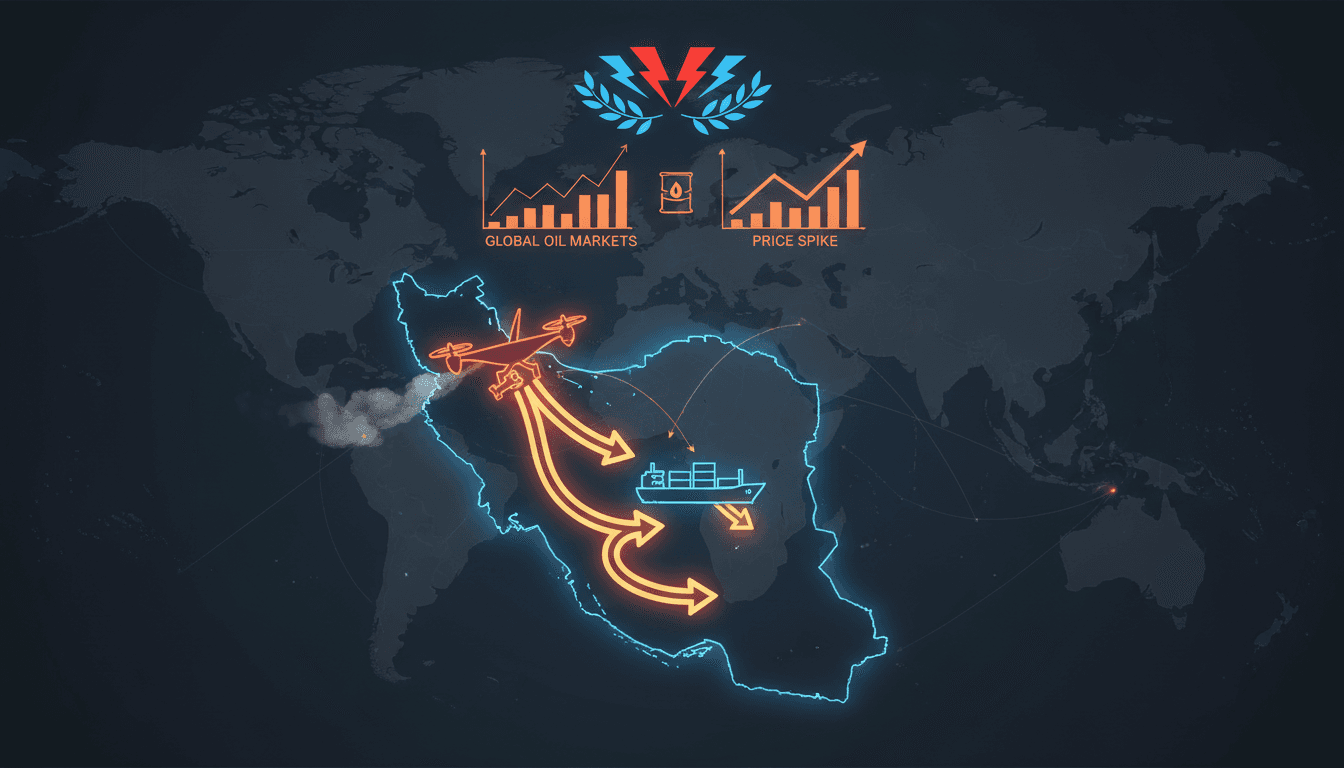
Here's what it means for you.
The recent U.S. airstrikes on Iranian targets signal a significant escalation in tensions that could have far-reaching implications for global oil markets and regional stability. With approximately 20% of the world's oil and liquefied natural gas supplies passing through the Strait of Hormuz, any disruption in this critical chokepoint could lead to increased prices and supply chain challenges. Stakeholders in energy markets should closely monitor developments as the situation unfolds. The ongoing conflict raises serious concerns about the security of vital shipping routes and the potential for broader military engagement in the region. Policymakers will need to navigate these complexities carefully to avoid further escalation.
What happened
The U.S. military conducted airstrikes against Iranian targets in response to a drone attack on a cargo ship in the Strait of Hormuz. This military action took place on June 27, 2026, just one day after the Iranian drone strike, marking a significant escalation in hostilities. The strikes targeted missile and drone storage locations as well as coastal radar sites in Iran.
This incident follows a fragile ceasefire agreement reached on June 17, 2026, when both nations aimed to reduce hostilities. However, the recent accusations of ceasefire violations have led to a cycle of retaliatory actions, further complicating the situation.
The Context
The U.S. and Iran had previously established a Memorandum of Understanding to mitigate tensions, but the drone attack on June 26 disrupted this fragile peace. Iran has since threatened further retaliation against U.S. military positions in the region, indicating that the conflict may escalate further. The strategic importance of the Strait of Hormuz cannot be overstated, as it serves as a critical passage for international trade.
The ongoing conflict not only affects the two nations involved but also poses risks to global markets and regional security. As both sides engage in retaliatory actions, the potential for broader conflict looms, raising alarms among international observers.
Takeaway
Looking ahead, the situation remains volatile, with both the U.S. and Iran poised for further military actions. Observers should watch for potential Iranian responses to the U.S. strikes, which could escalate tensions even further. Additionally, developments in negotiations between Israel and Hezbollah regarding ceasefire agreements may also influence the broader regional dynamics.
The implications of these events extend beyond immediate military concerns, as disruptions in the Strait of Hormuz could significantly impact global oil prices and supply chains. Stakeholders should remain vigilant as the situation evolves.
Regional and international reporting focused on Middle Eastern politics, diplomacy, and economics.
"Asharq Al-Awsat is a Saudi-owned international newspaper reflecting mainstream Gulf political perspectives."
— A47 Editor
Iran Accuses US of 'Blatant Violation' of Peace Deal
Iran has accused the United States of a 'blatant violation' of a peace deal following recent military strikes by the U.S. against Iranian targets, which Tehran claims breach a memorandum of understanding. This accusation comes amidst escalating tensi...
Oil, metals, and agriculture: supply/demand headlines, OPEC chatter, inventories, and price action.
"Solid tape for energy and metals traders tracking macro and micro catalysts."
— A47 Editor
Iran says it struck US-linked targets in response to US attacks
Iran has confirmed that it struck U.S.-linked targets in retaliation for recent U.S. military strikes on Iranian military sites, which were initiated following an attack on a cargo ship in the Strait of Hormuz. This escalation highlights the ongoing ...
International news coverage curated for readers in the UAE and Gulf region.
"Emirates 24|7 world coverage presents global developments through a UAE-facing and Gulf-relevant editorial lens."
— A47 Editor
US strikes Iran after drone attack on cargo ship in Strait of Hormuz amid ceasefire disputes
The U.S. military conducted airstrikes against Iran in response to a drone attack on the Singapore-flagged cargo ship Ever Lovely in the Strait of Hormuz, escalating tensions amid accusations of ceasefire violations by both nations. U.S. Central Comm...
Global news coverage with extensive reporting on Middle Eastern conflicts and geopolitics.
"Al Jazeera is a Qatar-based broadcaster known for wide regional coverage and alternative perspectives."
— A47 Editor
US strikes on Iran test fragile ceasefire
The United States has conducted military strikes against Iran for the first time since a ceasefire agreement was reached on June 17, 2026. This escalation follows accusations from Washington that Iran attacked a Singapore-flagged cargo ship in the St...
Comprehensive coverage of Middle Eastern and global issues.
"Al Jazeera is a prominent voice from the Global South, especially the Middle East, with an emphasis on underreported stories."
— A47 Editor
US strikes on Iran test fragile ceasefire
The United States has conducted military strikes against Iran for the first time since a ceasefire agreement was reached on June 17, 2026. This escalation follows accusations from Washington that Iran attacked a Singapore-flagged cargo ship in the St...
International stories from NPR’s global desk.
"NPR is an American public media organization known for thoughtful reporting and a slightly left-leaning editorial tone."
— A47 Editor
U.S. strikes Iran in response to a drone attack on a ship
The United States launched military strikes against Iran on June 26, 2026, in retaliation for a drone attack on the Singapore-flagged cargo ship Ever Lovely in the Strait of Hormuz. This incident marks a significant escalation in tensions, occurring ...